I’ve seen a static owl decoy scare birds away on day one… and then, two weeks later, the same birds used it as a meeting point. That’s when I started caring about motion.
For most outdoor gardens, wind-motion decoys work better than static decoys because movement keeps the “threat” unpredictable. Static decoys can still help, but they lose power fast unless you move them often and combine them with other deterrents.
Let’s compare them in a practical, real-garden way.
Understanding Static Animal Decoys: Simple but Limited
Static decoys are popular because they’re easy: place it once and hope it works. The problem is birds learn quickly.
Static animal decoys can deter birds in the short term by triggering predator fear, but their effectiveness often drops as birds realize the decoy never moves or attacks. Without regular repositioning, static decoys become background scenery.
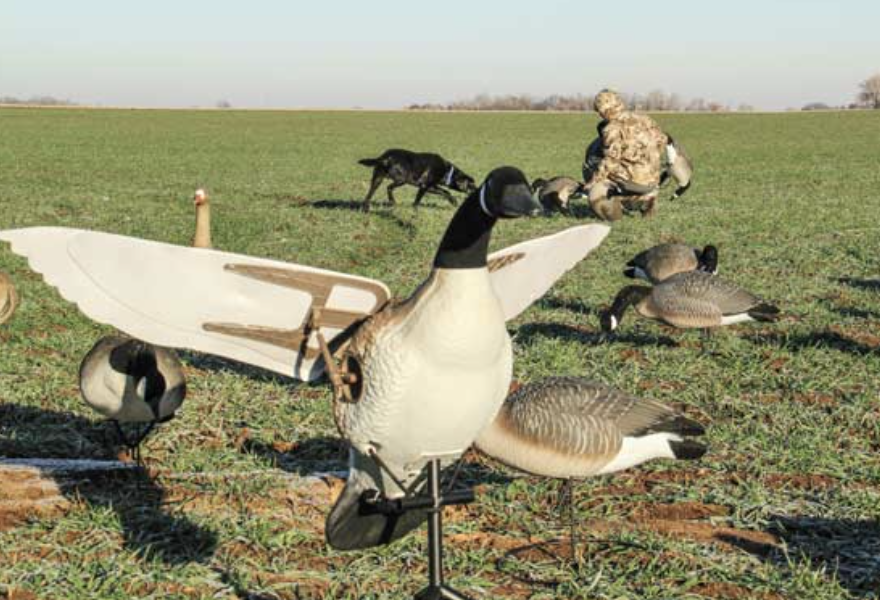
Static decoys are like a “warning sign.”
They work best when birds still believe the warning.
1) Why static decoys can work at the beginning
In the first days, birds often:
- hesitate to land
- circle the area
- choose another spot
This is most noticeable in small gardens where birds have other easy places to go.
2) Why static decoys often fail later
Birds are basically tiny pattern detectors.
They watch:
- Does it move?
- Does it chase?
- Does anything bad happen?
If the answer is always “no,” birds learn the truth:
“It’s safe.”
Then you see the funny (and painful) result:
birds sitting on the decoy.
3) Static decoys still have a place
I’m not anti-static. I just want realistic expectations.
Static decoys can still be useful when:
- you move them frequently[^1]
- you change their height and direction
- you use them in lower-pressure areas
- you combine them with motion items (reflective tape, spinners)[^2]
4) Size and realism matter more for static decoys
Since they don’t move, they must “look right”:
- correct predator shape
- realistic eyes and pose
- correct size for the bird problem
A tiny owl for big pigeons often gets ignored fast.
Static decoy summary table
| Static decoy strength | Static decoy weakness |
|---|---|
| easy to use | birds adapt quickly |
| low cost | becomes decoration if not moved |
| works short-term | limited in high-pressure areas |
| can help in combos | needs maintenance (repositioning) |
If you choose static, don’t “set and forget.” Treat it like a rotating tool.
How Wind Motion Enhances Bird Deterrence
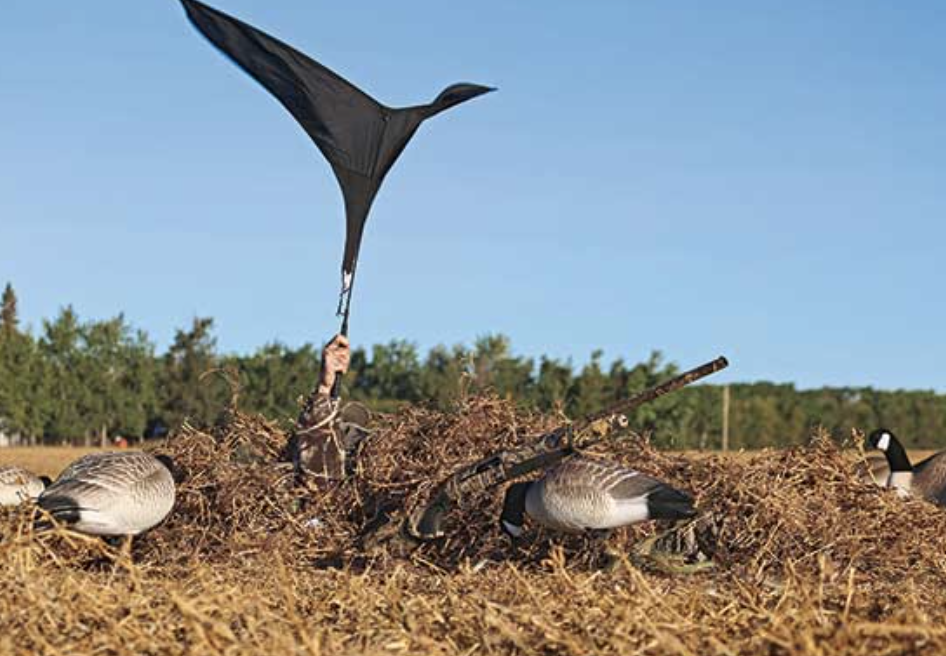
Motion is the main advantage. Even small movement makes birds feel uncertain, and uncertainty is what pushes them away.
Wind motion improves deterrence because it makes the predator seem alive and unpredictable. A moving head, swaying body, or spinning base creates changing angles and reflections, which birds read as real risk—so they avoid landing and feeding nearby.
This is why wind motion decoys often outperform static ones:
they don’t give birds a stable pattern.
1) Movement keeps the threat “fresh”
Birds can memorize a statue.[^3]
They can’t easily memorize something that shifts every hour.
Wind motion creates:
- slight rotation
- swaying silhouette
- changing “eye direction”
- changing shadows
Even small changes can reset fear.[^4]
2) Wind motion pairs well with real outdoor conditions
Gardens naturally have:
- wind
- light changes
- moving branches
So a moving decoy blends into the real world in a convincing way.
A perfectly still predator in a windy garden looks suspicious.
3) Motion reduces the need for constant manual repositioning
You still should move decoys sometimes, but wind motion helps extend effectiveness.
In real life, people forget to move things.
Wind helps you.
4) Motion helps against smarter birds (but not forever)
Crows and pigeons can still adapt, but motion slows adaptation.
It buys you time, especially when combined with other deterrents.
Wind motion advantages table
| Wind motion benefit | Why it matters |
|---|---|
| unpredictability | slows bird adaptation |
| “alive” impression | stronger fear response |
| less manual work | easier for busy gardeners |
| works well outdoors | matches natural movement |
If your garden is breezy, motion is like free energy for deterrence.
Behavioral Differences: Why Birds React Differently
Different birds have different intelligence, risk tolerance, and feeding habits—so they react differently to decoys.
Bird reactions depend on species behavior: cautious birds avoid uncertain threats longer, while social or intelligent birds (like crows) may test decoys and adapt faster. Birds also respond differently based on hunger level, food availability, and whether they feel safe in groups.
This is the part many people ignore.
They buy a decoy and expect one outcome.
But birds have personalities.
1) Hunger changes everything
If food is scarce, birds take more risks.
A decoy that works in normal times may fail during:
- cold seasons
- migration periods
- breeding season when birds feed constantly
2) Group behavior reduces fear
Birds in groups behave like this:
- one bird tests
- others watch
- if nothing happens, more land
That’s why pigeons and some flocking birds adapt quickly.
3) Smart birds “study the threat”
Crows are the classic example.[^5]
They observe:
- does it move at the right times?
- does it react to them?
- is it always in the same place?
Static decoys lose fast against smart birds.[^6]
Wind motion helps, but it’s still not magic.
4) Perching vs ground-feeding behavior matters
Some birds perch and scan, others feed low.
Placement must match behavior:
- owls/hawks decoys work better when elevated
- snake decoys work better near beds and ground zones
Behavior reaction table
| Bird type behavior | Reaction to static | Reaction to wind motion |
|---|---|---|
| cautious small birds | short-term avoidance | longer avoidance |
| flocking birds (pigeons) | adapt quickly | adapt slower |
| intelligent birds (crows) | test and learn fast | still test, but slower |
| hungry periods | fear drops | fear drops but still better than static |
This is why I always recommend a system, not a single product.
Choosing the Right Decoy Strategy for Your Garden
The best strategy depends on your bird pressure, garden layout, and how much maintenance you’ll actually do.
Choose wind motion decoys for most gardens because they stay effective longer with less effort. Choose static decoys when budget is tight or wind is low, but plan to move them often. For best results, rotate decoy positions and combine with simple motion deterrents or barriers.
Here’s my practical decision path.
Step 1: Be honest about your “maintenance personality”
If you will move the decoy every few days:
- static can work well enough
If you know you won’t remember:
- wind motion is safer
Step 2: Match the decoy type to your garden environment
- windy garden / open yard → wind motion shines
- sheltered patio / no wind → static needs manual rotation or add-on spinners
Step 3: Use a simple rotation plan
A rotation plan keeps birds uncomfortable.
Example:
- move decoy every 2–3 days
- change height and direction
- add reflective tape for 1 week, remove for 1 week
- switch decoy type (owl → hawk) occasionally
Step 4: Combine when pressure is high
If you’re protecting:
- fruit trees
- seedlings
- vegetable beds
- farms or larger spaces
Use a combo:
- wind motion decoy + reflective items[^7]
- decoy + netting in key zones
- decoy + habitat cleanup (remove food sources)[^8]
Quick strategy table
| Your garden situation | Best strategy | Why |
|---|---|---|
| light bird problem | static + regular moves | low effort, low cost |
| medium bird pressure | wind motion decoy | longer effectiveness |
| heavy bird pressure | wind motion + rotation + barrier | birds adapt slower |
| sheltered/no wind | static + added spinners | creates needed movement |
If you want a simple “set it up once” system, I suggest building a decoy rotation checklist and sticking it near your garden tools—so you actually do it.
Conclusion
Wind motion decoys usually work better outdoors because movement keeps birds unsure—static decoys need regular repositioning and support methods to stay effective.
[^1]: "[PDF] Use of frightening devices in wildlife damage management", https://digitalcommons.unl.edu/context/icwdm_usdanwrc/article/1221/viewcontent/Gilsdorf_IPMR_2003_Use_of_frightening.pdf. Wildlife-management literature on visual deterrents notes that stationary scare devices often lose effectiveness through habituation and that relocating or varying devices can help maintain a response. Evidence role: mechanism; source type: education. Supports: Static decoys are more likely to remain useful when they are moved frequently.. Scope note: This supports the general behavioral mechanism for static decoys or scare devices, but effectiveness varies by species, site, and context.
[^2]: "Deterrents – Deer Damage Management Techniques – Maryland DNR", https://dnr.maryland.gov/wildlife/pages/hunt_trap/ddmtdeter.aspx. Guidance on bird and wildlife deterrence commonly reports that visual devices incorporating movement, light reflection, or changing stimuli are generally more effective than static objects alone, especially when used as part of an integrated approach. Evidence role: expert_consensus; source type: government. Supports: Static decoys can be more useful when combined with motion items such as reflective tape or spinners.. Scope note: This provides contextual support for adding motion items to static decoys, not direct proof that every reflective tape or spinner setup improves results in all field conditions.
[^3]: "Experimental Divergences in the Visual Cognition of Birds and …", https://pmc.ncbi.nlm.nih.gov/articles/PMC4507827/. Research on avian cognition documents that birds can learn and remember visual cues and locations, supporting the general claim that fixed objects can become familiar over time. Evidence role: general_support; source type: paper. Supports: Birds can memorize a statue.. Scope note: This evidence would support avian learning and memory broadly rather than proving that all bird species specifically memorize statues.
[^4]: "The impact of multiple exposures and movement on the fear … – PMC", https://pmc.ncbi.nlm.nih.gov/articles/PMC11648746/. Studies of habituation and novelty responses in birds indicate that repeated exposure can reduce avoidance responses, while novel or changing stimuli may renew vigilance or fear responses. Evidence role: mechanism; source type: paper. Supports: Even small changes can reset fear.. Scope note: This supports the behavioral mechanism in general; it may not establish that every small wind-driven change reliably resets fear in every bird species or setting.
[^5]: "Crows control working memory before and after stimulus encoding", https://pmc.ncbi.nlm.nih.gov/articles/PMC7039964/. Research on corvid cognition documents advanced learning, memory, and behavioral flexibility in crows and related species, providing context for why crows are often used as examples of animals that can evaluate and adapt to deterrents. Evidence role: expert_consensus; source type: paper. Supports: Crows are a representative example of birds that can assess and adapt to scare devices.. Scope note: This supports the general characterization of crows as cognitively sophisticated, not the specific performance of any one decoy product.
[^6]: "Efficacy of Several Types of Pest Bird Deterrents and General Trend …", https://pmc.ncbi.nlm.nih.gov/articles/PMC12017283/. Wildlife-management literature on visual bird scaring devices reports that birds commonly habituate to stationary or predictable deterrents, while novelty and movement can delay but not eliminate habituation. Evidence role: general_support; source type: government. Supports: Static decoys tend to become less effective as birds learn that they pose no real threat.. Scope note: The evidence typically addresses bird deterrents broadly and may not quantify how quickly crows habituate to a particular static decoy.
[^7]: "Nonlethal bird deterrent strategies: How to reduce fruit crop losses in …", https://extension.oregonstate.edu/catalog/em-9286-nonlethal-bird-deterrent-strategies. Research and extension guidance on bird damage management describes visual deterrents such as predator decoys and reflective devices as more effective when they move, are varied, and are combined with other control methods. Evidence role: expert_consensus; source type: education. Supports: Combining a wind-motion decoy with reflective items can help protect fruit trees, seedlings, vegetable beds, farms, or larger spaces.. Scope note: The support is general to bird deterrence and does not prove effectiveness for every crop, bird species, or site condition.
[^8]: "8. Integrated Pest Management (IPM) | NC State Extension …", https://content.ces.ncsu.edu/extension-gardener-handbook/8-integrated-pest-management-ipm. Integrated pest management guidance identifies sanitation and removal of attractants, including accessible food sources, as a standard habitat-modification practice for reducing nuisance wildlife and pest pressure. Evidence role: mechanism; source type: education. Supports: Cleaning up habitat and removing food sources can strengthen the effectiveness of decoys for protecting planted areas.. Scope note: This supports the principle of attractant removal but does not quantify how much damage reduction will occur in a specific garden or farm setting.