I grew up thinking a scarecrow was the ultimate bird solution—old hat, stick arms, and a face that looked mildly angry. Then I watched sparrows land on one like it was a bus stop.
Garden bird control has evolved because birds learn fast. Traditional scarecrows still help in some situations, but modern solutions use movement, predator decoys, light/sound tech, and more humane, sustainable methods that make an area feel unsafe without harming wildlife.
Let’s walk through the evolution—without pretending there’s one “magic” fix.
Why Traditional Scarecrows Are No Longer Enough
Scarecrows worked better when farms were quieter and birds had fewer safe feeding options. Today, many birds adapt quickly.
Traditional scarecrows are no longer enough because birds quickly learn when a human-shaped figure never moves and never causes real danger. In busy gardens and farms, birds get used to static scarecrows within days or weeks, especially if food remains easy to access.
Here’s the honest truth: a scarecrow is basically a visual warning sign.
And warning signs only work when they feel real.
1) Birds learn patterns faster than we expect
If a scarecrow stays in the same place:
- birds watch it
- birds test it
- birds learn it’s harmless
Then the scarecrow becomes… garden decoration.
This is especially true for smart birds like:
- crows
- starlings
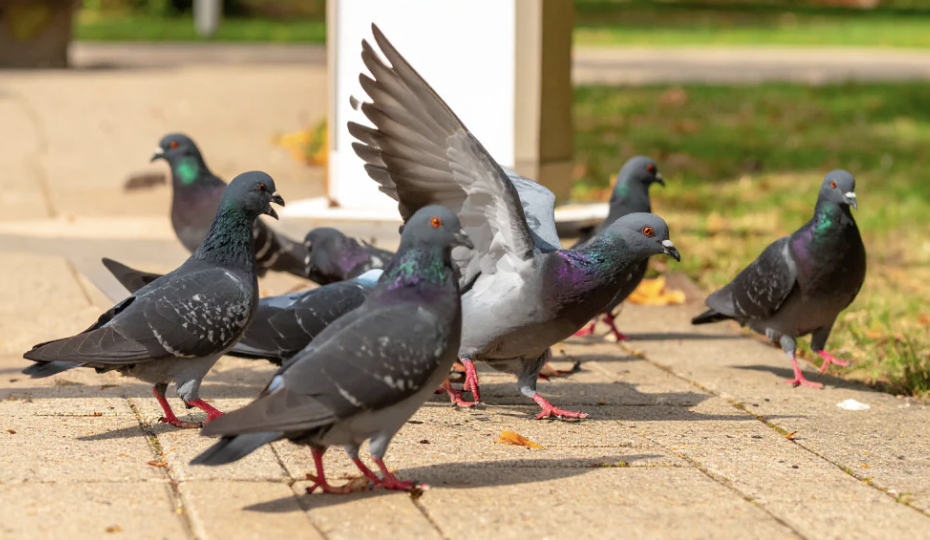
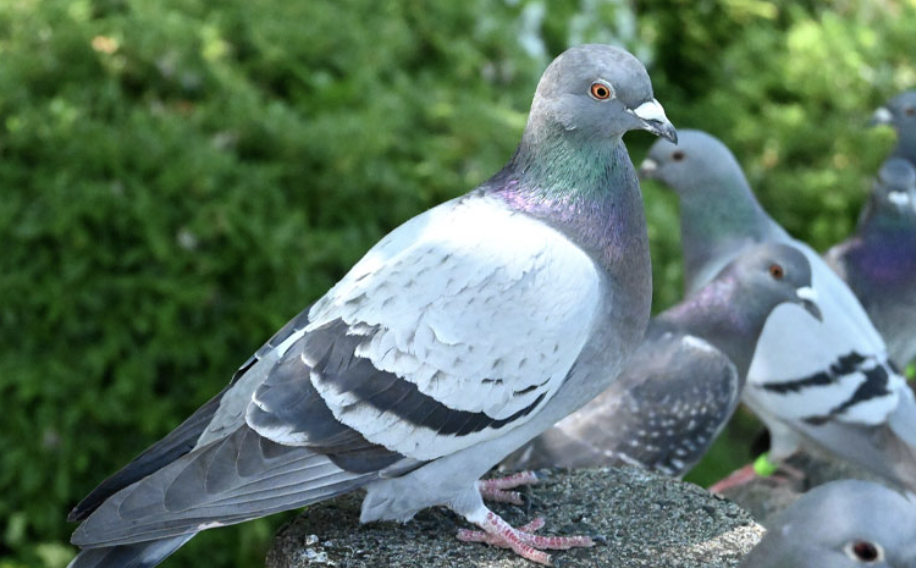
- pigeons
They’re not “brave.” They’re just trained by experience.
2) Modern farms and gardens give birds more confidence
In many areas, birds deal with:
- people walking around daily
- cars, noise, and movement
- constant human presence
So a human-shaped scarecrow doesn’t always feel like a special threat anymore.
3) The problem is not the scarecrow—it’s the lack of change
Scarecrows still can work when:
- moved frequently[^1]
- combined with noise or reflective items
- placed near the real feeding zone
- changed in appearance (hats, arms, flags)
But if it stays still for weeks, birds treat it like a statue[^2].
Scarecrow limitation table
| What scarecrows do well | Where they fail |
|---|---|
| quick visual warning | birds adapt quickly |
| cheap and simple | no real “risk signal” |
| can work short-term | weak as a long-term solution |
So the evolution started with one key idea: make the threat feel unpredictable.
How Animal Decoys Trigger Natural Predator Responses
Animal decoys work because they speak the “fear language” birds already understand: predators.
Animal decoys trigger predator responses by mimicking the shape and presence of natural enemies like owls, hawks, and snakes. Birds often avoid areas that look like a hunting zone—especially when decoys are realistic, well-placed, and moved regularly.
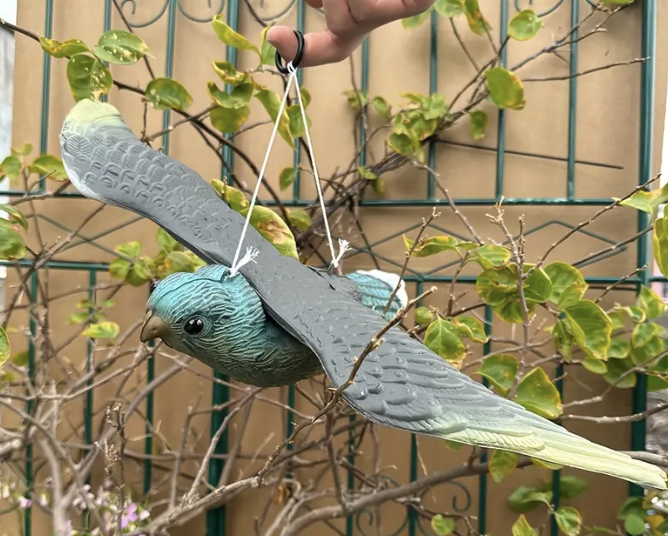
This is where bird control gets more psychological.
Birds don’t need to be attacked to feel fear.
They only need to believe the risk is possible.
1) Predator silhouettes are instantly recognizable
Even small birds know:
- owl shape on a perch = danger
- hawk shape in open sky = danger
- snake shape near ground = danger
That’s why predator decoys often work faster than scarecrows.
2) The best decoys feel “alive”
Birds are sensitive to:
- eyes
- posture
- placement height
- movement
A decoy works better when it has:
- rotating head
- wind movement
- changing location
Static decoys can still work… but only short-term.
3) Placement matters more than price
A cheap decoy placed correctly can outperform an expensive decoy placed badly.
Good placement usually means:
- visible from the birds’ approach path
- near the feeding/landing area
- elevated for owls/hawks[^3]
- moved often[^4]
4) Different birds react differently
This is important for farms.
- Crows often test decoys and adapt fast.
- Pigeons may ignore small owl decoys quickly.
- Sparrows can be scared initially, then return if food is easy.
So decoys work best as part of a system, not as a single tool.
Decoy effectiveness table
| Decoy type | Best use | Best practice |
|---|---|---|
| Owl | gardens, trees, perching areas | mount high + move often |
| Hawk/falcon | open fields, farms | high visibility + rotation |
| Snake | ground beds, borders | relocate frequently |
If you want decoys to keep working, the rule is simple: never let birds feel certain.
The Role of Technology in Modern Bird Control Solutions
Technology adds what scarecrows and decoys often lack: motion, timing, and automation.
Modern bird control technology uses motion-activated sprinklers, light flash devices, ultrasonic or sound deterrents, and smart timers to create unpredictable disturbance. These tools can be effective when used carefully and rotated, but they work best alongside physical and visual deterrents.
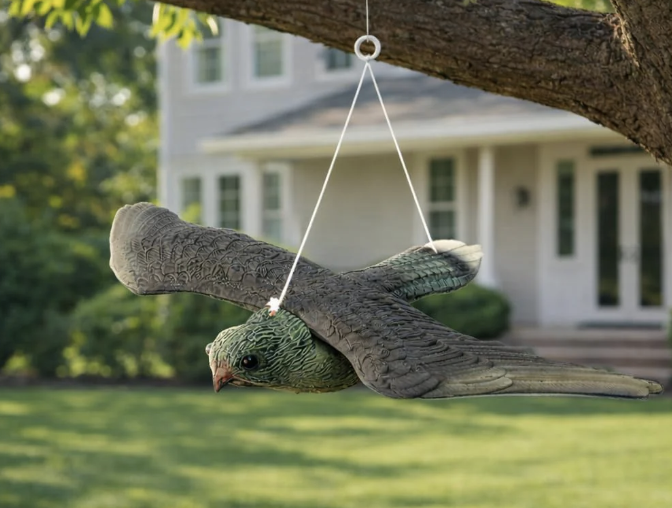
I’ll be honest—some tech works great, some is overhyped.
The best tech solutions share one advantage: they create surprise.
1) Motion-activated sprinklers (simple and effective)
This is one of the most practical tools because:
- it adds sudden movement
- it adds water (birds dislike it)
- it trains birds: “this place reacts”
It’s also humane. No harm, just discomfort.
2) Flashing lights and reflective systems
These work well in:
- orchards
- gardens with open sunlight
- rooftop areas
But they can lose power if:
- placed in shade[^5]
- left unchanged for too long
- used in areas where birds aren’t bothered by light[^6]
3) Sound deterrents and ultrasonic devices
This category is tricky.
Sound can work, but:
- neighbors may hate it
- birds can adapt
- wrong frequency can be useless
I usually recommend sound as a support tool, not a main tool.
4) Smart timers and rotation plans
This is the real “smart” part.
If your device triggers:
- randomly
- at changing intervals
- in changing zones
birds struggle to get comfortable.
Tech tool table
| Tech method | Strength | Common risk |
|---|---|---|
| motion sprinkler | strong surprise effect | needs water and setup |
| flashing lights | simple and low effort | birds adapt if constant |
| sound deterrent | can cover larger areas | noise complaints, adaptation |
| timers/automation | adds unpredictability | still needs rotation plan |
Technology helps most when it makes the environment feel unstable.
Sustainable and Humane Approaches to Protecting Crops
The smartest bird control today isn’t about hurting birds—it’s about making your crops less attractive and your space less comfortable for them.
Sustainable and humane bird control focuses on prevention: netting and physical barriers, habitat management (remove easy food sources), crop protection timing, and rotating non-lethal deterrents. The goal is to reduce damage while respecting wildlife and local ecosystems.
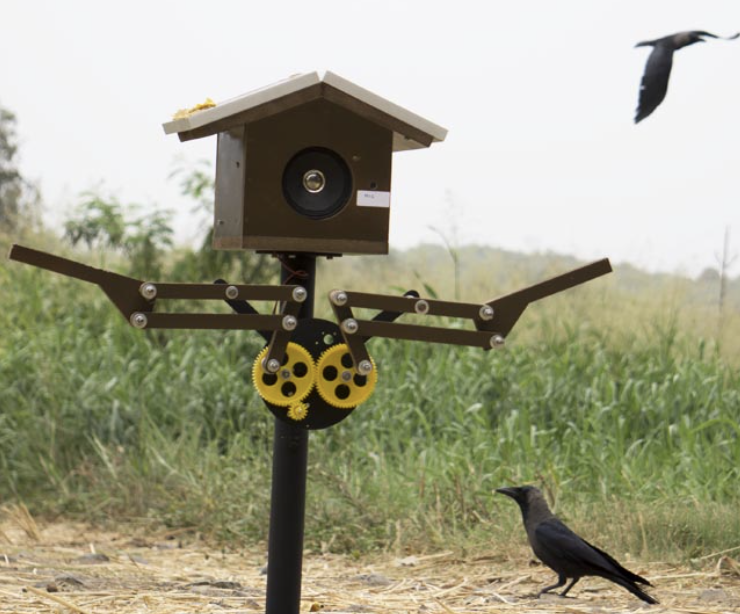
I like humane solutions because they’re realistic long-term.
If you rely on harsh methods, you often create:
- legal issues
- community complaints
- ecological problems
Humane prevention is calmer and more stable.
1) Physical barriers (the most reliable for high-value crops)
Netting is not glamorous, but it’s effective.
Best for:
- berries
- fruit trees
- seed beds
- greenhouse entrances
It prevents access, not just “scares.”
2) Remove the reasons birds stay
Birds come for:
- food
- water
- shelter
So check:
- spilled feed
- open compost
- uncovered trash
- standing water
If you make your space less rewarding, birds spend less time there.
3) Use rotation, not one permanent scare tool
A humane system often includes:
- a decoy moved often
- reflective items added and removed
- occasional motion sprinklers
- barriers during peak ripening weeks[^7]
The rotation is what keeps it effective.[^8]
4) Protect crops at the right time
Some crops only need protection at certain stages:
- when fruit is ripening
- when seedlings are vulnerable
- when seeds are fresh
Targeted protection reduces effort and waste.
Sustainable approach table
| Humane approach | What it does | Why it’s sustainable |
|---|---|---|
| netting/barriers | blocks access | reliable, non-lethal |
| habitat cleanup | removes attraction | reduces repeat visits |
| rotation strategy | prevents adaptation | longer effectiveness |
| timing protection | focuses effort | less waste, less stress |
If you want a simple plan, I often suggest building a humane bird control routine: move decoys, rotate deterrents, protect only when needed.
Conclusion
Bird control has evolved from static scarecrows to smart, humane systems—success comes from movement, unpredictability, and prevention, not one “forever” trick.
[^1]: "[PDF] SCARECROWS AND PREDATOR MODELS FOR FRIGHTENING …", https://digitalcommons.unl.edu/cgi/viewcontent.cgi?referer=&httpsredir=1&article=1048&context=vpc15. Research and extension guidance on bird deterrents notes that visual scare devices tend to lose effectiveness through habituation and are more effective when their position or configuration is changed regularly. Evidence role: mechanism; source type: education. Supports: Scarecrows can remain effective when they are moved frequently.. Scope note: This supports the general principle for visual bird deterrents rather than proving efficacy for every scarecrow design or bird species.
[^2]: "[PDF] SCARECROWS AND PREDATOR MODELS FOR FRIGHTENING …", https://digitalcommons.unl.edu/cgi/viewcontent.cgi?referer=&httpsredir=1&article=1048&context=vpc15. Studies and wildlife-management guidance on bird scaring describe habituation, in which birds reduce their response to stationary or predictable scare devices after repeated harmless exposure. Evidence role: mechanism; source type: paper. Supports: If a scarecrow remains still for weeks, birds may habituate to it and stop responding as if it were a threat.. Scope note: The phrase “like a statue” is figurative; the evidence would support habituation to stationary scare devices, not the exact metaphor.
[^3]: "Nonlethal bird deterrent strategies: How to reduce fruit crop losses in …", https://extension.oregonstate.edu/catalog/em-9286-nonlethal-bird-deterrent-strategies. Wildlife-damage management guidance describes raptor/owl models and other visual frightening devices as more plausible when positioned prominently, such as on posts or elevated perches, supporting the placement rationale for elevated predator decoys. Evidence role: mechanism; source type: education. Supports: Owl or hawk decoys are generally more effective when elevated.. Scope note: This supports the general placement principle for predator effigies, not a quantified comparison of elevated versus ground-level decoys in every bird species.
[^4]: "[PDF] SCARECROWS AND PREDATOR MODELS FOR FRIGHTENING …", https://digitalcommons.unl.edu/cgi/viewcontent.cgi?referer=&httpsredir=1&article=1048&context=vpc15. Extension and wildlife-management sources commonly note that birds habituate to stationary scare devices and that moving or varying visual deterrents helps maintain their frightening effect. Evidence role: expert_consensus; source type: education. Supports: Decoys should be moved often because birds can habituate to stationary deterrents.. Scope note: The evidence is usually based on general bird-deterrent practice and species-specific responses may vary.
[^5]: "Solar Integration: Inverters and Grid Services Basics", https://www.energy.gov/cmei/systems/solar-integration-inverters-and-grid-services-basics. Research and educational guidance on photovoltaic systems explains that shading reduces incident solar irradiance on cells and can substantially lower module or system power output; this supports the claim that solar-powered devices may lose power when installed in shaded locations. Evidence role: mechanism; source type: education. Supports: These devices can lose power if placed in shade.. Scope note: This evidence supports the power-generation mechanism generally and may not measure the exact performance loss for this specific device type.
[^6]: "[PDF] Bird Dispersal Techniques – USDA-Aphis", https://www.aphis.usda.gov/sites/default/files/Bird-Dispersal-Techniques-WDM-Technical-Series.pdf. Bird-control and wildlife-management literature notes that visual deterrents vary in effectiveness by species, context, and habituation; this supports the claim that light-based deterrents may be ineffective where birds do not respond to light stimuli. Evidence role: expert_consensus; source type: institution. Supports: These devices can lose power or become ineffective when used in areas where birds are not bothered by light.. Scope note: The support is contextual because effectiveness depends on bird species, setting, alternative food sources, and how the deterrent is deployed.
[^7]: "Protecting Berries from Birds – [email protected]", https://hgic.clemson.edu/protecting-berries-from-birds/. Agricultural extension guidance commonly identifies physical exclusion methods such as netting, fencing, or row covers as reliable ways to reduce bird and wildlife damage to ripening fruit crops. Evidence role: general_support; source type: education. Supports: Using temporary barriers during the ripening period can be part of an effective humane system to protect crops.. Scope note: This supports barriers as a general crop-protection method, but effectiveness depends on the target animal, crop, installation quality, and local conditions.
[^8]: "Nonlethal bird deterrent strategies: How to reduce fruit crop losses in …", https://extension.oregonstate.edu/catalog/em-9286-nonlethal-bird-deterrent-strategies. Research on wildlife damage management notes that animals can habituate to static frightening devices, so varying or moving deterrents is generally used to prolong their effectiveness. Evidence role: mechanism; source type: institution. Supports: Changing deterrents over time helps maintain their effectiveness because animals may habituate to fixed deterrents.. Scope note: This supports the general principle of rotating deterrents rather than proving that any specific garden setup will remain effective.