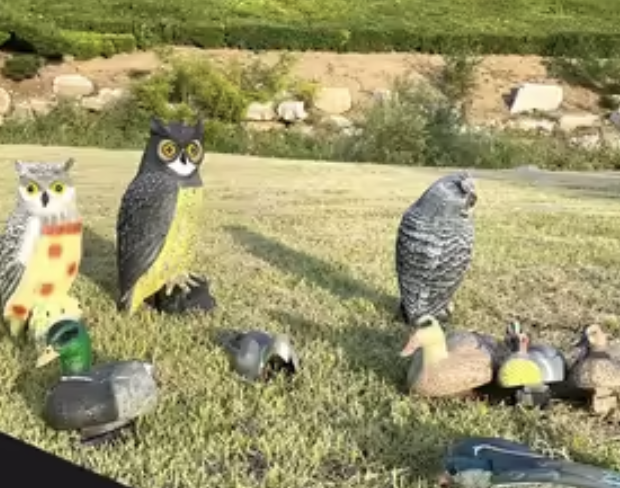
I’ve sold plenty of garden products, and animal decoys are one of those “simple-looking” items that can do two jobs: bird control and outdoor decoration.
Wholesale animal decoys from China are popular because importers can source many styles (owl, duck, eagle), materials, and finishes with OEM packaging support. The key is choosing realistic designs, durable outdoor materials, and packaging that prevents scratches and dents during shipping.
Let’s talk about owl, duck, and eagle models the way an importer actually needs.
How Owl Decoys Help Control Birds in Gardens and Farms
Owl decoys work because they trigger a natural fear response in many smaller birds—especially at first.
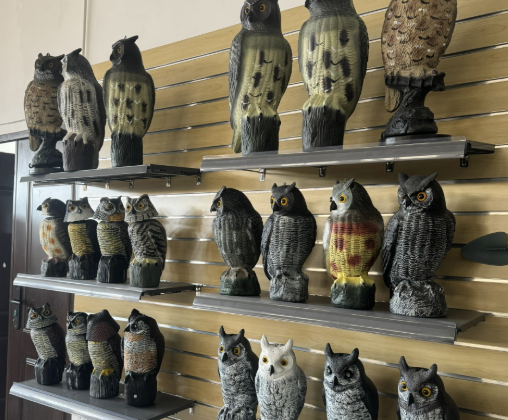
Owl decoys help control birds by mimicking a common predator silhouette. They can reduce perching and feeding in a target area, especially when placed high, visible, and moved regularly. For best results, owl decoys should be repositioned often and combined with simple motion deterrents.
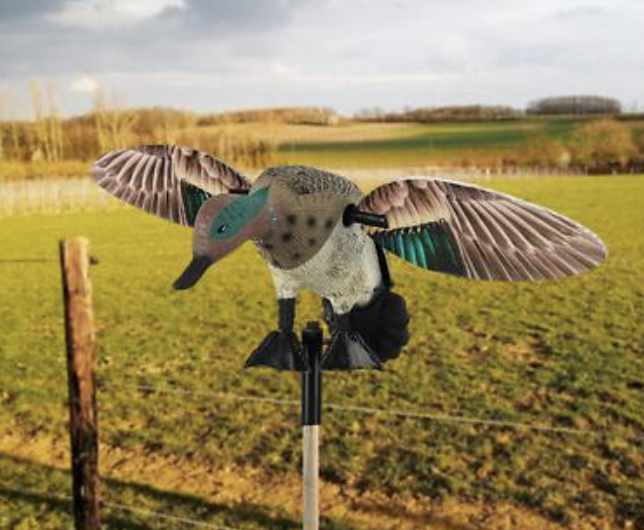
I’ll be honest: owl decoys are not magic. But they are useful—when used correctly.
1) Why owl decoys work (at least short-term)
Many nuisance birds see an owl and think:
“Predator nearby. Not safe.”
So they hesitate to:
- land
- feed
- nest
This works best in:
- gardens with light to medium bird pressure
- farms where birds have other options nearby
- places where birds approach from trees or fences
2) Placement is everything
If an owl decoy is hidden behind bushes, birds won’t care.[^1]
Good placement usually means:
- higher position[^2] (on a post, fence, roof edge)
- visible from the approach direction
- facing the open area birds fly into
I like this simple rule:
If you can’t see the owl clearly from 10 meters away, birds probably can’t either.
3) Movement extends effectiveness
Birds adapt fast if the owl never moves.
So the best-selling owl decoy styles for real deterrence often include:
- rotating head (wind motion)
- reflective eyes
- hanging or swaying body design
Even small movement makes it feel “alive.”
4) What buyers should not promise
If your customers expect one owl decoy to protect a huge farm, they will be disappointed.
Owl decoys work best as part of a system:
- decoy + reflective tape
- decoy + wind spinners
- decoy + netting in key zones
Owl decoy effectiveness table
| Setup factor | What to do | Why it helps |
|---|---|---|
| placement | mount high and visible | matches predator behavior |
| movement | rotating head / wind motion | slows bird adaptation |
| rotation | move every few days | prevents “statue effect” |
| combo tactics | add reflectors or netting | stronger long-term control |
If you’re selling owl decoys, I’d position them as best for gardens and small farm zones, not as a “one-product solution.”
Decorative Duck Models for Modern Outdoor Spaces
Duck models are less about bird control and more about the mood: friendly, playful, and modern outdoor décor.
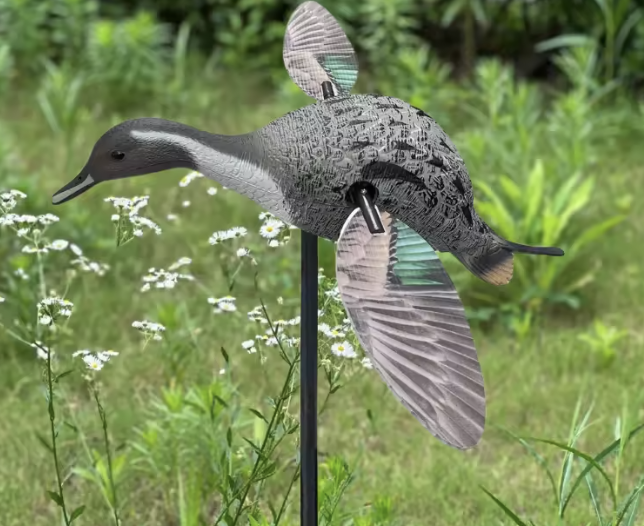
Decorative duck models are popular because they add charm to patios, ponds, and garden paths. They sell well in modern outdoor spaces when the finish is clean, colors are stable, and the shape feels realistic but friendly—without looking like a cheap toy.
Duck decoys are interesting because “duck” can mean two very different product directions:
1) decorative duck models (for garden décor)
2) hunting / field decoys (different market, different expectations)
Here, I’m focusing on garden models for importers—DIY stores, garden centers, outdoor décor retailers.
1) Why duck models sell well as décor
They create a simple emotion:
- calm
- cute (but not childish)
- nature-friendly
A duck near:
- a pond
- a fountain
- a flower bed
…just makes the space feel alive.
2) What makes a duck model look “premium”
From my sales experience, premium-looking duck models usually have:
- realistic feather texture (not too busy)
- stable paint tone
- matte finish (less plastic shine)[^3]
- good weight balance (doesn’t tip easily)[^4]
The enemy is “toy shine.”
If it looks like a toy, retailers lose confidence fast.
3) Material matters for outdoor use
Duck models often come in:
- resin
- plastic
- mixed materials
For outdoor décor, importers should focus on:
- UV resistance (prevents fading)
- weather resistance (prevents cracking)
- stable base (wind and rain)
4) Best-selling scene concepts (for retail)
These scenes sell well:
- “pond friend” duck set
- “garden path” duck family
- “modern patio” single clean design duck
If you want to build a range, you can create a simple duck décor collection that fits different garden styles.
Duck model selection table
| Buyer goal | Best duck model type | What to watch |
|---|---|---|
| modern décor | clean, minimal duck | avoid glossy toy look |
| pond decoration | heavier base duck | stability and UV |
| giftable item | set of 2–3 ducks | paint consistency |
Duck models are often “easy sellers” when they look tasteful and real.
Why Eagle Decoys Are Popular Among Commercial Growers
Eagle decoys are chosen because they project “top predator” energy—especially useful for larger, open areas where birds approach from distance.
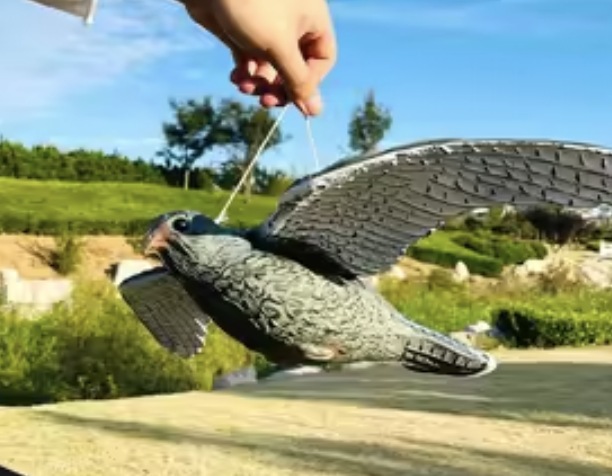
Eagle decoys are popular among commercial growers because they create a stronger predator signal than smaller decoys. Their larger silhouette can be seen from farther away, which helps deter nuisance birds in orchards, fields, and open farm zones—especially when the decoy includes motion and is repositioned regularly.
If owl decoys are “local warning signs,” eagle decoys are more like “big security presence.”
1) Bigger silhouette, bigger impact
In open farms and orchards, birds approach from distance.
A larger decoy helps because:
- it’s visible far away
- it changes the flight decision earlier
- it signals “this area is risky”
This is why commercial growers like them.
2) Motion is still the key
Even with an eagle, birds can adapt if it never moves.
Popular wholesale design features include:
- wind motion wings
- rotating base
- hanging styles that sway
- reflective elements
The goal is always the same: unpredictability.
3) Best use cases for eagle decoys
[Eagle decoys often perform best in:
- orchards
- vineyards
- open fields
- rooftop areas
- large garden farms](https://extension.oregonstate.edu/catalog/em-9286-nonlethal-bird-deterrent-strategies)[^1]
They’re not always necessary for small backyard gardens[^2].
In a small garden, an eagle can look “too intense” for décor.
4) Honest expectations for importers
I always tell importers this:
An eagle decoy works better when:
- you use multiple units across a large area
- you move them
- you rotate tactics
One decoy will not protect a huge field forever.
Eagle decoy use table
| Farm situation | Why eagle decoy helps | Best practice |
|---|---|---|
| open orchard | visible from distance | mount high + move often |
| vineyards | protects fruit zones | rotate positions weekly |
| rooftops | blocks perching | add motion features |
| large gardens | stronger deterrence | combine with reflectors |
If you sell eagle decoys, position them as commercial grower deterrence tools with proper usage guidance.
What Importers Should Know Before Buying Animal Decoys from China
Importing decoys is not hard, but profits depend on the boring details: material durability, paint stability, packaging, and consistent batches.
Before buying from China, importers should confirm material type (resin/plastic), UV resistance, paint finish quality, weight and stability, packaging protection, and repeat-order consistency. Also confirm compliance labeling needs for your market and set clear QC checkpoints for appearance defects.
Here’s the importer checklist I actually care about.
1) Confirm product purpose: deterrence vs décor
This matters because it changes design priorities.
- Bird deterrence decoys need realism and sometimes motion.
- Decorative models need tasteful design and premium finish.
If you mix these goals, the product can become confused.
2) Confirm outdoor durability (UV and weather)
Common outdoor complaints:
- color fading after sun exposure
- paint peeling
- cracks in winter
- brittle parts
Ask suppliers:
- what UV resistance approach is used
- what paint/coating system is used
- whether outdoor exposure testing exists (even basic)
3) Confirm weight and stability
For outdoor garden models, stability matters.
Check:
- base weight
- anti-tip design
- wind resistance
A model that tips over feels cheap and creates bad reviews.
4) Treat packaging as part of the product
Decoys are easy to damage in shipping:
- paint scratches
- beak/wing breaks
- dents and deformation
- scuffed surfaces
So packaging should include:
- inner protection
- corner protection
- separated parts protection (if any)
- carton strength
5) Confirm QC standards for appearance defects
For décor products, appearance is everything[^7].
Set clear QC points:
- paint consistency
- surface scratches
- color tone match
- seam lines control (for resin)
- assembly fit (for multi-part models)
A small scratch can become a return.[^8]
6) Plan a safe order workflow
A simple safe import workflow:
- approve sample (golden sample)
- confirm packaging method
- in-line photo updates (if possible)
- final inspection before shipment
- repeat order rules locked
Importer checklist table
| Import check | What to verify | Why it matters |
|---|---|---|
| material and UV | resin/plastic durability | prevents fading and cracking |
| finish quality | paint and texture | protects décor value |
| stability | base weight, balance | reduces tip-over complaints |
| packaging | scratch/break protection | reduces shipping damage |
| QC plan | appearance defect rules | fewer returns |
| repeat orders | batch consistency | stable long-term program |
If you want, I can provide a ready-to-send Animal Decoy RFQ template you can use to compare suppliers quickly.
Conclusion
Owl decoys sell for practical bird control, duck models sell for décor charm, and eagle decoys fit commercial deterrence—import success comes from durable materials, stable finish, and strong packaging.
[^1]: "Nonlethal bird deterrent strategies: How to reduce fruit crop losses in …", https://extension.oregonstate.edu/catalog/em-9286-nonlethal-bird-deterrent-strategies. University extension guidance on visual bird scare devices indicates that predator models and similar deterrents depend on birds detecting a visible threat cue; this supports the need for unobstructed placement, though it does not specifically test owl decoys hidden behind bushes. Evidence role: mechanism; source type: education. Supports: A hidden or visually obstructed owl decoy is unlikely to deter birds effectively because birds must be able to see the deterrent.. Scope note: Contextual support: the source may address visual bird deterrents generally rather than this exact placement scenario.
[^2]: "[PDF] Bird Dispersal Techniques – USDA-Aphis", https://www.aphis.usda.gov/sites/default/files/Bird-Dispersal-Techniques-WDM-Technical-Series.pdf. Ornithological and extension sources describe many birds as responding to conspicuous predator silhouettes or elevated visual scare devices in open sightlines; this supports placing a decoy higher to improve visibility, although height alone is not proof of deterrent effectiveness. Evidence role: general_support; source type: education. Supports: Owl decoys are generally placed higher because elevated positions improve their visibility to approaching birds.. Scope note: The support is indirect because it links height to visibility and detection rather than establishing a universal optimal height for owl decoys.
[^3]: "[PDF] A psychophysically-based model of surface gloss perception", https://www.cis.rit.edu/people/faculty/ferwerda/publications/ei_paper_4299_30_v3.pdf. Research on visual material perception indicates that surface gloss is a salient cue by which observers distinguish plastic-like, shiny materials from more natural or matte surfaces; this supports the use of a matte finish as a way to reduce a toy-like plastic appearance. Evidence role: mechanism; source type: paper. Supports: Premium-looking duck models benefit from a matte finish because reduced shine makes them look less like plastic toys.. Scope note: This evidence supports the perceptual mechanism of gloss and material judgment generally, rather than testing duck models or retailer reactions directly.
[^4]: "[PDF] Observations About Bicycles Vehicle’s Static Stability, Part … – Galileo", http://galileo.phys.virginia.edu/classes/605.ral5q.fall05/lectures/bicycles.pdf. Basic stability principles state that an object is less likely to tip when its center of mass remains over its base of support; this provides physical support for the claim that balanced weight distribution improves resistance to tipping. Evidence role: mechanism; source type: education. Supports: A duck model with good weight balance is less likely to tip easily.. Scope note: The source would explain the general mechanics of tipping stability, not provide product-specific testing data for duck models.
[^5]: "Nonlethal bird deterrent strategies: How to reduce fruit crop losses in …", https://extension.oregonstate.edu/catalog/em-9286-nonlethal-bird-deterrent-strategies. University extension guidance on bird damage management describes visual scare devices, including predator models and effigies, as tools used in agricultural and open-site bird deterrence, while noting that effectiveness depends on visibility, placement, and birds’ habituation to static devices. Evidence role: general_support; source type: education. Supports: Eagle decoys often perform best in orchards, vineyards, open fields, rooftop areas, and large garden farms.. Scope note: This supports the general suitability of visible predator decoys in open or agricultural settings, but it does not specifically prove that eagle-shaped decoys outperform other deterrents in every listed location.
[^6]: "Non-Chemical Bird Control – Animal and Range Sciences", https://animalrangeextension.montana.edu/wildlife/prevention_and_control/organic-bird-control.html. Extension-based garden pest guidance commonly recommends physical exclusion methods such as netting or row covers for protecting small plantings from birds, and treats visual scare devices as variable or supplemental because birds may become accustomed to them. Evidence role: expert_consensus; source type: education. Supports: Eagle decoys are not always necessary for small backyard gardens.. Scope note: The source would contextualize why eagle decoys may be unnecessary in small gardens; it would not establish a universal rule against using them in all backyard settings.
[^7]: "Effects of Design Aesthetics on the Perceived Value of a Product", https://pmc.ncbi.nlm.nih.gov/articles/PMC8359925/. Research on consumer product aesthetics indicates that visual appearance influences product evaluation and purchase-related judgments, supporting the importance of appearance for décor items where visual display is central. Evidence role: expert_consensus; source type: paper. Supports: For décor products, appearance is a critical factor in customer evaluation.. Scope note: The evidence is likely to address consumer products broadly rather than décor products exclusively.
[^8]: "[PDF] Relationship between product quality and customer satisfaction", https://scholarworks.waldenu.edu/cgi/viewcontent.cgi?article=2402&context=dissertations. Studies of online retail returns and product quality dissatisfaction show that perceived defects and mismatch with expectations are common drivers of returns, which contextualizes why even minor visible damage may lead to a returned décor product. Evidence role: general_support; source type: paper. Supports: Minor visible defects such as scratches can increase the risk of product returns.. Scope note: The source may support defect-related returns generally rather than proving that every small scratch results in a return.