
For overseas buyers, checking product quality before shipment is essential. However, travelling to China for every inspection is not always practical.
Remote product inspection in China allows overseas buyers to check product quality through live video, photos, digital reports, and factory communication without visiting the supplier in person.
When managed correctly, remote inspection can become a reliable tool for international sourcing.
Why Remote Product Inspection Is Becoming Popular Among Global Buyers
Remote inspection is becoming more common because international buyers need faster, more flexible, and lower-cost ways to control product quality.
Remote product inspection is popular because it reduces travel costs, speeds up decision-making, improves supplier communication, and allows buyers to monitor production from anywhere in the world.

Traditional product inspection usually requires buyers or third-party inspectors to visit factories physically.
While this method remains valuable, it also creates challenges:
- travel expenses;
- scheduling difficulties;
- longer approval times;
- limited flexibility for small orders.
Remote inspection provides an alternative solution.
Reducing inspection costs
For many small and medium importers, sending someone to China for every shipment is expensive.
Remote inspection helps reduce:
- flights;
- accommodation;
- transportation;
- inspection travel time.
This makes quality control more accessible, especially for:
- trial orders;
- repeat purchases;
- seasonal products;
- lower-value shipments.
Faster decision-making
International sourcing often involves tight timelines.
A buyer may need to quickly confirm:
- sample approval;
- production progress;
- packaging changes;
- final shipment condition.
Remote inspection allows suppliers and buyers to communicate immediately.[^1]
A problem discovered during a live inspection can often be solved before shipment.
Better supplier communication
Remote inspection creates more transparency between buyers and suppliers.
Instead of relying only on written messages, buyers can see:
- actual products;
- production status;
- packaging conditions;
- factory processes.
This reduces misunderstandings caused by language differences or unclear descriptions.
Suitable for regular suppliers
For long-term suppliers, remote inspection can become part of a normal quality system.
For example:
- first orders use full inspection;
- repeat orders use remote checks;
- stable suppliers receive simplified procedures.
This creates a more efficient sourcing process.
Supporting global sourcing trends
More companies now manage suppliers remotely.
International teams may be located in:
- Europe;
- North America;
- Australia;
- the Middle East;
- Asia.
Remote inspection fits modern global business operations.
| Benefit | Value for buyers |
|---|---|
| Lower travel cost | More affordable quality control |
| Faster communication | Quicker problem solving |
| Visual confirmation | Better product understanding |
| Flexible scheduling | Easier shipment management |
| Digital records | Better supplier evaluation |
Remote inspection is becoming popular because it provides a practical connection between factories and overseas buyers.
What Can Overseas Buyers Check During a Remote Inspection?
A remote inspection can cover many important quality points, especially when buyers prepare a clear checklist.
During a remote inspection, overseas buyers can check product appearance, quantity, packaging, production progress, materials, labels, functionality, and loading preparation through digital communication tools.

The effectiveness of remote inspection depends heavily on preparation.
A supplier should know exactly what the buyer wants to verify.
Product appearance inspection
Visual inspection is one of the strongest advantages of remote checking.
Buyers can review:
- product colour;
- surface condition;
- shape;
- assembly quality;
- finishing details;
- visible defects.
For products such as:
- garden decorations;
- trellises;
- fence panels;
- bird feeders;
- outdoor clocks;
appearance directly affects customer satisfaction.
Quantity confirmation
Remote inspection can also verify product quantity.
Buyers can check:
- carton numbers;
- pallet quantity;
- SKU quantities;
- product labels;
- finished stock.
Useful evidence includes:
- carton photos;
- warehouse videos;
- counting records;
- packing lists[^2].
Packaging inspection
Packaging problems often cause damage during shipping.
Remote inspection can check:
- carton strength;
- packaging method;
- protective materials;
- labels;
- barcode placement;
- shipping marks.
This is especially important for products that travel long distances.
Production progress monitoring
Remote checks are not only for finished products.
Buyers can also monitor:
- raw materials;
- production lines;
- assembly processes;
- semi-finished products;
- production schedules.
This helps identify delays earlier.
Function testing
For products with functions, buyers can request demonstrations.
Examples:
- LED products;
- solar garden lights;
- moving decorations;
- mechanical parts;
- tools.
A live demonstration provides stronger confirmation than product photos.
Loading preparation checks
Before shipment, remote inspection can verify:
- carton condition;
- container preparation;
- loading sequence;
- quantity loaded;
- container sealing.
| Inspection area | What buyers can check |
|---|---|
| Product quality | Appearance and defects |
| Quantity | Cartons and SKU count |
| Packaging | Protection and labels |
| Production | Progress and processes |
| Function | Product operation |
| Loading | Shipment preparation |
A well-prepared remote inspection can cover many important points before goods leave China through a structured digital quality process.
How to Improve the Reliability of Remote Product Inspection
Remote inspection can be reliable, but it requires proper planning and clear procedures.
The reliability of remote product inspection improves when buyers use detailed checklists, request real-time evidence, work with trusted suppliers, combine different inspection methods, and maintain clear quality standards.
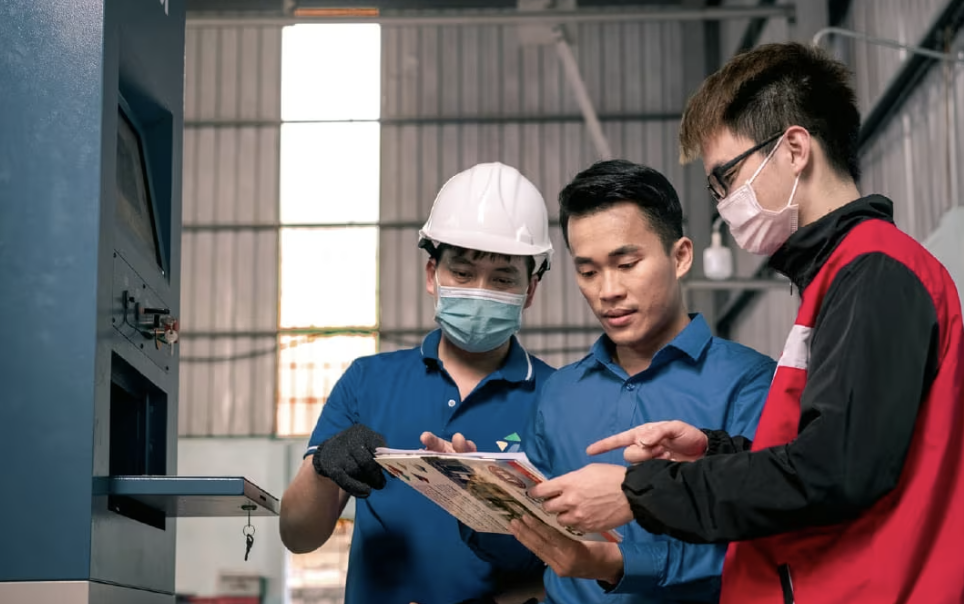
Remote inspection should not simply mean asking a supplier to “send some photos”.
A professional process needs structure.
Prepare a detailed inspection checklist
Before inspection begins, buyers should define what needs to be checked.
A checklist may include:
- product specifications;
- acceptable defects;
- quantity requirements;
- packaging standards;
- testing requirements;
- photo requirements.
Clear standards prevent different interpretations.
Use live video whenever possible
Photos are useful, but live video provides more confidence[^3].
During live video inspection, buyers can request:
- close-up views;
- product demonstrations;
- random carton selection;
- label checks;
- production area views.
This reduces the possibility of incomplete information.[^4]
Request multiple types of evidence
A reliable remote inspection should combine:
- photos;
- videos;
- measurements;
- documents;
- factory explanations.
Different evidence types support each other.
Use random checking methods
Suppliers should not only show perfect samples.
Buyers can request:
- random carton opening;
- random product selection;
- random quantity checking.
This provides a more realistic quality picture.
Compare with approved samples
Before mass production, buyers should keep:
- approved samples;
- technical drawings;
- specifications;
- colour references.
Remote inspection should compare production goods against these standards.
Work with experienced suppliers
Supplier reliability is a major factor.
Experienced suppliers usually understand:
- inspection requirements;
- export standards;
- documentation;
- buyer expectations.
Long-term cooperation makes remote quality control easier.
Combine remote inspection with other controls
Remote inspection works best as part of a wider quality system.
A strong process may include:
- sample approval;
- production monitoring;
- remote inspection;
- loading supervision;
- shipment record keeping.
| Improvement method | Result |
|---|---|
| Detailed checklist | Clear inspection standard |
| Live video | Better transparency |
| Random checking | More realistic results |
| Sample comparison | Prevents quality differences |
| Supplier evaluation | Reduces long-term risk |
| Combined inspection | Stronger quality control |
Remote inspection becomes reliable when buyers create a professional inspection system instead of a simple photo request.
What Are the Limitations of Remote Inspection Before Shipment?
Although remote inspection provides many advantages, it cannot completely replace every type of physical inspection.
The limitations of remote product inspection include reduced physical contact, limited testing ability, dependence on supplier cooperation, and difficulty identifying hidden quality problems that may not appear visually.

Understanding these limitations helps buyers choose the right inspection method.
Remote inspection is a useful tool, but it should be used correctly.
Limited physical examination
Some quality issues require direct handling.
Examples:
- material hardness;
- product weight;
- surface texture;
- strength testing;
- smell detection;
- hidden structural problems.
A camera cannot fully replace physical inspection.
Difficult-to-check internal problems
Some defects are not visible from outside.[^5]
Examples:
- weak internal connections;
- poor material composition;
- hidden assembly problems;
- inconsistent internal components.
Additional testing may be needed for higher-risk products.[^6]
Dependence on supplier cooperation
Remote inspection requires:
- good communication;
- honest cooperation;
- proper preparation;
- reliable factory staff.
If a supplier provides incomplete information, inspection quality may decrease.
Internet and communication issues
Technical problems can also affect remote inspection.
Possible issues include:
- poor video quality;
- unstable internet;
- unclear images;
- language communication problems.
Good planning helps reduce these problems.
Not suitable for every shipment
Remote inspection may not be enough for:
- first cooperation with unknown suppliers;
- high-value products;
- strict regulatory products;
- complex machinery;
- products requiring laboratory testing.
In these cases, third-party inspection may be better.
Best approach: combine different methods
Many experienced buyers use a mixed approach.
Example:
New supplier
- physical third-party inspection.
Trusted supplier
- remote inspection plus shipment records.
Regular products
- simplified remote quality checks.
| Situation | Recommended approach |
|---|---|
| New supplier | Full inspection |
| High-value order | Third-party inspection |
| Repeat supplier | Remote inspection |
| Simple products | Remote checking |
| Complex products | Professional testing |
Remote inspection works best when buyers understand both its advantages and its limitations.
Conclusion
Remote product inspection in China can be a reliable solution for overseas buyers when supported by clear standards, digital tools, and supplier cooperation. It improves visibility while reducing sourcing costs and risks.
[^1]: "Viewpoint-Controllable Telepresence: A Robotic-Arm-Based Mixed … – PMC", https://pmc.ncbi.nlm.nih.gov/articles/PMC10145150/. Research on remote inspection and telepresence methods describes live audio-video communication as a means for geographically separated parties to observe conditions and exchange information in real time. Evidence role: mechanism; source type: paper. Supports: Remote inspection enables immediate communication between suppliers and buyers.. Scope note: This would support the communication mechanism generally, not prove that every supplier-buyer inspection process is immediate or effective.
[^2]: "Packing List", https://www.trade.gov/packing-list. International trade and logistics references define packing lists as shipment documents that itemize package contents, quantities, weights, and marks, supporting their use as documentary evidence for quantity checks; however, a packing list remains a supplier- or shipper-generated record and may require corroboration by photos, video, or physical inspection. Evidence role: definition; source type: government. Supports: Packing lists are useful evidence for verifying product quantity during remote inspection.. Scope note: The source can support what packing lists normally contain, but not that any individual packing list is accurate.
[^3]: "Synchronous video-based communication and online learning", https://pmc.ncbi.nlm.nih.gov/articles/PMC9607789/. Research on media richness and synchronous video communication supports that live video can convey more cues and allow immediate clarification than static images, which can increase user confidence in remote assessment contexts. Evidence role: mechanism; source type: paper. Supports: Live video provides more confidence than photos during inspection.. Scope note: This would provide contextual support for the communication mechanism, not direct proof that every live product inspection is more reliable than photo review.
[^4]: "[2409.06272] Information Asymmetry Index: The View of Market Analysts", https://arxiv.org/abs/2409.06272. Studies of remote visual inspection and video-mediated auditing indicate that real-time video can support interactive questioning, selective viewing, and verification of visual details, which may reduce information gaps compared with relying only on preselected still images. Evidence role: general_support; source type: paper. Supports: Live video inspection reduces the possibility of incomplete information.. Scope note: The evidence is likely to support reduced information asymmetry or improved information completeness in similar inspection settings, rather than quantify the exact reduction for buyer-led carton or label checks.
[^5]: "What is nondestructive evaluation? – Ohio State Online", https://online.osu.edu/content-hub/blogs/what-is-nondestructive-evaluation/. Non-destructive testing literature distinguishes surface inspection from volumetric or internal inspection methods, noting that some flaws may be located within a material or assembly rather than being externally observable. Evidence role: general_support; source type: education. Supports: Some product defects are internal and cannot be detected by outside visual inspection alone.. Scope note: This supports the general principle that external visual inspection can miss internal defects; it does not verify the specific defect rate for any particular product category.
[^6]: "Risk Assessment Components", https://www.cpsc.gov/s3fs-public/pdfs/blk_pdf_RiskAssessmentConsumerProductSystemSafety.pdf. Risk-based quality and conformity-assessment frameworks commonly require more intensive verification where product failure could create greater safety, regulatory, or performance consequences. Evidence role: expert_consensus; source type: institution. Supports: Higher-risk products may require additional testing beyond basic inspection.. Scope note: This provides contextual support for risk-based additional testing, but the exact testing requirements depend on the product type, jurisdiction, and applicable standard.