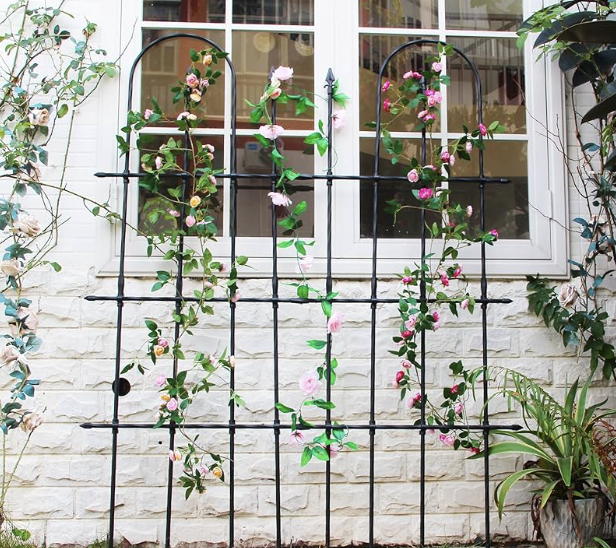
Garden centres across Europe usually stock trellises in practical sizes that fit common gardens, balconies, patios, and climbing plants. Size selection is not only about plant support—it also depends on retail space, packaging, transportation, and customer expectations.
The most common trellis sizes in European garden centres are typically compact-to-medium formats, such as 30–60 cm wide panels, 120–180 cm high wall trellises, and expandable folding trellises that adapt to different garden layouts.
For suppliers, understanding European size preferences helps create products that match real market demand.
Which Trellis Sizes Are Most Common in European Garden Centres?
European garden centres usually prefer trellis sizes that balance practicality, display space, and consumer demand.
The most popular trellis sizes in Europe are medium-sized panels suitable for climbing plants, privacy decoration, and small garden projects, with common heights ranging from around 100 cm to 200 cm depending on the application.
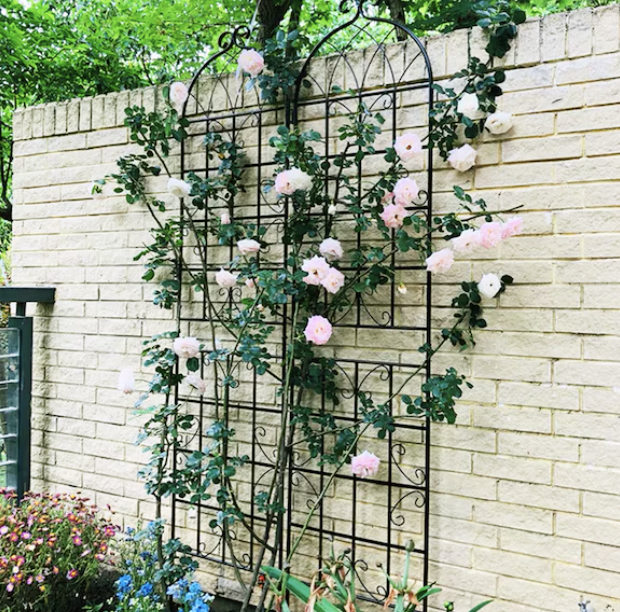
Unlike large commercial landscaping projects, garden centre customers usually buy trellises for home gardens.
They are looking for products that are:
- easy to carry;
- simple to install;
- suitable for standard gardens;
- compatible with common climbing plants;
- affordable for home improvement projects.
Common retail trellis dimensions
Popular retail sizes include:
| Trellis type | Common size range | Typical use |
|---|---|---|
| Small balcony trellis | 30–50 cm wide × 90–120 cm high | Pots and balconies |
| Medium garden trellis | 40–60 cm wide × 150–180 cm high | Climbing plants |
| Large decorative panel | 60–100 cm wide × 180–200 cm high | Privacy and garden walls |
| Expandable trellis | 30–100 cm wide × 100–200 cm high | Flexible installation |
These sizes work well because they fit most residential gardens.
Why medium sizes dominate retail sales
Very small trellises are limited because they only support young plants or small decorative applications[^1].
Very large trellises create challenges:
- higher shipping costs[^2];
- larger storage requirements;
- more complicated installation;
- fewer suitable customers.
Medium sizes offer the best balance between:
- customer demand;
- product price;
- warehouse efficiency;
- retail shelf space.
Balcony and urban gardening influence
Urban gardening has increased demand for smaller trellis formats.
Popular products include:
- mini wooden trellises;
- pot-mounted trellis systems;
- folding balcony screens;
- narrow wall panels.
These products are especially attractive for consumers with:
- apartments;
- terraces;
- small courtyards;
- limited planting space.
Garden centres prefer easy-selling sizes
Retailers usually avoid products that require too much customer explanation.
The best-selling sizes are often those where customers immediately understand:
- where to install them;
- what plants to grow;
- how much space they need.
A successful retail trellis size is usually easy for customers to imagine in their own gardens.
How Does Trellis Size Vary Between Countries and Garden Types?
European countries have different garden styles, climates, and housing structures, which influence trellis size preferences.
Trellis sizes vary across Europe because UK gardens often favour traditional climbing plant supports, Mediterranean gardens need sun-resistant decorative structures, and urban European markets prefer compact balcony-friendly designs.
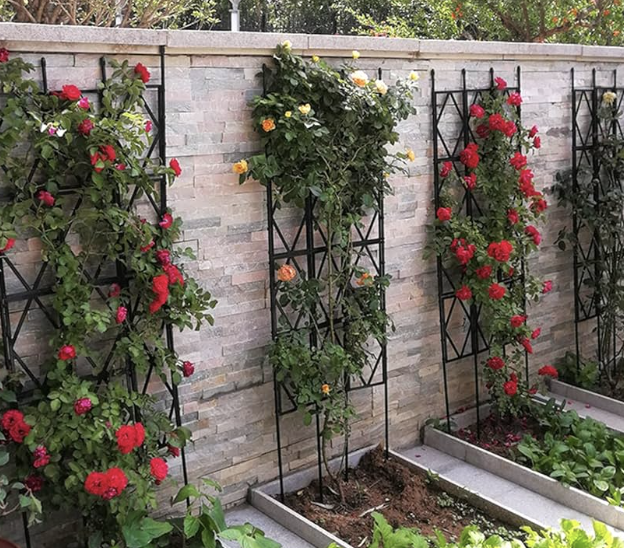
A supplier targeting Europe should not assume one size fits every market.
Different regions have different expectations.
United Kingdom: traditional gardens and climbing plants
The UK has a strong gardening culture, especially for:
- roses;
- clematis;
- ivy;
- flowering vines.
Popular sizes include:
- 45 × 180 cm;
- 60 × 180 cm;
- 90 × 180 cm panels.
Gardeners often use trellises against:
- fences;
- brick walls;
- sheds;
- garden boundaries.
Germany and Northern Europe: practical and durable designs
Northern European buyers often focus on:
- durability;
- functionality;
- weather resistance;
- clean design.
Popular sizes are usually:
- medium wall trellises;
- sturdy metal panels;
- expandable systems.
Products must handle:
- rain;
- frost;
- seasonal temperature changes.
Southern Europe: decorative and outdoor living focus
Countries with warmer climates often use trellises for:
- shade;
- outdoor decoration;
- Mediterranean climbing plants;
- patio design.
Larger decorative trellises may be more popular.
Common applications include:
- pergola areas;
- terraces;
- outdoor seating spaces.
Urban markets across Europe
Cities create demand for compact sizes.
Popular products include:
- 30–40 cm wide trellises;
- balcony panels;
- planter combinations;
- lightweight plastic trellises.
| Market type | Preferred size | Main purpose |
|---|---|---|
| UK suburban gardens | Medium-large | Plant support |
| Northern Europe | Medium | Weather-resistant gardening |
| Mediterranean areas | Medium-large | Decoration and shade |
| Urban apartments | Small-medium | Space-saving gardening |
Understanding local garden habits helps suppliers choose the right product size for each European market.
What Materials and Folding Sizes Are Preferred by Retailers?
Size alone does not determine retail success. Garden centres also consider material, packaging efficiency, and storage convenience.
European retailers often prefer trellises made from willow, wood, plastic, or metal in folding or expandable formats because these designs reduce shipping volume and improve shelf flexibility.
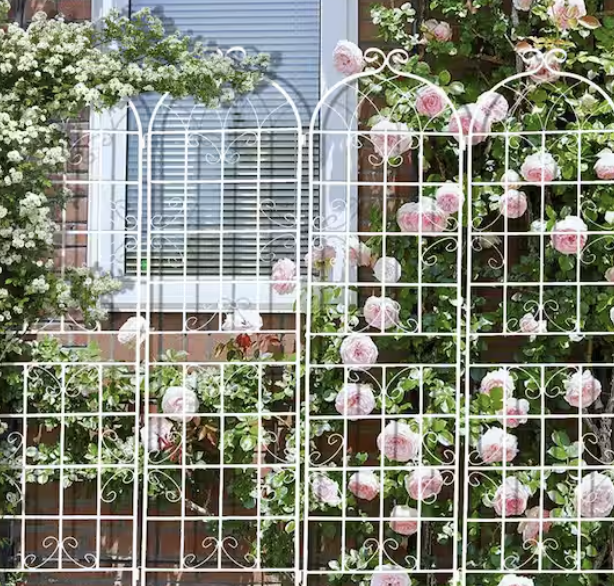
For importers and retailers, packaging efficiency is extremely important.
A product that sells well but takes too much warehouse space can become difficult to manage.
Folding trellises are highly attractive
Expandable and folding trellises offer several advantages:
- smaller packaging size;
- easier transportation;
- adjustable dimensions;
- better retail display flexibility.
Common folding sizes include:
- 30 × 100 cm expandable to 60 × 200 cm;
- 45 × 120 cm expandable formats;
- adjustable wooden lattice panels.
These products are popular because customers can adapt them to different spaces.
Willow trellises: natural and flexible
Willow trellises are popular in European garden markets[^3] because they provide:
- rustic appearance;
- cottage garden style;
- eco-friendly image;
- lightweight handling.
- 30–50 cm width;
- 100–180 cm height.
They are often sold as decorative supports.
Plastic trellises: lightweight retail products
Plastic trellises are attractive because they offer:
- low weight;
- easy installation;
- weather resistance;
- affordable pricing.
Common sizes include:
- 40 × 120 cm;
- 50 × 150 cm;
- 60 × 180 cm.
Metal trellises: premium positioning
Metal trellises are usually positioned as longer-life products.
They are often larger and used for:
- climbing roses;
- privacy planting;
- decorative garden structures.
Retail packaging considerations
Suppliers should consider:
- carton dimensions;
- container loading efficiency;
- shelf display size;
- customer carrying ability.
| Material | Common size style | Retail advantage |
|---|---|---|
| Willow | Folding, medium size | Natural appearance |
| Wood | Medium-large panels | Traditional gardens |
| Plastic | Compact formats | Lightweight |
| Metal | Larger panels | Premium durability |
The best retail trellis is not only attractive—it is also efficient to pack, ship, and display.
How Can Suppliers Choose the Right Trellis Size for European Buyers?
Selecting the right trellis size requires understanding customer needs, retail channels, and logistics requirements.
Suppliers should choose trellis sizes based on target market, garden type, material, packaging efficiency, and consumer installation habits rather than simply producing the largest possible designs.
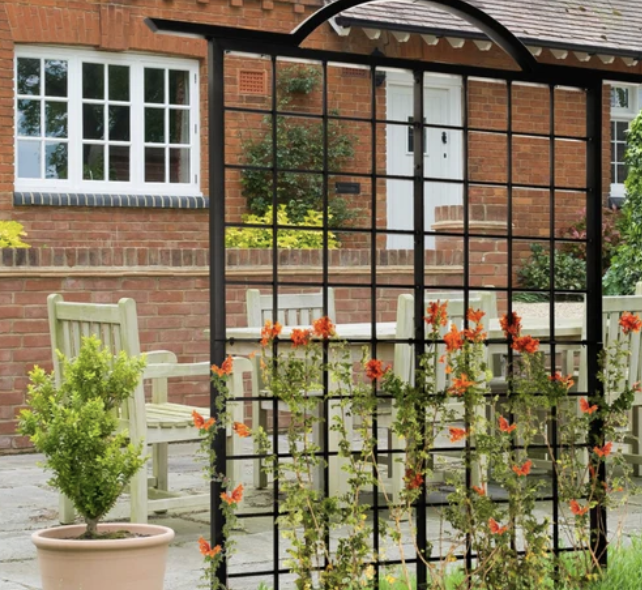
For suppliers exporting to Europe, product planning is just as important as manufacturing.
Build a balanced size range
Instead of offering only one size, suppliers should create a product range.
A practical collection may include:
Small range
- balcony trellises;
- planter supports;
- decorative panels.
Medium range
- standard garden trellises;
- climbing plant supports;
- wall-mounted panels.
Large range
- privacy screens;
- garden partitions;
- decorative outdoor structures.
This allows retailers to serve different customer groups.
Consider shipping efficiency
Large trellises may look impressive but create challenges:
- higher freight cost;
- lower container efficiency;
- larger warehouse requirements.
Expandable designs often solve this problem.
Match size with plant requirements
Different plants require different support heights.
Examples:
| Plant type | Recommended trellis height |
|---|---|
| Small flowers | 100–120 cm |
| Herbs and vegetables | 100–150 cm |
| Clematis and jasmine | 150–200 cm |
| Roses and strong climbers | 180–220 cm |
Consider retailer target
Different buyers need different products.
Garden centres often prefer:[^5]
- attractive packaging;
- popular standard sizes;
- easy customer understanding.
- practical dimensions;
- easy installation;
- competitive pricing.
Premium retailers may prefer:
- larger decorative designs;
- unique materials;
- higher-end finishes.
Recommended supplier strategy
For European markets, suppliers should focus on:
- 2–3 core sizes;
- expandable options;
- mixed material collections;
- efficient packaging;
- climate-appropriate designs.
The winning approach is choosing sizes based on market demand, not factory convenience.
Conclusion
European garden centres usually prefer practical trellis sizes that balance design, function, and logistics. Suppliers who understand regional preferences, folding formats, and customer needs can create products with stronger market potential.
[^1]: "Staking and guying trees | UMN Extension", https://extension.umn.edu/planting-and-growing-guides/staking-and-guying-trees. University extension guidance on trellising describes plant supports as needing to match the mature size and weight of the crop, supporting the inference that very small trellises are generally suitable only for seedlings, young plants, or light ornamental use. Evidence role: general_support; source type: education. Supports: Very small trellises are limited because they only support young plants or small decorative applications.. Scope note: The source is likely to support the horticultural principle of matching trellis capacity to plant size, rather than directly evaluating commercial “very small trellis” products.
[^2]: "Parcel Size, Weight & Fee Standards – FAQ | USPS", https://faq.usps.com/s/article/Parcel-Size-Weight-Fee-Standards. Postal and parcel-shipping guidance on dimensional weight explains that larger packages can be charged based on volume as well as actual weight, supporting the claim that oversized trellises may incur higher shipping costs. Evidence role: mechanism; source type: government. Supports: Very large trellises create challenges, including higher shipping costs.. Scope note: This supports the shipping-cost mechanism for large items generally, not a trellis-specific cost study.
[^3]: "Trellis Market Research Report 2033", https://dataintelo.com/report/trellis-market. A market or horticultural trade source documenting the sale or common retail presence of willow trellises in European garden markets would support the claim that these products are widely marketed in that region. Evidence role: general_support; source type: institution. Supports: Willow trellises are popular in European garden markets.. Scope note: Such evidence would likely show market availability or retail prevalence rather than directly proving consumer popularity.
[^4]: "Expandable Garden Trellis Plant Support Willow Lattice …", https://www.amazon.com/Garden-Land-Expandable-Climbing-Lattices/dp/B07F7T55R4. Retail catalogues or horticultural product specifications listing willow trellis dimensions would support the stated size range as representative of commonly sold products. Evidence role: general_support; source type: other. Supports: Typical willow trellis sizes include 30–50 cm width and 100–180 cm height.. Scope note: Product listings can establish common commercial dimensions, but they do not prove that the range covers all willow trellises on the market.
[^5]: "Plant Selection Behavior and Promotion Use by Garden …", https://ask.ifas.ufl.edu/publication/FE1098. A retail-merchandising or consumer-behavior study showing that packaging attractiveness and ease of product evaluation affect garden-centre or plant-related purchases would support the rationale for these buyer preferences. Evidence role: general_support; source type: paper. Supports: Garden centres often prefer attractive packaging, popular standard sizes, and products that customers can easily understand.. Scope note: Such evidence would contextualize typical merchandising priorities rather than prove that all garden centres use the same purchasing criteria.
[^6]: "[PDF] Home Depot Strategic Audit – UNL Digital Commons", https://digitalcommons.unl.edu/cgi/viewcontent.cgi?article=1856&context=honorstheses. Research on home-improvement or DIY retail consumers indicating that price, practicality, and installation effort influence purchase decisions would support the stated priorities for DIY-store buyers. Evidence role: general_support; source type: paper. Supports: DIY stores may prefer practical dimensions, easy installation, and competitive pricing.. Scope note: The support would be market-level and may not reflect the procurement rules of every DIY retailer or product category.