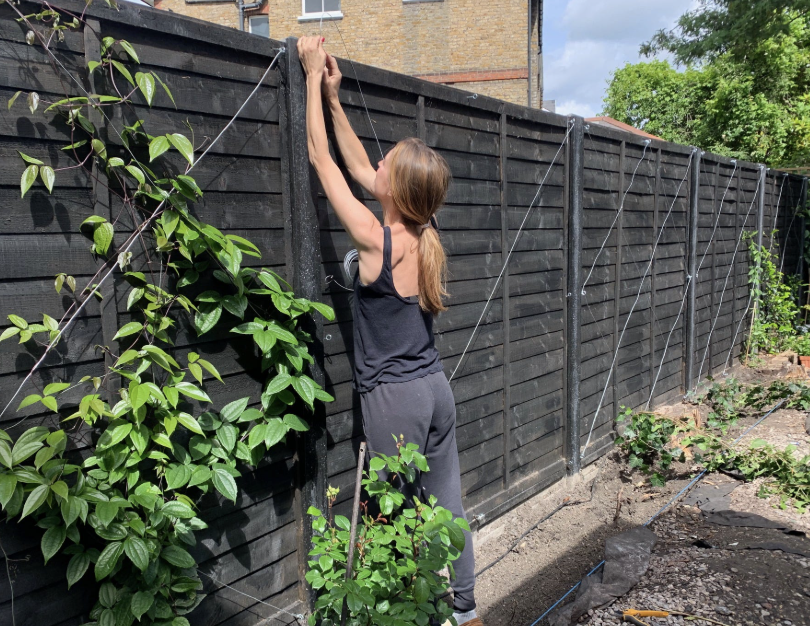
Installing a garden trellis on a wall is a great way to add greenery, privacy, and decoration, but not every homeowner wants to drill holes into their walls.
A no-drill garden trellis installation uses adhesive mounting systems, tension solutions, freestanding supports, or lightweight structures to create a vertical garden without permanent wall damage.
This approach is especially useful for renters, balconies, patios, and decorative outdoor spaces where flexibility matters.
Why Choose a No-Drill Garden Trellis Installation?
A no-drill installation offers a simple way to create a green wall without using permanent fixings.
No-drill garden trellis installation is popular because it protects walls, avoids complex tools, allows easy removal, and provides a flexible solution for temporary or rental outdoor spaces.
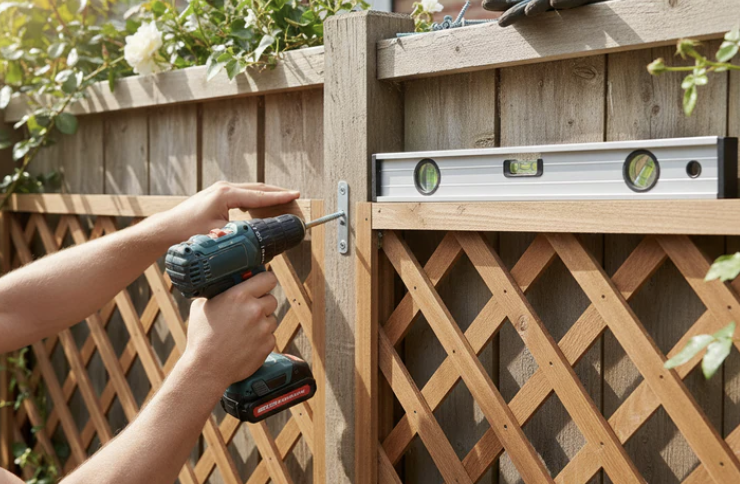
Traditional trellis installation often requires:
- drilling holes;
- wall anchors;
- screws;
- permanent brackets;
- professional tools.
While these methods are strong, they are not always suitable for every situation.
Ideal for rental properties
Many renters want to improve balconies or gardens but cannot make permanent changes[^1].
A no-drill trellis allows them to:
- add climbing plants;
- create privacy[^2];
- decorate outdoor spaces;
- remove the structure when moving.
This makes it a popular solution for apartment gardens and temporary homes.
Protecting walls from damage
Drilling can create:
- visible holes;
- cracks in weak surfaces;
- water entry points;
- difficult repairs.
No-drill systems reduce these risks, especially on:
- painted walls;
- tiled surfaces;
- finished balconies;
- decorative outdoor walls.
Easier installation process
A no-drill trellis can usually be installed with fewer tools.
Common requirements include:
- cleaning supplies;
- adhesive strips;
- outdoor mounting glue;
- measuring tools;
- level checking tools.
This makes installation faster and more accessible for everyday gardeners.
Flexible seasonal decoration
No-drill systems also work well for seasonal gardens.
They allow users to change:
- plant arrangements;
- decorative styles;
- locations;
- climbing plant types.
For example, a homeowner may use a lightweight trellis for summer flowers and remove it during winter.
Suitable for lightweight applications
No-drill methods work best when the trellis supports:
- small climbing plants;
- artificial greenery;
- decorative vines;
- lightweight garden ornaments.
Heavy plants with thick stems may require stronger structural support.
| Situation | Why no-drill installation helps |
|---|---|
| Rental homes | Easy removal |
| Balcony gardens | Avoids permanent damage |
| Decorative walls | Protects surfaces |
| Seasonal gardens | Flexible placement |
| Lightweight plants | Simple installation |
A no-drill trellis is a practical choice when flexibility matters as much as appearance.
Which Adhesive Mounting Methods Work Best for Different Wall Types?
Different wall materials require different installation methods. Choosing the wrong adhesive can lead to instability or damage.
The best adhesive mounting method depends on wall surface type, weight load, weather exposure, and trellis material. Outdoor-rated adhesives, heavy-duty mounting tapes, and specialised brackets provide better performance than standard indoor solutions.
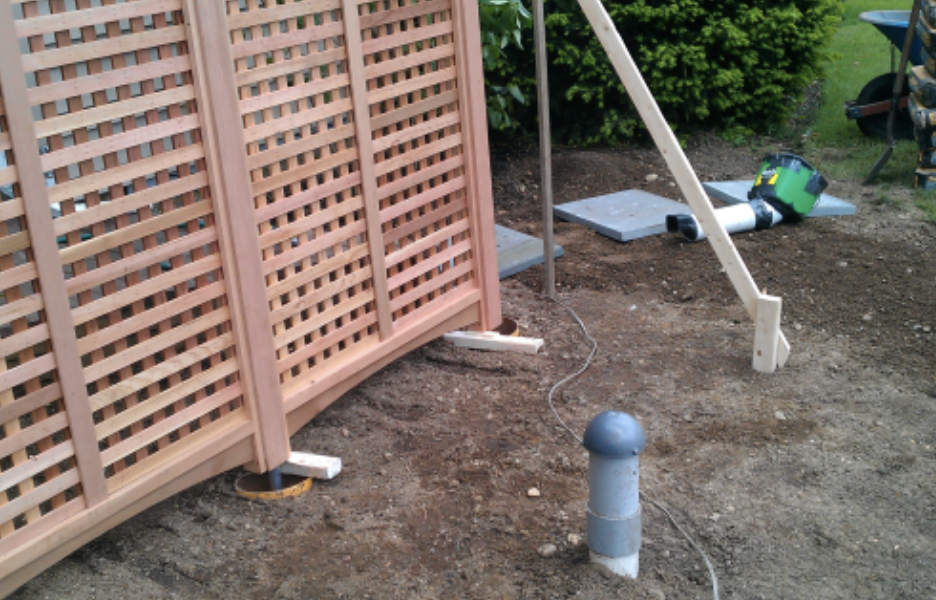
Not all walls provide the same level of adhesion.
Before installation, always check:
- surface condition;
- wall texture;
- moisture exposure;
- temperature changes;
- expected plant weight.
Smooth painted walls
Smooth painted walls are among the easiest surfaces for adhesive installation.
Suitable methods include:
- outdoor mounting strips;
- strong adhesive hooks;
- weather-resistant mounting tape.
However, the paint surface must be:
- clean;
- dry;
- free from dust;
- properly cured.
Fresh paint may not hold adhesives well.
Tile and ceramic surfaces
Tiles provide a strong and smooth bonding surface.[^3]
Advantages include:
- low porosity[^4];
- easy cleaning;
- stable adhesion.
Common options:
- waterproof adhesive pads;
- outdoor silicone adhesive;
- strong mounting hooks.
Tile surfaces are often found on balconies and patios.
Brick and textured walls
Rough surfaces are more challenging.
Brick or textured walls may have:
- uneven contact areas;
- dust particles;
- reduced adhesive bonding area.
For these surfaces:
- use specialised construction adhesive;
- increase contact points;
- consider supporting the trellis from the ground.
Adhesive-only installation may not be suitable for heavy structures.
Glass and metal surfaces
Glass and metal can work well with suitable adhesives.
Recommended methods:
- high-strength outdoor tape;
- silicone-based adhesive;
- suction-based systems (for temporary use).
These surfaces are often used in modern balconies and greenhouses.
Weight consideration
The adhesive method must match the load.
Consider:
- trellis weight;
- plant weight;
- wind pressure;
- rainwater weight;
- future plant growth.
| Wall type | Suitable method | Difficulty |
|---|---|---|
| Smooth painted wall | Outdoor adhesive strips | Easy |
| Tile | Silicone adhesive/tape | Easy–medium |
| Brick | Construction adhesive | Medium–hard |
| Glass | Strong tape/suction systems | Medium |
| Rough surfaces | Additional support recommended | Hard |
The strongest installation combines the right adhesive with realistic weight planning.
How Can You Keep a Wall-Mounted Trellis Stable and Safe?
A no-drill trellis still needs proper planning. Without screws, stability depends on correct positioning, weight control, and regular inspection.
A wall-mounted trellis stays stable when the mounting surface is prepared properly, the weight load is controlled, adhesives are suitable for outdoor conditions, and plant growth is managed regularly.
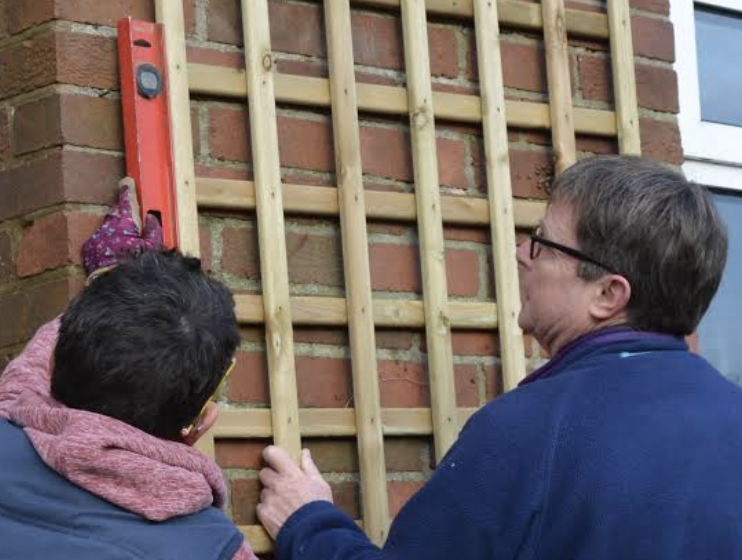
Many installation failures happen because users focus only on attaching the trellis and forget about future plant growth.
Prepare the wall surface correctly
Before mounting:
- clean the wall;
- remove dust and grease;
- allow the surface to dry;
- check for loose paint;
- confirm the mounting area is stable.
A dirty surface can reduce adhesive strength significantly.
Avoid excessive plant weight
Plants become heavier as they grow.
A small climbing plant may eventually create:
- additional weight;
- pulling force;
- wind resistance;
- moisture accumulation.
Suitable plants for lightweight no-drill trellises include:
- small flowering vines;
- decorative climbers;
- lightweight greenery.
Large woody climbers may require permanent support.
Reduce wind pressure
Outdoor walls are exposed to changing weather.
Wind can pull a trellis away from the wall.[^5]
To improve stability:
- avoid very tall unsupported structures;
- choose lightweight materials;
- place trellises in sheltered areas;
- use multiple mounting points[^6].
Check the installation regularly
Regular inspection helps identify problems early.
Check:
- adhesive edges;
- loose sections;
- wall surface damage;
- plant pressure;
- moisture buildup.
Small repairs are much easier than replacing a failed installation.
Combine wall support with ground support
For heavier applications, a hybrid approach works well.
Examples:
- planter-supported trellis;
- freestanding trellis placed against the wall;
- bottom support feet;
- decorative wall contact points.
This reduces pressure on the adhesive system.
| Stability factor | Best practice |
|---|---|
| Wall preparation | Clean and dry surface |
| Plant selection | Lightweight climbers |
| Wind control | Sheltered placement |
| Inspection | Regular checking |
| Heavy loads | Add ground support |
A stable trellis depends on matching installation strength with real outdoor conditions.
What Maintenance Tips Help Extend the Life of a No-Drill Trellis?
No-drill trellises require less installation work, but regular maintenance is still important for long-term performance.
Maintaining a no-drill trellis includes checking adhesive strength, cleaning surfaces, controlling plant growth, protecting materials from weather damage, and repairing small issues before they become major problems.
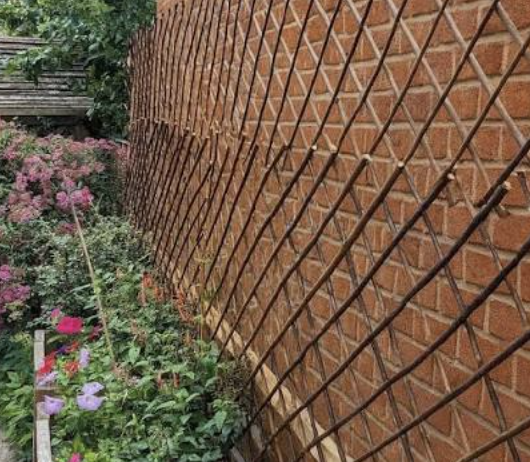
Outdoor conditions constantly affect both the trellis and its mounting system.
Clean the trellis regularly
Dust, leaves, and moisture can collect around:
- joints;
- plant connections;
- wall contact points;
- adhesive areas.
Cleaning helps prevent:
- mould growth[^7];
- surface damage[^8];
- hidden moisture problems.
Monitor adhesive performance
Adhesive systems may weaken over time due to:
- heat;
- rain;
- UV exposure;
- temperature changes.
Check:
- peeling edges;
- reduced bonding;
- movement after storms.
Replace damaged adhesive before failure occurs.
Control plant growth
Plants should be maintained regularly.
Important tasks include:
- trimming excessive growth;
- removing dead branches;
- preventing overcrowding;
- improving airflow.
Too much plant weight is one of the biggest risks for no-drill systems.
Protect the trellis material
Maintenance depends on the material.
For example:
Wood trellis
- apply protective coatings;
- prevent moisture buildup.
Metal trellis
- check for scratches;
- repair coating damage.
Plastic trellis
- clean regularly;
- check for UV ageing.
Seasonal inspection
Before and after extreme weather:
- inspect mounting points;
- check structural condition;
- remove excessive plant weight;
- repair minor issues.
| Maintenance action | Benefit |
|---|---|
| Surface cleaning | Better adhesion |
| Plant trimming | Lower weight pressure |
| Adhesive checks | Prevent sudden failure |
| Material protection | Longer lifespan |
| Seasonal inspection | Early problem detection |
With proper care, a no-drill trellis can remain a beautiful and practical vertical garden feature for years.
Conclusion
A no-drill garden trellis is a flexible solution for creating vertical gardens without damaging walls. With the right mounting method, suitable plants, and regular maintenance, it can provide beauty, privacy, and greenery in many outdoor spaces.
[^1]: "[PDF] Missouri’s Landlord-Tenant Law", https://www.como.gov/archive/2021/03/landlord-tenantlaw-1.pdf. Tenant-rights guidance commonly distinguishes ordinary decoration or removable fixtures from alterations that require a landlord’s consent, supporting the claim that renters often face limits on permanent changes. Evidence role: general_support; source type: government. Supports: Many renters want to improve balconies or gardens but cannot make permanent changes.. Scope note: The exact rules vary by jurisdiction and by the terms of the individual lease.
[^2]: "Selecting Landscape Plants: Ornamental Vines – MU Extension", https://extension.missouri.edu/publications/g6840. University extension and horticultural guidance describe trellises and vine-covered structures as landscape elements that can function as screens, providing contextual support for the claim that a trellis can improve privacy in an outdoor space. Evidence role: mechanism; source type: education. Supports: A no-drill trellis allows renters to create privacy.. Scope note: Such sources generally support trellises as screening devices, but they may not specifically evaluate no-drill balcony trellises or renter installations.
[^3]: "Bond Strength to Lithium-Disilicate Ceramic after Different Surface …", https://pmc.ncbi.nlm.nih.gov/articles/PMC11740779/. Materials and adhesion literature describes ceramic or glazed tile as a hard, dense surface, while noting that adhesive bond strength depends on surface condition, cleanliness, and the specific adhesive system used. Evidence role: general_support; source type: paper. Supports: Tiles can provide a smooth, generally suitable surface for bonding.. Scope note: This supports the general suitability of tile as a bonding substrate but does not prove that every tile type or adhesive will produce a strong bond.
[^4]: "The low porosity and minimal water absorption of porcelain tile …", https://www.facebook.com/grespaniaceramica/posts/the-low-porosity-and-minimal-water-absorption-of-porcelain-tile-compared-to-natu/3139088152776450/. Standards-based descriptions of ceramic tile classify many tiles by low water absorption, which is commonly used as an indicator of low porosity in tile materials. Evidence role: definition; source type: institution. Supports: Tile surfaces, especially porcelain or certain ceramic tiles, may have low porosity.. Scope note: Porosity varies by tile category; the source would support low porosity for specified ceramic or porcelain tiles rather than all tiles universally.
[^5]: "Porches, Carports, and Deck Attachments | Building America …", https://basc.pnnl.gov/resource-guides/porches-carports-and-deck-attachments. Wind-load guidance for structures explains that wind pressure creates lateral and uplift forces on exposed surfaces, supporting the need to account for wind when attaching wall-mounted elements. Evidence role: mechanism; source type: government. Supports: Wind can exert forces that may detach a wall-mounted trellis if it is inadequately secured.. Scope note: Such sources typically address structural components or cladding rather than garden trellises specifically, so the support is contextual.
[^6]: "The Effects of Row Spacing and Bolt Spacing in 6-Bolt and 4 …", https://cmec.wsu.edu/documents/2016/04/the-effects-of-row-spacing-and-bolt-spacing-in-6-bolt-and-4-bolt-wood-to-steel-connections.pdf. Engineering guidance on fastened connections indicates that loads can be distributed among multiple fasteners or anchors, supporting the use of several mounting points to improve attachment stability. Evidence role: mechanism; source type: education. Supports: Using multiple mounting points can improve the stability of a wall-mounted trellis by distributing load.. Scope note: The evidence would support the general fastening principle; actual capacity depends on wall material, anchor type, spacing, and installation quality.
[^7]: "A Brief Guide to Mold, Moisture and Your Home | US EPA", https://www.epa.gov/mold/brief-guide-mold-moisture-and-your-home. EPA guidance states that mould control depends on controlling moisture and cleaning or drying wet materials, supporting the claim that removing damp debris can reduce mould risk. Evidence role: mechanism; source type: government. Supports: Cleaning helps prevent mould growth.. Scope note: The source gives general indoor moisture and mould-control guidance rather than evidence specific to the listed joints, plant connections, or adhesive areas.
[^8]: "Moisture Control Guidance for Building Design, …", https://www.epa.gov/sites/default/files/2014-08/documents/moisture-control.pdf. EPA moisture-control guidance describes accumulated moisture as a cause of deterioration in building materials and finishes, providing general support for the claim that cleaning moisture-prone contact areas may reduce surface damage. Evidence role: general_support; source type: government. Supports: Cleaning helps prevent surface damage.. Scope note: The support is contextual and does not directly test cleaning practices for this specific installation type.