Large Flower Pots vs Small Flower Pots: Which Sizes Should Garden Retailers Stock in 2027?
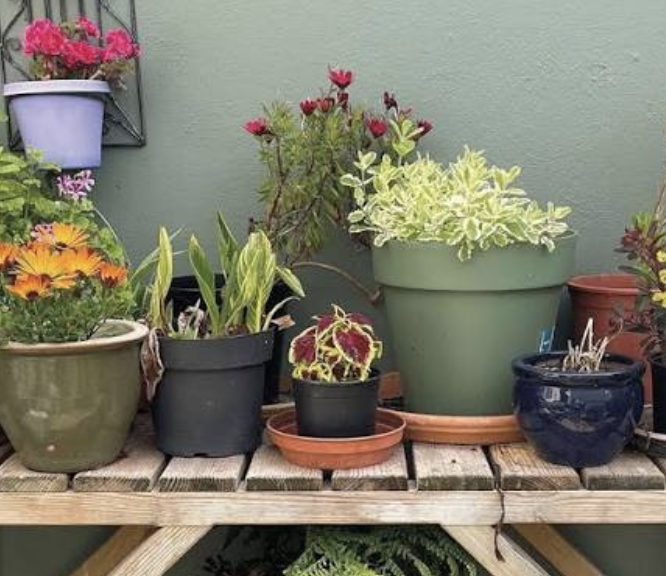
Flower pots are a core garden retail category, but size strategy is becoming more important. In 2027, retailers need both small and large pots for different customer needs.
Garden retailers should stock both small and large flower pots in 2027. Small pots remain important for high-volume sales, indoor plants, herbs, and impulse buying, while large pots are growing because they support outdoor living, privacy, heat resilience, and premium garden design.
The best range is not about choosing one size. It is about balancing size, style, margin, and shipping efficiency.
Why Should Small Flower Pots Remain a Core Retail Category?
Small flower pots should remain a core category because they are affordable, easy to display, simple to ship, and suitable for many everyday planting needs.
Small flower pots remain important because they support herbs, seedlings, succulents, indoor plants, balcony gardening, gift products, and quick seasonal purchases with lower storage and freight pressure.
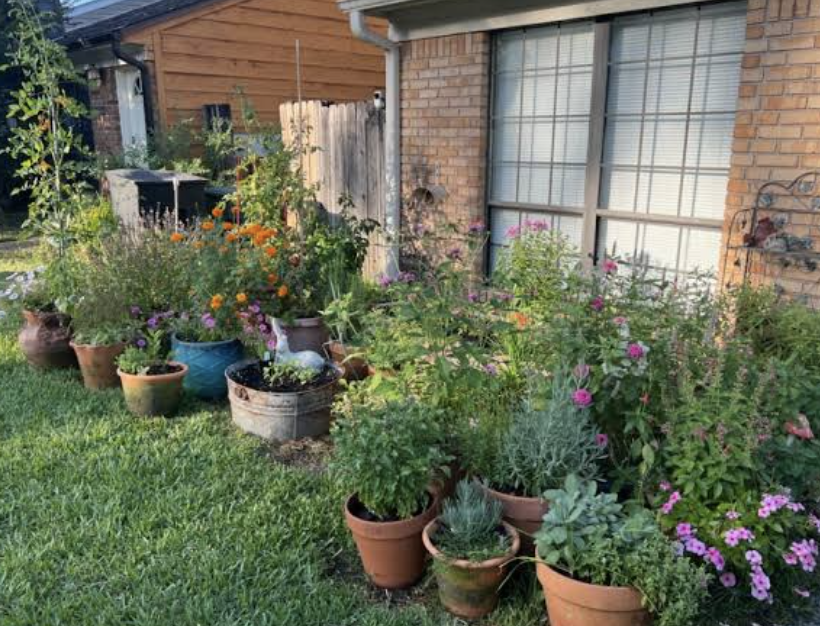
Small pots are often the most flexible products in a garden retail range.
They are easy for customers to buy without much planning.
A customer may add several small pots to the basket while shopping for seeds, soil, tools, or plants.
This makes small pots valuable for repeat sales and impulse purchases.
Small pots support indoor and balcony gardening
Many European consumers do not have large gardens.
They may live in:
- apartments;
- townhouses;
- rental homes;
- urban areas;
- small terrace houses.
For these customers, small flower pots are practical.
They can be used for:
- windowsills;
- shelves;
- balconies;
- kitchen herbs;
- small patios;
- indoor decoration.
RHS guidance notes that container gardening allows people to grow plants even without traditional garden space, which supports continued demand for small and medium pots in urban settings.
Small pots are easy to merchandise
Retailers can display small pots in:
- colour groups;
- material groups;
- seasonal themes;
- gift sections;
- herb-growing areas;
- indoor plant displays.
They are also easy to combine with:
- seed packets;
- potting mix;
- plant labels;
- mini tools;
- watering cans;
- artificial plants;
- decorative trays.
This makes small pots useful for cross-selling.
Small pots reduce logistics pressure
From a sourcing perspective, small pots are easier to handle.
They usually offer:
- better nesting;
- lower carton volume;
- easier warehouse storage;
- simpler shelf display;
- lower delivery risk.
This is important for importers and retailers trying to manage landed cost.
Small pots fit fast-changing trends
Small pots are ideal for testing new colours and finishes.1
Retailers can try:
- terracotta colours;
- soft green;
- matte black;
- recycled plastic;
- ceramic effects;
- textured surfaces;
- seasonal designs.
Because the order risk is lower2, retailers can refresh small pot ranges more often.
Small pots work well as gift and lifestyle products
Small decorative pots are often bought as gifts.
They are suitable for:
- housewarming;
- Mother’s Day;
- teacher gifts;
- office decoration;
- seasonal plant gifts.
| Small pot advantage | Retail value |
|---|---|
| Low price point | Easy impulse purchase |
| Compact size | Efficient storage and shipping |
| Wide use | Indoor, balcony, herbs, seedlings |
| Easy display | Strong merchandising flexibility |
| Trend testing | Lower inventory risk |
Small flower pots should remain the high-volume foundation of a balanced planter range.
Why Are Large Flower Pots Becoming More Important for 2027?
Large flower pots are becoming more important because customers are using planters to create outdoor living spaces, privacy, structure, and climate-resilient container gardens.
Large flower pots are becoming more important for 2027 because they hold more soil, support larger plants, improve moisture retention, create stronger visual impact, and help customers design patios, balconies, entrances, and garden zones.
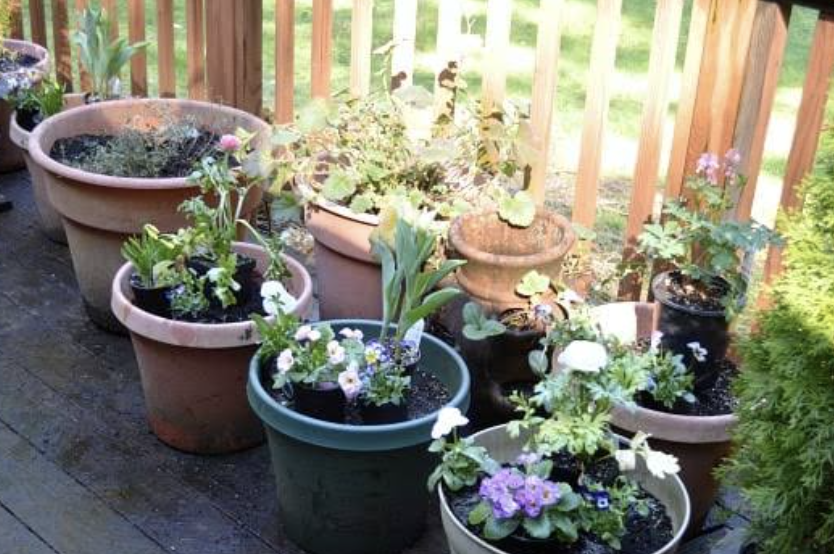
Large pots are no longer only for luxury gardens.
They are becoming practical products for everyday outdoor living.
Customers use large pots to solve several problems at once:
- make a patio feel finished;
- create privacy;
- grow larger plants;
- reduce visual clutter;
- improve balcony design;
- support heat-tolerant planting;
- decorate entrances and terraces.
Large pots create instant structure
A large planter can change the feeling of a space quickly.
It can frame:
- doorways;
- garden paths;
- seating areas;
- pool areas;
- restaurant terraces;
- balcony corners.
Unlike permanent landscaping, planters can be moved or rearranged.
This flexibility is attractive for modern homeowners and rental properties.
Large pots support privacy planting
Large flower pots can hold taller plants3 such as:
- bamboo;
- ornamental grasses;
- olive trees;
- bay trees;
- shrubs;
- small trees.
These plants can create natural privacy without building a fence4.
This is especially useful for:
- balconies;
- patios;
- overlooked gardens;
- outdoor cafés;
- compact urban homes.
Large containers help in hot weather
Hotter and drier summers increase interest in larger containers.
Small pots dry out quickly, especially in direct sun.
Larger planters hold more soil, which can help reduce moisture loss and protect roots from rapid temperature changes.
RHS advice for heatwaves recommends shading pots and baskets exposed to direct sun and using drip trays to collect run-off water, showing how container care becomes more important during hot dry periods.
Large pots increase perceived value
Large planters can make a garden display look more premium.
They are suitable for:
- garden centres;
- DIY stores;
- home décor retailers;
- hotels;
- restaurants;
- landscaping projects.
A well-designed large planter often creates higher visual value than several small pots.
Large pots support premium ranges
Retailers can use large planters to build higher-margin categories.
Popular directions include:
- stone-effect planters;
- ribbed resin pots;
- self-watering large pots;
- recycled plastic planters;
- tall privacy planters;
- lightweight oversized pots.
| Large pot advantage | Retail value |
|---|---|
| More soil volume | Better moisture buffer |
| Bigger plants | Stronger garden impact |
| Privacy use | Useful for balconies and patios |
| Premium appearance | Higher perceived value |
| Outdoor living fit | Supports lifestyle displays |
Large flower pots are becoming key products for outdoor living and climate-resilient gardening.
Which Flower Pot Sizes and Styles Should Retailers Prioritise?
Retailers should prioritise a balanced flower pot range that covers everyday small pots, medium patio pots, large statement planters, balcony pots, and self-watering designs.
For 2027, retailers should prioritise small pots for indoor and herb planting, medium pots for patios, large planters for outdoor living, balcony planters for urban customers, and self-watering pots for hot and dry summers.
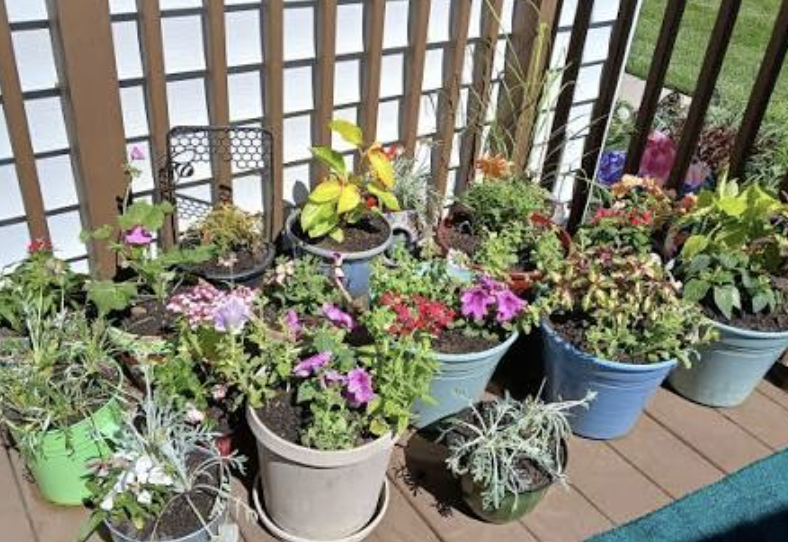
The right size range depends on the retailer’s market, customer base, and selling channel.
A garden centre may need more large outdoor pots.
An online seller may focus more on compact, nestable products.
A DIY supermarket may need a wide range with clear price levels.
Recommended small pot sizes
Small pots are useful for:
- herbs;
- succulents;
- seedlings;
- tabletop plants;
- small indoor plants.
Recommended size range:
| Pot size | Best use |
|---|---|
| 8–12 cm | Seedlings, mini plants, succulents |
| 13–17 cm | Herbs, small houseplants |
| 18–22 cm | Window plants, small balcony plants |
These sizes are easy to display and sell in multiples.
Recommended medium pot sizes
Medium pots are the core of many retail planter ranges.
They work for:
- patios;
- balconies;
- flowering plants;
- small shrubs;
- decorative outdoor displays.
Recommended size range:
| Pot size | Best use |
|---|---|
| 23–30 cm | Patio flowers and herbs |
| 31–40 cm | Larger flowers and compact shrubs |
| 40–45 cm | Small trees, grasses, statement plants |
Medium pots often offer the best balance between customer value and shipping cost.
Recommended large pot sizes
Large pots are suitable for premium outdoor use.
Recommended size range:
| Pot size | Best use |
|---|---|
| 45–50 cm | Shrubs, grasses, small trees |
| 50–60 cm | Entrance planters, large patio displays |
| 60 cm+ | Commercial spaces and statement landscaping |
For fruit bushes and trees in containers, RHS school gardening guidance suggests using as large a pot as possible, around 45–50 cm in diameter, which supports the value of larger sizes for long-term planting.
Styles retailers should prioritise
2027 garden trends suggest stronger demand for natural, durable, and practical styles5.
Recommended styles include:
- terracotta-look pots;
- stone-effect planters;
- ribbed modern pots;
- recycled plastic pots;
- self-watering planters6;
- woven-style planters;
- lightweight resin pots;
- matte neutral colours.
Match style with customer type
| Customer type | Recommended pot style |
|---|---|
| Urban balcony customer | Compact and railing planters |
| Traditional gardener | Terracotta-look pots |
| Modern patio customer | Ribbed or stone-effect planters |
| Climate-conscious buyer | Self-watering or recycled pots |
| Premium retail customer | Large lightweight planters |
| Gift buyer | Small decorative pots |
Retailers should build a planter range that covers different spaces, budgets, and planting habits.
How Can Retailers Balance Size, Margin, and Shipping Costs?
Flower pot sourcing is not only about design. Size, weight, nesting, packaging, and freight cost can strongly affect profit.
Retailers can balance size, margin, and shipping costs by choosing nestable designs, reviewing carton dimensions, comparing landed cost per unit, mixing sizes strategically, and avoiding bulky low-margin products with poor container loading efficiency.
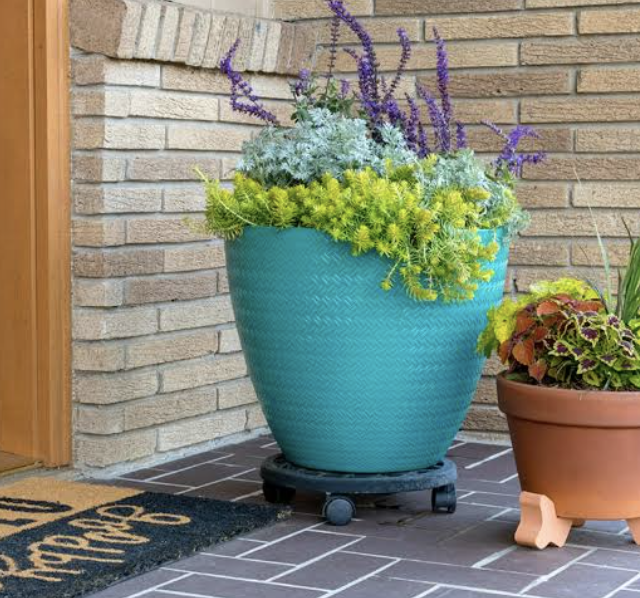
Flower pots can be profitable, but they can also create hidden costs.
This is especially true for large planters.
A large pot may have a good selling price, but if it wastes container space, the landed cost may become too high.
Compare landed cost, not only factory price
Retailers should calculate:
- factory price;
- carton size;
- freight cost;
- duty and customs charges;
- warehouse cost;
- display space;
- damage rate;
- final retail margin.
A cheaper pot may not be cheaper after shipping.
This is why landed cost is essential.
Choose nestable designs
Nesting is one of the most important features for flower pots.
Good nesting can:
- reduce carton volume;
- improve container loading;
- lower freight cost;
- simplify storage;
- allow mixed-size sets.
Retailers should ask suppliers for nesting photos and loading data before ordering.
Use size sets carefully
Size sets can increase average order value.7
Common sets include:
- small-medium-large;
- three-piece planter sets;
- matching balcony and patio pots;
- nested decorative pot sets.
However, sets should be planned carefully.
If one size sells faster than the others, retailers may create unbalanced stock.8
Balance small, medium, and large products
A practical 2027 range may include:
| Size category | Role in retail range |
|---|---|
| Small pots | High-volume sales and impulse buying |
| Medium pots | Core patio and balcony demand |
| Large pots | Premium display and outdoor living |
| Self-watering pots | Climate-resilient gardening |
| Balcony pots | Urban and small-space customers |
This gives customers choice without overcomplicating inventory.
Check packaging protection
Flower pots can be scratched, cracked, or deformed during shipping.
Retailers should check:
- carton strength;
- inner protection;
- surface protection;
- stack pressure;
- pallet or non-pallet loading;
- drop-test performance if needed.
For premium finishes, surface protection is very important.
Avoid slow-moving bulky items
Large pots should earn their space.
Retailers should reduce products that are:
- too bulky;
- poorly nested;
- fragile;
- hard to display;
- low-margin;
- slow-moving.
A large item that sells slowly can block space for better-performing products.
Work with suppliers who understand logistics
Good suppliers should provide:
- carton dimensions;
- container loading quantity;
- nesting details;
- material options;
- packaging photos;
- mixed container support;
- sample checking;
- quality inspection support.
For importers, this information is just as important as product photos.
A profitable flower pot range depends on design appeal, practical sizing, and shipping efficiency working together.
Conclusion
In 2027, retailers should not choose between large and small flower pots. Small pots drive volume, while large pots support outdoor living, premium design, and climate-resilient gardening.
-
"Navigating new product development: Uncovering factors and overcoming …", https://pmc.ncbi.nlm.nih.gov/articles/PMC10788447/. Research on new product development and market testing describes small-scale trials as a way to evaluate consumer response before wider rollout, supporting the use of small pot ranges for testing colours and finishes. Evidence role: general_support; source type: paper. Supports: Small pots are suitable for testing new colours and finishes.. Scope note: This supports the general retail-testing logic rather than providing evidence specific to plant pots. ↩
-
"[PDF] Merchandise assortment planning: Analysis through computer …", https://behost.lib.iastate.edu/DR/Rupe_ISU-1994-R877.pdf. Inventory and retail operations literature explains that smaller order quantities can reduce exposure to unsold stock and demand-forecasting risk, providing contextual support for the claim that smaller pot orders carry lower order risk. Evidence role: mechanism; source type: paper. Supports: Lower order quantities for small pots can reduce order risk for retailers.. Scope note: The source would support the inventory-risk mechanism generally, not necessarily quantify risk for small plant pots specifically. ↩
-
"Planting Guidelines for Container Trees and Shrubs", https://extension.arizona.edu/publication/planting-guidelines-container-trees-and-shrubs. Container-gardening guidance from an educational or horticultural extension source supports that sufficiently large containers can accommodate woody and tall ornamental plants when container volume, drainage, and root growth are matched to the species; this is contextual support rather than proof that every listed plant will thrive in any large pot. Evidence role: general_support; source type: education. Supports: Large flower pots can hold taller plants such as bamboo, ornamental grasses, olive trees, bay trees, shrubs, and small trees.. Scope note: Suitability depends on plant species, cultivar size, container volume, climate, drainage, and maintenance. ↩
-
"Plants for Mixed Privacy Screens", https://extension.umd.edu/resource/plants-mixed-privacy-screens. Landscape-design guidance from an educational or institutional source supports that container plantings, hedges, shrubs, bamboo, or ornamental grasses can be used as visual screens to increase privacy in outdoor spaces; this supports the design principle but does not measure the degree of privacy achieved in a specific site. Evidence role: general_support; source type: education. Supports: Taller plants in large flower pots can create natural privacy without building a fence.. Scope note: Effectiveness varies with plant height, density, placement, seasonality, and local growing conditions. ↩
-
"Sustainable gardening trends for 2026 | UMN Extension", https://extension.umn.edu/about/our-stories/news/yard-and-garden-news/sustainable-gardening-trends-2026. A horticultural or design-trend institution source can contextualize this statement by documenting recent consumer interest in resilient, low-maintenance, and nature-oriented garden materials; however, it should be treated as trend context rather than direct proof of 2027 demand. Evidence role: general_support; source type: institution. Supports: Garden trends are moving toward natural-looking, durable, and practical planter styles.. Scope note: Trend reports can indicate direction of interest, but they may not provide statistically representative forecasts for 2027 specifically. ↩
-
"Subirrigated Containers for the Mississippi Gardener", https://extension.msstate.edu/publications/subirrigated-containers-for-the-mississippi-gardener. Research on self-watering or sub-irrigated container systems describes how water reservoirs can supply moisture to the growing medium and reduce the need for frequent surface watering; this supports the practical rationale for including such planters, though performance varies by crop, container design, and climate. Evidence role: mechanism; source type: paper. Supports: Self-watering planters are a practical planter option because their reservoir-based design can reduce watering frequency and help regulate moisture availability.. Scope note: Evidence generally supports the watering mechanism and potential labor or water-management benefits, not necessarily their status as a 2027 design trend. ↩
-
"Utilizing Bundling Strategies to Increase Sales Revenue", https://sites.udel.edu/weeklycropupdate/?p=23262. Research on product bundling and quantity-based selling indicates that offering related items as a set can raise transaction value by encouraging multi-item purchases; this supports the general mechanism behind higher average order value for size sets. Evidence role: mechanism; source type: paper. Supports: Size sets can increase average order value.. Scope note: The evidence is likely to address bundling or multi-item purchasing broadly rather than planter-size sets specifically. ↩
-
"Inventory control strategy: based on demand forecast error", https://www.emerald.com/mscra/article/5/2/74/313764/Inventory-control-strategy-based-on-demand. Inventory-management literature describes demand variability across stock-keeping units as a cause of assortment imbalance, where faster-moving items stock out while slower-moving items remain; this provides contextual support for the risk of unbalanced stock in mixed-size sets. Evidence role: mechanism; source type: paper. Supports: If one size sells faster than the others, retailers may create unbalanced stock.. Scope note: The source may discuss SKU-level inventory imbalance generally, not specifically decorative pot or planter sets. ↩