
Artificial plants are becoming an important product category for home décor, garden decoration, hospitality projects, and retail businesses.
When sourcing artificial plants, buyers should evaluate realism, materials, supplier capability, packaging quality, inspection processes, and total landed cost instead of focusing only on the factory price.
Choosing the right supplier helps importers build a reliable product range with better customer satisfaction and long-term sales potential.
How Can Buyers Evaluate the Quality and Realism of Artificial Plants?
The biggest challenge when buying artificial plants is finding products that look natural while maintaining stable quality and competitive pricing.
Buyers should evaluate artificial plant quality by checking realistic appearance, leaf structure, colour accuracy, craftsmanship, density, and how closely the product matches real plants.

Customers usually judge artificial plants within seconds.
If a product looks obviously fake, it becomes difficult to sell at a premium price.
Quality evaluation should focus on both visual appearance and physical construction.
Check leaf and flower realism
The most important factor is how natural the plant looks.
Buyers should check:
- leaf shape;
- leaf texture;
- colour variation;
- branch arrangement;
- flower details;
- plant density.
Low-quality artificial plants often have:
- identical leaves;
- unnatural colours;
- simple shapes;
- poor arrangement.
High-quality products usually include more natural variation.
Compare with real plant references
A good sourcing method is comparing artificial plants with real examples.
Check:
- leaf size;
- colour differences;
- branch direction;
- natural growth patterns.
The goal is not making every detail perfect, but creating a realistic overall impression.
Evaluate craftsmanship
Manufacturing details strongly affect product value.1
Inspect:
- leaf attachment;
- stem connection;
- wire structure;
- pot stability;
- finishing quality.
Common quality problems include:2
- loose leaves;
- weak branches;
- uneven assembly;
- visible glue marks.
Consider product density
Density affects both appearance and cost.
Too few leaves may make a plant look cheap.
Too many leaves may increase:
- material cost;
- packaging volume;
- shipping cost.
The best design balances realism and commercial practicality.
Check consistency between samples and bulk production
A common sourcing mistake is approving a good sample but receiving different mass production.
Buyers should confirm:
- sample approval process;
- production standards;
- quality inspection method.
| Quality factor | Why it matters |
|---|---|
| Leaf design | Creates realism |
| Colour accuracy | Improves appearance |
| Craftsmanship | Reduces defects |
| Plant density | Affects value perception |
| Sample consistency | Ensures stable production |
Good evaluation helps buyers choose artificial plants that look natural and sell better.
Which Materials and Performance Features Matter Most?
Material selection determines the appearance, durability, price level, and target market of artificial plants.
The most important material and performance factors include plastic quality, fabric selection, UV resistance, weather durability, flexibility, colour stability, and suitability for indoor or outdoor use.

Different markets require different material solutions.
A decorative indoor plant and an outdoor garden plant should not use the same materials.
Common artificial plant materials
PE (Polyethylene)
PE is widely used for realistic artificial greenery.
Advantages:
- natural texture;
- good outdoor performance;
- strong durability;
- realistic appearance.
Common applications:
- artificial hedges;
- outdoor plants;
- garden greenery.
PVC
PVC is often used for cost-effective products.
Advantages:
- affordable;
- flexible;
- easy to shape.
Common applications:
- basic decorative plants;
- indoor greenery;
- seasonal products.
Fabric and silk materials
Fabric materials are popular for flowers and premium decorative plants.3
Advantages:
- soft appearance;
- detailed design;
- realistic colours4.
Common applications:
- artificial flowers;
- wedding decoration;
- indoor décor.
Outdoor performance features
For outdoor applications, buyers should consider:
- UV resistance;
- waterproof performance;
- temperature resistance;
- colour stability.
Without proper protection, outdoor plants may:
- fade;
- become brittle;
- lose shape.
Flexibility and structure
Artificial plants should have a practical structure.
Check:
- adjustable branches;
- strong internal wire;
- stable stems;
- secure connections.
This improves:
- installation;
- customer experience;
- product lifespan.
Balance material and price
The highest-quality material is not always necessary.
The correct choice depends on:
- target market;
- retail price;
- application;
- customer expectations.
For example:
| Market | Suitable focus |
|---|---|
| Budget retail | Cost-effective materials |
| Premium home décor | Realistic appearance |
| Outdoor garden | UV and weather resistance |
| Commercial projects | Durability and scale |
The right material choice helps buyers match product performance with market expectations.
How Should Buyers Compare Artificial Plant Suppliers?
Choosing the right supplier is often more important than choosing the right product.
Buyers should compare artificial plant suppliers based on production experience, product development ability, quality control systems, export experience, communication, and long-term cooperation potential.
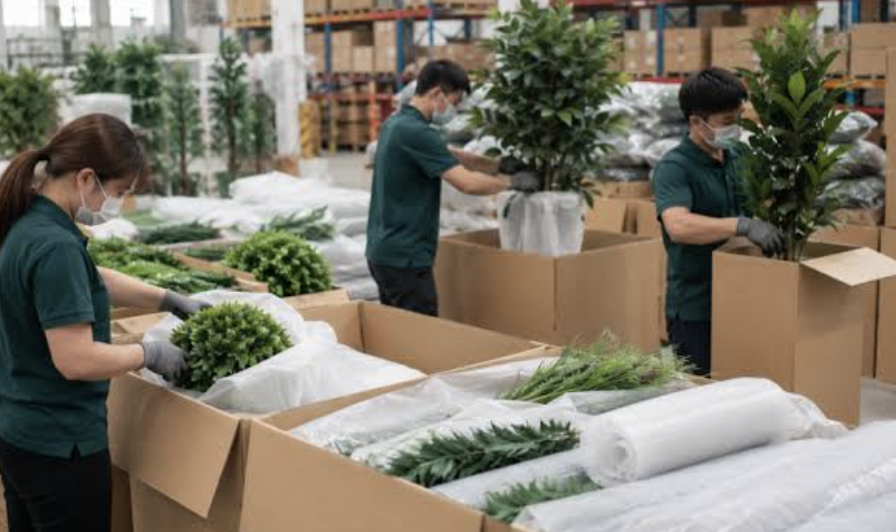
Many suppliers can provide similar-looking products.
However, their manufacturing ability may be very different.
Evaluate supplier experience
Experienced suppliers usually understand:
- material selection;
- production processes;
- packaging requirements;
- export standards;
- customer expectations.
Buyers should ask:
- How long has the supplier produced artificial plants?
- What markets do they export to?
- Can they support OEM projects?
Review product development ability
A strong supplier should help buyers create better products5.
Useful capabilities include:
- new design development;
- sample making;
- colour adjustment;
- material suggestions;
- packaging improvement.
This is especially important for retailers building private-label collections6.
Check production and quality control
Important questions include:
- Does the supplier inspect materials?
- Are products checked during production?
- Is final inspection available?
- Can they provide production photos?
A supplier should have a clear quality process.
Compare communication quality
Good communication reduces mistakes.
Look for suppliers who:
- answer questions clearly;
- provide detailed quotations;
- understand specifications;
- report problems early.
Poor communication often creates hidden costs.
Consider export experience
International experience helps suppliers understand:
- shipping requirements;
- documentation;
- packaging standards;
- destination market expectations.
| Supplier factor | Why it matters |
|---|---|
| Production experience | Better quality control |
| OEM ability | More product flexibility |
| Export experience | Smoother importing |
| Communication | Fewer mistakes |
| Quality system | Stable production |
The best supplier is not always the cheapest. It is the one that provides the best overall value for long-term business growth.
Why Packaging, Inspection, and Landed Cost Should Be Checked Before Ordering
Many buyers focus on product quality but forget that packaging, inspection, and logistics also affect business results.
Before ordering artificial plants, buyers should check packaging design, inspection procedures, shipping efficiency, and total landed cost to avoid unexpected expenses and supply problems.
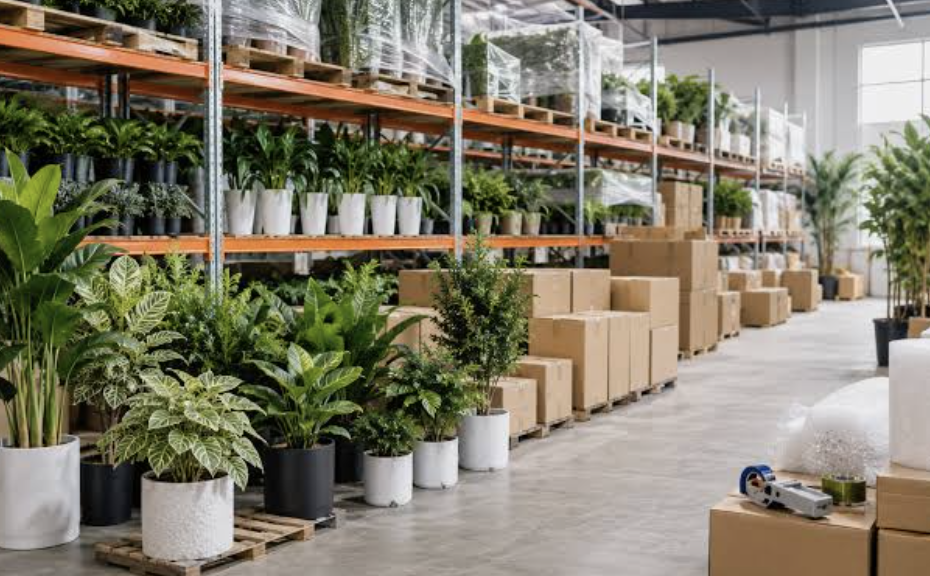
A product can be excellent at the factory but still become unprofitable if the import process is inefficient.
Packaging affects shipping cost
Artificial plants often have large volume compared with their weight.
Poor packaging may create:
- wasted container space;
- higher freight cost;
- warehouse difficulties.
Buyers should review:
- carton size;
- packing quantity;
- product protection;
- loading efficiency.
Confirm inspection requirements
Inspection helps verify:
- product appearance;
- quantity;
- packaging;
- specifications;
- bulk production quality.
For first orders, inspection is especially valuable.
Calculate total landed cost
The real import cost includes7:
- product price;
- packaging;
- shipping;
- customs duties;
- inspection;
- local delivery;
- possible risk costs.
A supplier with a lower unit price may not always provide the lowest final cost.8
Review customs and documentation requirements
Before shipment, confirm:
- product description;
- HS code;
- invoice details;
- packing list;
- required documents.
Incorrect information may create delays.
Plan orders strategically
Better planning can reduce cost.
Consider:
- ordering before peak season;
- combining products;
- improving container loading;
- forecasting demand.
Build a complete sourcing checklist
Before placing an order, buyers should confirm:
| Item | Check |
|---|---|
| Product sample | Approved |
| Material | Confirmed |
| Packaging | Reviewed |
| Inspection | Planned |
| Shipping | Calculated |
| Documents | Prepared |
A complete sourcing process helps buyers avoid unexpected costs after placing orders.
Conclusion
Successful artificial plant sourcing requires more than finding a low-price supplier. Buyers should evaluate realism, materials, suppliers, packaging, inspection, and landed cost to build a reliable and profitable product line.
-
"Does quality stimulate customer satisfaction where perceived value …", https://pmc.ncbi.nlm.nih.gov/articles/PMC7749382/. Research on perceived quality and customer value supports the proposition that observable product quality attributes can influence perceived value; this provides general support rather than evidence specific to artificial plants. Evidence role: general_support; source type: paper. Supports: Manufacturing details strongly affect product value.. Scope note: The source would support the relationship between product quality and perceived value in general, not necessarily quantify the effect for this product category. ↩
-
"Science-Based Risk Assessment for the Categorization of Visual … – PMC", https://pmc.ncbi.nlm.nih.gov/articles/PMC12473576/. Quality-control literature on visual inspection and defect classification supports identifying assembly defects such as looseness, uneven construction, and visible adhesive as inspection findings; the support is contextual unless the source addresses artificial plants directly. Evidence role: general_support; source type: paper. Supports: Common quality problems include loose leaves, weak branches, uneven assembly, and visible glue marks.. Scope note: A general inspection or defect-classification source may validate these as quality defects but may not list the exact same defects for artificial foliage products. ↩
-
"Artificial plants – Wikipedia", https://en.wikipedia.org/wiki/Artificial_plants. A historical or encyclopedic source on artificial flowers can support that textile-based materials, including silk and other fabrics, have long been used for artificial flowers and decorative botanical objects. Evidence role: historical_context; source type: encyclopedia. Supports: Fabric materials are popular for flowers and premium decorative plants.. Scope note: Such sources may establish common or historical use of fabric in artificial flowers, but may not directly quantify current market popularity or the term “premium.” ↩
-
"A recent (2009–2021) perspective on sustainable color and textile … – PMC", https://pmc.ncbi.nlm.nih.gov/articles/PMC9587285/. A textile-science or color-technology source can support that dyeing and printing processes allow fabrics to reproduce a wide range of stable colors and visual effects used in decorative applications. Evidence role: mechanism; source type: education. Supports: Fabric materials can provide realistic colours for artificial flowers and decorative plants.. Scope note: This would support the material capability behind realistic coloring, but not prove that every fabric artificial flower achieves botanical realism. ↩
-
"[PDF] Evaluation of Early Supplier Involvement in Product Development", https://docs.lib.purdue.edu/cgi/viewcontent.cgi?article=1029&context=techmasters. Research on supplier involvement in new product development indicates that suppliers can contribute design, technical, and material knowledge that supports product innovation and development outcomes. Evidence role: expert_consensus; source type: paper. Supports: A strong supplier should help buyers create better products.. Scope note: The evidence is general to supplier involvement in product development and may not prove that every individual supplier improves product quality. ↩
-
"Do private labels always benefit the supply chain? | IESE Insight", https://www.iese.edu/insight/articles/private-labels-benefit-supply-chain/. Studies of private-label retailing describe retailers as taking a more active role in product specification, assortment development, and coordination with manufacturers than in traditional branded-goods purchasing. Evidence role: general_support; source type: paper. Supports: Supplier product-development capabilities are especially important for retailers building private-label collections.. Scope note: This supports the contextual importance of supplier capabilities for private-label development, but it does not directly rank these capabilities against other retailer priorities. ↩
-
"Determine Total Export Price – International Trade Administration", https://www.trade.gov/determine-total-export-price. Sources on landed cost accounting define import cost as extending beyond the purchase price to include freight, insurance, duties, taxes, handling, and other charges required to bring goods to their destination. Evidence role: definition; source type: government. Supports: The real import cost includes product price, packaging, shipping, customs duties, inspection, local delivery, and possible risk costs.. Scope note: The exact cost categories vary by jurisdiction, contract terms, and product type, so the source supports the general cost framework rather than every listed item in all cases. ↩
-
"Total cost of ownership factors in procurement and technology …", https://ui.adsabs.harvard.edu/abs/2024E3SWC.48401022P/abstract. Total cost and landed cost frameworks show that supplier selection should account for logistics, duties, quality, inspection, and risk-related costs in addition to unit price, which can make a lower quoted price more expensive overall. Evidence role: mechanism; source type: education. Supports: A supplier with a lower unit price may not always provide the lowest final cost.. Scope note: This supports the economic rationale generally; whether a specific supplier is cheaper depends on the actual transaction costs and contract terms. ↩