I’ve been watching garden buyers closely in 2026, and the pattern is clear: retailers aren’t just selling “products” anymore—they’re selling an easier, nicer outdoor life.
In 2026, the biggest garden trends are smart multi-function items, practical eco choices, lifestyle-driven outdoor décor, and sourcing models that support flexible orders with low MOQ. Retailers who build ranges around these trends will win shelf space and repeat customers.
Let’s go trend by trend, in a way you can actually use.
Smart and Multifunctional Garden Products Are Growing Fast
People have less space and less patience, so products that do two jobs feel like a gift.
Smart and multifunctional garden products are growing fast because they save space, reduce effort, and offer a clear “why buy” story. The winners are items that combine support + privacy, lighting + décor, or watering + control—without becoming complicated.

I’ll give you a simple example.
A normal trellis is a plant support.
A “smart trellis” can be:
- a plant support
- a privacy screen
- a light-holding décor wall
Same category. Bigger reason to buy.
What’s selling in this trend
- Trellis panels that double as screens (privacy + climbing support)
- Planter + trellis combos (instant vertical gardening)
- Outdoor clock + thermometer designs (time + weather at a glance)
- Watering tools with better control (nozzle sets, quick connectors)
- Storage-friendly tool systems (compact kits, wall-mount solutions)
The key is that the product feels simpler, not more complex.
Why retailers love multi-function items
Multi-function products:
- increase basket size[^1]
- improve “solution selling”
- reduce decision fatigue for shoppers[^2]
When a customer sees one item that solves two problems, price becomes easier.
A quick “multi-function” table
| Multi-function idea | Why customers like it | Why retailers like it |
|---|---|---|
| trellis + screen | privacy + beauty | higher value item |
| planter + trellis | instant garden | strong gift appeal |
| clock + thermometer | daily usefulness | easy display story |
| compact tool kits | fewer pieces | higher basket value |
If you’re building a 2026 display, I like the message: one product, two wins.
Sustainable and Eco-Friendly Garden Products Continue Expanding
Sustainability is still growing, but the market is more practical now. Buyers want proof, not slogans.
Eco-friendly garden products continue expanding because consumers want less waste and longer product life. The strongest sellers are durable items, recyclable packaging, and materials that feel responsible—without sacrificing performance.

Here’s what I’ve learned: customers love “green,” but they hate fragile.
So the eco trend that sells best is:
durability + less waste.
Eco trends that are actually moving
- Longer-life outdoor products (rust-resistant coatings, stronger UV resistance)
- Recyclable packaging (less plastic trays, cleaner cartons)
- Natural-look materials (willow, wood, bamboo) when they’re treated well
- Compostable or reusable gardening accessories (market-dependent)
- Water-saving tools (drip/soaker concepts, controlled watering)
Retailers do well when eco is framed as:
- “lasts longer”
- “less replacement”
- “less waste”
Not just “eco.”
How to avoid greenwashing problems
I avoid vague claims. I prefer:
- “recyclable carton”
- “reduced plastic packaging”
- “rust-resistant coating for longer life[^3]”
- “UV-resistant material to reduce fading[^4]”
These are practical and defendable.
Sustainability table
| Sustainable angle | What sells best | What to avoid |
|---|---|---|
| durability | longer life products | “eco” but breaks fast |
| packaging | recyclable cartons | too much plastic wrap |
| materials | responsible options | vague green slogans |
| water saving | controlled watering | complicated systems |
If you want a clean eco story for retail, I like buy once, use longer.
Outdoor Decoration Products Are Becoming More Lifestyle-Oriented
Outdoor décor is shifting from “random ornaments” to “outdoor living mood.” People want gardens that feel like rooms.
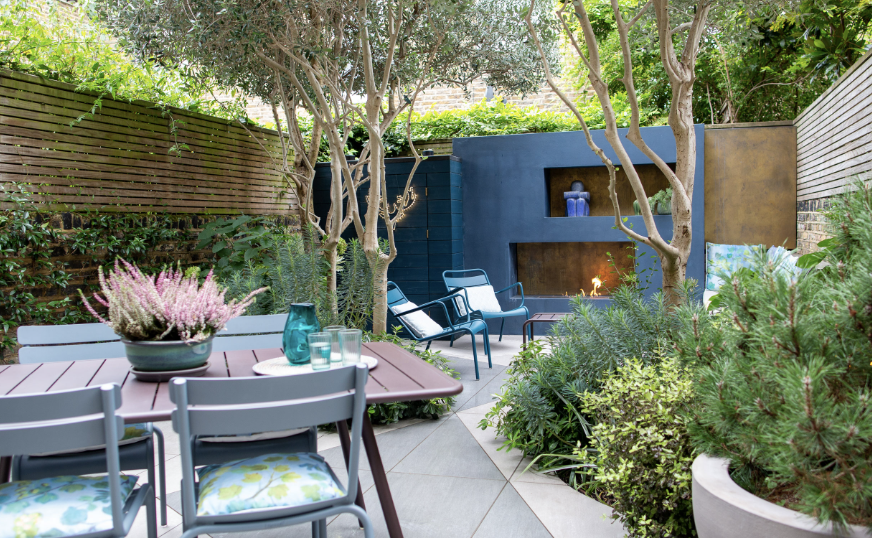
Outdoor decoration products are becoming more lifestyle-oriented because customers want cozy, photo-friendly outdoor spaces. Warm lighting, coordinated décor sets, and functional decoration (bird feeders, clocks, trellis walls) are driving sales.
This is one of my favorite shifts, because it’s so human.
Customers don’t say:
“I want a decoration.”
They say:
“I want my patio to feel nice.”
What’s trending in lifestyle décor
- Outdoor lighting (warm tone, solar, string lights)
- Statement pieces (outdoor clocks, bird feeders, decorative trellis)
- Natural décor (willow screens, rustic textures)
- Animal décor and decoys (decorative + functional in some cases)
- Coordinated sets (matching finishes across items)
The best-selling décor doesn’t feel scattered. It feels intentional.
Why coordinated décor wins
If items match in:
- color family
- texture
- style language
…customers feel the space is designed.
That “designed feeling” is what makes a garden look premium—even on a budget.
Lifestyle décor table
| Lifestyle product | Why shoppers buy it | Merchandising tip |
|---|---|---|
| warm lighting | cozy night vibe | show it in a “patio corner” |
| bird feeder | nature lifestyle | place near seating story |
| outdoor clock | “outdoor room” feel | sell as a focal point |
| trellis wall | vertical beauty | show before/after images |
If you’re building a display theme, I’d use outdoor living made easy.
Flexible Sourcing and Low MOQ Manufacturing Are Becoming Key Advantages
Retailers are taking fewer risks with inventory. They want faster tests, smaller runs, and the ability to adjust quickly.
Flexible sourcing and low MOQ manufacturing are becoming key advantages because retailers want to test new SKUs without heavy inventory pressure. Suppliers who offer stable quality at smaller quantities, faster sampling, and flexible packaging options help buyers respond to trends faster.
This trend is huge in 2026—and it’s not about fashion. It’s about risk control.
Why low MOQ matters more now
Retailers are facing:
- faster trend cycles[^5]
- tighter warehouse space
- more cautious purchasing
- pressure to avoid dead stock[^6]
So they prefer:
- small test orders
- quick reorders if it sells
- flexible assortments
What “flexible sourcing” looks like in real business
- faster sample lead time
- mix-and-match SKUs in one container
- controlled OEM packaging options
- clear repeat-order stability
- production planning transparency
The best suppliers don’t just offer low MOQ.
They offer low MOQ with stable quality.
How retailers can use this trend
A simple strategy:
1) test 5–10 new SKUs with smaller quantities[^7]
2) track sell-through fast
3) reorder winners quickly
4) drop losers without pain
This is how modern ranges stay fresh without huge risk[^8].
Flexible sourcing table
| Advantage | Why it matters | What to ask suppliers |
|---|---|---|
| low MOQ | reduces inventory risk | “minimum per SKU?” |
| fast sampling | speeds launches | “sample lead time?” |
| mixed container | better efficiency | “can we mix SKUs?” |
| stable repeat orders | protects range | “batch control plan?” |
If you want a supplier-friendly RFQ format, I can provide a low MOQ sourcing template that keeps comparison fair.
Conclusion
In 2026, retailers win with smart multi-function items, practical sustainability, lifestyle décor, and flexible low-MOQ sourcing that keeps inventory risk under control.
[^1]: "Bundling Information Goods: – NYU Stern", https://pages.stern.nyu.edu/~bakos/big/big.html. Research on product bundling and complementary offerings describes how presenting related functions or products together can increase perceived value and encourage larger purchases, supporting the basket-size rationale in a general retail context. Evidence role: general_support; source type: paper. Supports: Multi-function products can increase basket size.. Scope note: The evidence may address bundling or assortment strategy broadly rather than proving that every multi-function product increases basket size.
[^2]: "[PDF] A Better Test of Choice Overload – Columbia University", http://www.columbia.edu/~md3405/Working_Paper_24.pdf. Studies of choice overload and consumer decision making indicate that simplifying alternatives or reducing the number of separate decisions can lower cognitive burden, providing contextual support for the claim that multi-function products may reduce shopper decision fatigue. Evidence role: mechanism; source type: paper. Supports: Multi-function products can reduce decision fatigue for shoppers.. Scope note: This supports the decision-simplification mechanism generally; it does not directly establish that all multi-function products reduce fatigue in every shopping category.
[^3]: "[PDF] CORROSION PROTECTION SERVICE LIFE OF … – VTechWorks", https://vtechworks.lib.vt.edu/bitstream/handle/10919/27690/MCBrownDissertation.pdf. Corrosion-engineering literature describes protective coatings as barriers that limit contact between a substrate and corrosive environments, supporting the mechanism by which a rust-resistant coating can contribute to longer service life. Evidence role: mechanism; source type: paper. Supports: A rust-resistant coating can help a product last longer by reducing corrosion.. Scope note: This supports the general mechanism, not the measured lifespan of the specific product or coating.
[^4]: "Modifications of Polymers through the Addition of Ultraviolet … – PMC", https://pmc.ncbi.nlm.nih.gov/articles/PMC8747282/. Materials-science sources explain that ultraviolet radiation can cause photodegradation and color fading in polymers and coatings, while UV-resistant formulations or stabilizers can reduce this degradation. Evidence role: mechanism; source type: paper. Supports: UV-resistant material can reduce fading caused by ultraviolet exposure.. Scope note: This supports the general material principle, not the UV-resistance rating or fade performance of the specific product.
[^5]: "Fast Fashion and its Effect on Retail Supply Chain Management", https://businessstories.sandiego.edu/fast-fashion-and-its-effect-on-retail-supply-chain-management. Research on fast fashion and apparel supply chains documents shortened product life cycles and accelerated trend turnover in retail, supporting the claim that retailers face faster trend cycles. Evidence role: general_support; source type: paper. Supports: Retailers are facing faster trend cycles.. Scope note: The evidence is strongest for fashion and apparel retail and may not apply equally to all retail categories.
[^6]: "Retail’s Inventory Glut | Robert H. Smith School of Business", https://www.rhsmith.umd.edu/research/retails-inventory-glut. Studies of inventory management and retail markdowns show that unsold inventory creates holding costs, discounting pressure, and margin risk, providing support for the claim that retailers face pressure to avoid dead stock. Evidence role: mechanism; source type: paper. Supports: Retailers face pressure to avoid dead stock.. Scope note: The source may explain the economic mechanism of excess inventory rather than measure current pressure across all retail sectors.
[^7]: "[PDF] The Value of Fast Fashion: Quick Response, Enhanced Design, and …", https://repository.upenn.edu/bitstreams/beda918a-6166-42f8-9618-d8dc0d9ac40a/download. Research on quick response and assortment planning in fashion retailing describes using smaller initial commitments and demand observation to reduce forecast error before scaling inventory. Evidence role: mechanism; source type: paper. Supports: Retailers can reduce risk by testing a limited number of new SKUs in smaller quantities before committing to larger orders.. Scope note: The literature supports the general small-batch testing mechanism, but may not prescribe the specific range of 5–10 SKUs.
[^8]: "[PDF] Drivers of Product Expiration in Retail Supply Chains – INSEAD", https://sites.insead.edu/facultyresearch/research/file.cfm?fid=58761. Studies of quick-response retailing indicate that faster sales feedback and replenishment can help retailers update assortments while limiting markdown and inventory-risk exposure. Evidence role: general_support; source type: paper. Supports: Fast sell-through tracking, rapid reordering of winners, and discontinuing poor performers can keep assortments fresh while reducing inventory risk.. Scope note: This supports the broader retail mechanism rather than proving that every modern range will remain fresh or low-risk under this strategy.