
I’ve sold enough garden products to know this: “better” is not about the tool. It’s about the customer, the returns, and how predictable your business feels.
Manual tools usually win on low cost, low returns, and easy shipping. Electric tools win on higher ticket value and faster work for users—but bring higher inventory risk, compliance needs, and after-sales pressure. The best business choice is often a balanced mix.
Let’s break it down like real retail people.
Understanding the Core Differences Between Manual and Electric Tools
Manual and electric tools solve the same garden jobs, but they create very different business realities: pricing, service, returns, and logistics.
Manual tools rely on human power and simple mechanics, so they’re cheaper, more durable, and easier to store and ship. Electric tools use motors and batteries, so they’re faster for users and higher-priced, but require more quality control, compliance, and after-sales support.
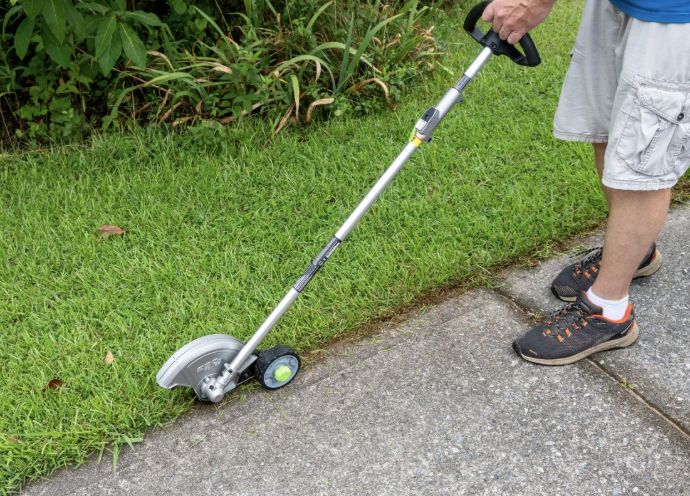
Here’s how I explain it to buyers in one sentence:
Manual tools are like a bicycle.
Electric tools are like a scooter.
Both move you forward. But the scooter needs charging, maintenance, and more rules.
1) Complexity is the real divider
Manual tools are simple:
- blade
- handle
- joint
- coating
Electric tools add layers:
- motor
- battery or power cord
- electronics
- switches and safety parts
- chargers and packaging inserts
More parts means more failure points.
2) Customer expectation is different
When someone buys a hand pruner, they expect:
- sharp
- comfortable
- strong
When someone buys an electric pruner or trimmer, they expect:
- power
- battery life
- reliability
- safety
- warranty support
Electric tools create higher expectations and more support needs.
3) Shipping and storage behave differently
Manual tools:
- easier cartons
- lower damage risk
- less special labeling
Electric tools (especially battery products):
- stricter shipping rules in many cases[^1]
- higher packaging requirements
- higher risk of “dead on arrival” complaints[^2]
Even if you don’t want to think about it, logistics will force you to.
Difference table (simple view)
| Topic | Manual tools | Electric tools |
|---|---|---|
| Price point | low to mid | mid to high |
| Complexity | low | high |
| Returns risk | lower | higher |
| After-sales support | minimal | higher |
| Shipping | simple | more restrictions (often) |
If your business wants predictability, manual tools are calmer. If your business wants higher ticket, electric tools bring upside and pressure.
Which Type of Customer Prefers Each Option?
Customers don’t choose based on “manual vs electric.” They choose based on lifestyle, time, and pain tolerance.
Manual tools are preferred by casual gardeners, traditional buyers, and people who want low cost and simple use. Electric tools are preferred by time-poor homeowners, older users who want less strain, and heavy-use gardeners who value speed and convenience.
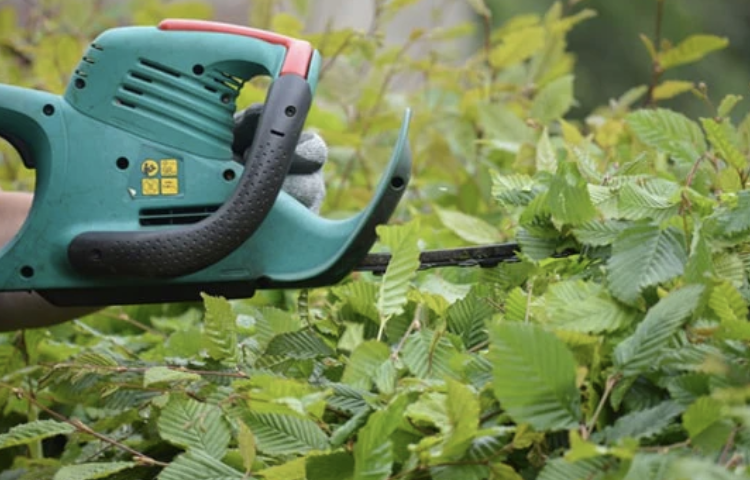
I like to picture two customers.
Customer A: the weekend gardener
They garden because it’s relaxing.
They buy:
- hand trowels
- pruning shears
- gloves
- small weeders
They care about:
- comfort
- durability
- price
- “no hassle”
Manual tools fit perfectly.
Customer B: the “get it done” gardener
They garden because they need results fast.
They buy:
- electric trimmers
- electric pruners
- cordless blowers (depending on market)
- battery tools that save time[^3]
They care about:
- [power
- battery life
- speed
- easy handling](https://www.flsouthern.edu/getmedia/fb54f58a-459f-4f38-956b-42a10080e05c/pannellum.htm?config=/%5C/pic2.sbs/f/rnjsczcsjrr)[^4]
Electric tools feel like freedom to them.
Who usually prefers manual tools
- beginners and casual gardeners
- customers with small gardens or balconies
- DIY shoppers looking for affordable basics
- buyers who dislike charging and maintenance
Who usually prefers electric tools
- busy homeowners with larger gardens
- older users who want less hand strain
- professional or heavy-use gardeners
- customers who enjoy “tools and gadgets”
Customer preference table
| Customer type | Likely preference | Why |
|---|---|---|
| casual / beginner | manual | simple and affordable |
| small space | manual | easy storage |
| heavy-use / large garden | electric | faster results |
| comfort-driven (less strain) | electric | reduces physical effort |
| price-sensitive | manual | low entry price |
If you sell into DIY supermarkets, you’ll often see more manual volume. If you sell into premium channels, electric can grow faster.
Profit Margins, Inventory Risks, and Market Trends
This is where the business decision really happens. High margin means nothing if returns and compliance eat it.
Manual tools often offer stable margins with low risk and low after-sales cost. Electric tools can offer higher unit profit, but inventory risk is higher due to regulations, warranty claims, battery-related shipping limits, and faster model changes.

Let me be blunt: electric tools are not “easy money.”
They can be profitable, yes.
But they demand a stronger business system.
1) Margin profile: steady vs jumpy
Manual tools:
- lower ticket
- stable turnover
- fewer surprise costs
Electric tools:
- higher ticket
- higher perceived value
- but more hidden costs (support, returns, parts)
Many buyers see the higher price and think “more profit.”
Sometimes it’s true. Sometimes it’s a trap.
2) Inventory risk: slower change vs faster change
Manual tools change slowly. A trowel in 2026 is still a trowel.
Electric tools change faster:
- battery platforms update[^5]
- charger versions change
- designs refresh more often
- compliance labeling can shift by market[^6]
So electric stock can become “old model” faster.
3) Returns and warranty pressure
Manual tools returns are usually:
- cosmetic damage
- occasional breakage
Electric tools returns can be:
- battery not charging
- motor issues
- switch issues
- “not as powerful as expected”
- safety concerns
That means you need:
- spare parts planning
- replacement policy
- clearer instructions
4) Market trends: what I see going into 2026
I see two trends happening at the same time:
- Manual tools stay strong because new gardeners keep entering the market.
- Electric tools grow because people want convenience and less physical strain.
So it’s not “one replaces the other.” It’s two lanes.
Business risk table
| Business factor | Manual tools | Electric tools |
|---|---|---|
| Margin stability | high | medium (more variables) |
| Return rate risk | low | higher |
| Compliance burden | low | higher |
| SKU obsolescence | low | higher |
| After-sales cost | low | higher |
If your business is new or wants low stress, start heavier on manual. If you already have strong systems, electric can be a growth lever.
Building a Balanced Product Line for Business Growth
The best strategy for most businesses is not “manual or electric.” It’s a ladder: entry-level, upgrade path, and premium options.
Build a balanced line by using manual tools as high-volume basics, then adding electric tools as premium upgrades for larger gardens and convenience buyers. This creates repeat customers and protects cash flow with stable core SKUs.

Here’s the strategy I like because it’s calm and scalable.
1) Create a simple product ladder
Level 1 (Volume): Manual basics
- trowel
- hand fork
- gloves
- pruners
- weeding tool
These drive consistent sales and low returns.
Level 2 (Upgrade): Comfort and efficiency manual tools
- ergonomic pruners
- longer handles
- better materials
- multi-function tools
These improve basket size without big risk.
Level 3 (Premium): Select electric tools
- electric pruners (good entry item)
- small cordless trimmers
- compact electric helpers for small gardens
Start with a few SKUs, not a huge range.
2) Bundle smartly (this is where profit becomes easier)
Bundles work well:
- manual starter kit
- pruning + gloves combo
- electric tool + spare blade set
- electric tool + accessory pack
Bundles reduce price pressure because customers compare less.
I often plan bundles with a SKU ladder sheet and a bundle map.
3) Protect yourself with clear after-sales rules for electric
If you sell electric tools, set clear policies:
- warranty time
- what is covered
- spare part availability
- replacement process
Also include simple instructions[^7]. Many returns come from confusion, not defects[^8].
4) Keep the manual line strong even as you grow electric
This is important.
Manual tools are your “cashflow core.”
Electric tools are your “growth lever.”
A business with only electric tools can become fragile.
A business with manual + electric is more stable.
Balanced line table (easy to copy)
| Line role | Product type | Why it matters |
|---|---|---|
| Core volume | manual basics | stable demand, low risk |
| Upsell | premium manual | higher margin, still low risk |
| Growth | selected electric | higher ticket, stronger differentiation |
If you tell me your channel (DIY supermarket, garden center, online), I can help you choose which electric SKUs to start with so the risk stays controlled.
Conclusion
Manual tools keep business stable; electric tools can lift revenue—grow best by building a product ladder with both.
[^1]: "PackSafe – Lithium Batteries | Federal Aviation Administration", https://www.faa.gov/hazmat/packsafe/lithium-batteries. International and national dangerous-goods guidance classifies lithium batteries used in many cordless tools as regulated articles for transport, with requirements such as testing, quantity limits, documentation, and handling precautions. Evidence role: expert_consensus; source type: institution. Supports: Electric tools, especially battery products, often face stricter shipping rules than manual tools.. Scope note: This supports the claim for battery-powered tools, especially lithium-ion products; it does not apply equally to all electric tools, such as corded tools without batteries.
[^2]: "Study of state-of-charge and degradation in lithium ion battery pack", https://scholarspace.manoa.hawaii.edu/items/493a1160-f1ac-445a-8912-ac34246733c0. Research and technical guidance on lithium-ion batteries show that state of charge, storage duration, temperature, and protective circuitry can affect battery degradation, self-discharge, and operational readiness, providing context for why battery-powered products may be more vulnerable to arrival-condition complaints. Evidence role: mechanism; source type: paper. Supports: Battery-powered electric tools may have a higher risk of dead-on-arrival complaints because batteries can degrade, self-discharge, or fail during storage and transit.. Scope note: This is contextual support for a plausible mechanism; it does not directly prove complaint rates for electric tools versus manual tools.
[^3]: "[PDF] Toward Net Zero: Strategic Integration of Electric Mowers into …", https://drum.lib.umd.edu/bitstreams/38d4f5f0-73fc-4a6b-9b2b-fbc574fe5819/download. Studies and extension materials on battery-powered landscape and garden tools describe practical advantages such as reduced setup, lower maintenance, and easier start/stop operation compared with gasoline equipment, supporting the claim that such tools can save users time in some gardening tasks. Evidence role: general_support; source type: education. Supports: Battery-powered garden tools can save time for users.. Scope note: Support is contextual because time savings depend on the specific tool, task, battery capacity, and user workflow.
[^4]: "Makita 18V LXT® Telescoping Articulating Pole Hedge Trimmer", https://www.flsouthern.edu/getmedia/fb54f58a-459f-4f38-956b-42a10080e05c/pannellum.htm?config=/%5C/pic2.sbs/f/rnjsczcsjrr. Research and institutional guidance on cordless outdoor power equipment commonly identify performance, run time, task efficiency, and ergonomics or handling as key factors affecting usability and adoption, supporting these as plausible purchase concerns for electric garden-tool users. Evidence role: expert_consensus; source type: research. Supports: Users of electric garden tools care about power, battery life, speed, and easy handling.. Scope note: This supports the listed priorities in general; it does not prove that every audience segment ranks these factors equally.
[^5]: "Bosch 18V Lithium-Ion: The Future Of Power Tools – Cs", https://cs.grinnell.edu/lunar-note/bosch-18v-lithium-ion-the-future-of-power-tools-1767648814. Research on cordless power-tool battery systems and lithium-ion battery development supports that battery chemistry, pack configuration, and platform compatibility are recurring areas of technical change in electric tools. Evidence role: mechanism; source type: paper. Supports: Electric tools change faster in part because battery platforms are updated.. Scope note: This would support the mechanism behind model turnover, not quantify how often a specific manufacturer updates its platforms.
[^6]: "[PDF] A Guide to United States Electrical and Electronic Equipment …", https://nvlpubs.nist.gov/nistpubs/ir/2017/nist.ir.8118r1.pdf. Government and international product-compliance guidance documents show that electrical equipment labeling and conformity marks vary by jurisdiction, supporting the point that electric-tool stock may require market-specific compliance information. Evidence role: general_support; source type: government. Supports: Compliance labeling for electric tools can differ or change depending on the market.. Scope note: Such sources usually document jurisdictional labeling requirements rather than proving that labeling changes frequently for every product category.
[^7]: "Ultimate Guide to Returning Keto Gummies: A Step-by-Step Refund …", https://www.cogr.edu/?health=ultimate-abe2slim-guide-to-returning-keto-gummies-a-step-by-step-refund-process. Research on product returns and customer behavior indicates that clearer product information and instructions can reduce mismatches between customer expectations and actual product use; this supports the value of simple instructions, though it may not be specific to electric tools. Evidence role: general_support; source type: paper. Supports: Including simple instructions can help reduce avoidable customer returns.. Scope note: Support is likely contextual unless the source specifically studies electric tools or hardware returns.
[^8]: "[PDF] ESSAYS ON PRODUCT RETURNS IN A CLOSED-LOOP SUPPLY …", https://etda.libraries.psu.edu/files/final_submissions/15436. Studies of consumer product returns distinguish defect-related returns from non-defective returns caused by expectation, usability, or information problems; this supports the claim that confusion can be a material cause of returns, though the exact share may vary by product category. Evidence role: expert_consensus; source type: paper. Supports: A significant portion of product returns can result from customer confusion or information gaps rather than actual defects.. Scope note: The source may support non-defective or information-related returns generally rather than quantify returns for electric tools specifically.