A balcony may have limited space, but with the right design, it can become a green and relaxing outdoor corner.
Trellises are one of the best solutions for balcony gardens because they allow vertical planting, improve privacy, save floor space, and create a decorative feature without requiring a large garden area.
From climbing flowers to herb walls, a well-designed trellis can completely change the feeling of a small balcony.
Why Is a Trellis Perfect for Small Balcony Gardens?
Balcony gardening is often limited by space, but trellises help gardeners use vertical areas that are usually ignored.
A trellis is perfect for small balcony gardens because it maximises available space, supports climbing plants, creates visual height, and allows people to grow more greenery without occupying valuable floor area.
Traditional gardening mainly uses horizontal space.
Balconies usually do not have enough room for large planters, garden beds, or many containers.
A trellis changes the design approach by moving plants upward.
Vertical gardening saves valuable space
The biggest advantage of a balcony trellis is space efficiency.
Instead of placing many pots on the ground, gardeners can grow:
- climbing flowers;
- vines;
- herbs;
- vegetables;
- decorative plants.
Popular balcony climbing plants include:
- jasmine;
- clematis;
- climbing roses;
- sweet peas;
- ivy;
- morning glory;
- cucumber;
- beans.
A single vertical structure can create a much richer green effect than several small pots.
Trellises create a stronger garden atmosphere
Small balconies can sometimes feel empty because they lack natural elements[^1].
A trellis adds:
- height;
- texture;
- colour;
- movement;
- seasonal changes.
As plants grow, the trellis becomes part of the garden rather than just a support tool.
Trellises are suitable for urban lifestyles
More people now live in apartments and smaller homes.
Balcony trellises are popular because they offer:
- easy installation;
- limited maintenance;
- flexible placement;
- affordable garden improvement.
They are especially suitable for:
- city apartments;
- rented homes;
- small terraces;
- rooftop balconies;
- compact outdoor spaces.
Better use of vertical surfaces
A balcony usually has unused areas such as:
- walls;
- railings;
- corners;
- balcony screens.
A trellis allows these areas to become productive and decorative.
| Balcony challenge | Trellis solution |
|---|---|
| Limited floor space | Vertical planting |
| Lack of privacy | Green plant screen |
| Empty walls | Decorative climbing feature |
| Few gardening options | More plant varieties |
For small outdoor spaces, a trellis creates more garden possibilities without increasing the footprint.
Which Trellis Style Works Best for Different Balcony Layouts?
Different balconies require different trellis styles. The best choice depends on available space, installation method, and design preference.
The best balcony trellis style depends on the balcony layout. Folding trellises suit flexible spaces, wall-mounted designs save floor space, planter trellises combine decoration and function, while freestanding trellises work well for larger balconies.
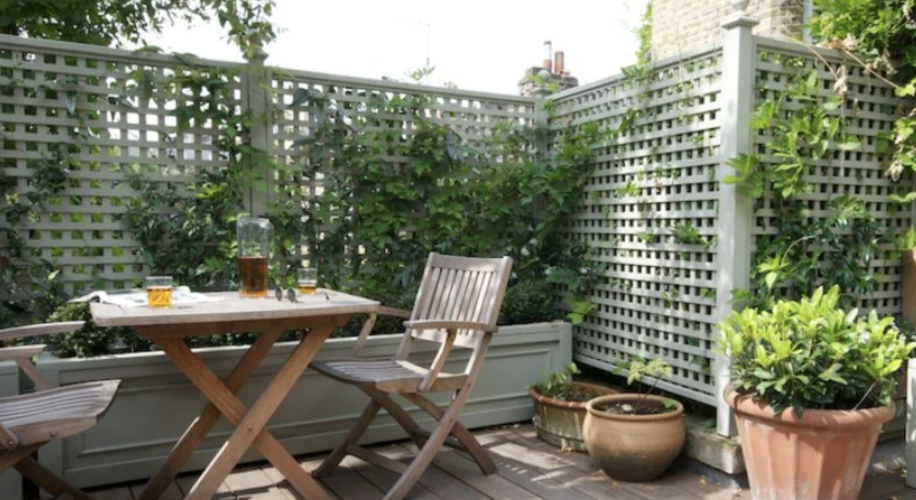
A good trellis should fit the balcony, not force the balcony to fit the trellis.
Before choosing a style, consider:
- available width;
- wall structure;
- sunlight direction;
- wind exposure;
- plant type;
- rental restrictions.
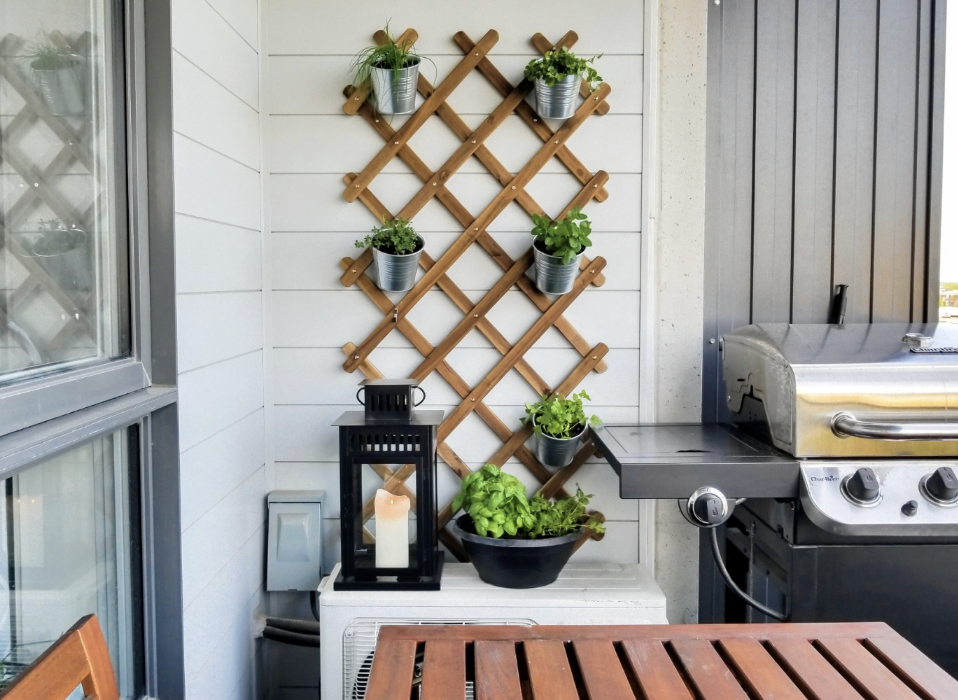
Wall-mounted trellises for compact balconies
Wall-mounted trellises are ideal when floor space is limited.
Advantages include:
- maximum space saving;
- clean appearance;
- strong vertical planting;
- suitable for permanent garden designs.
They work well with:
- ivy;
- jasmine;
- small flowering vines;
- decorative greenery.
However, renters should check whether drilling or permanent fixing is allowed.
Folding expandable trellises for flexibility
Expandable trellises are popular for balconies because they are easy to adjust[^2].
Benefits include:
- adjustable width;
- easy storage;
- simple installation;
- suitable for seasonal changes.
They are useful for:
- rental apartments;
- temporary decoration;
- small balconies[^3].
Planter trellis combinations
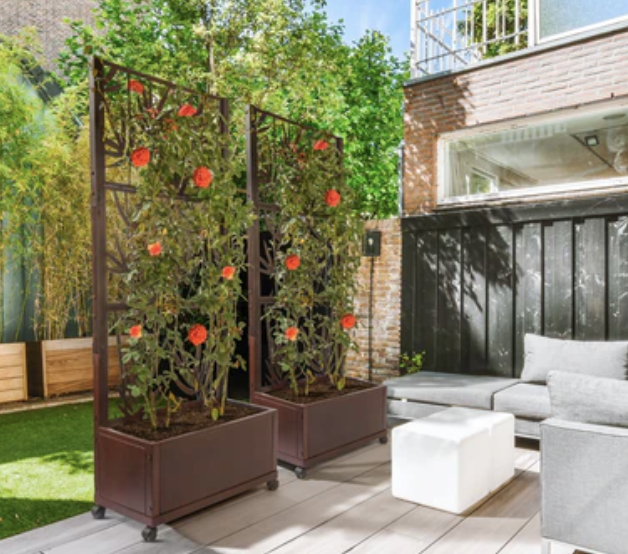
A planter with an attached trellis combines two functions:
- plant container;
- climbing support.
This design is especially attractive because it creates a complete garden feature.
Suitable for:
- roses;
- climbing vegetables;
- decorative vines.
It also reduces installation difficulty because the trellis and plant base are already connected.
Freestanding trellises for larger balconies
Large balconies or terraces can use freestanding structures.
Advantages include:
- flexible placement;
- movable design;
- stronger privacy screening;
- larger planting capacity.
They can create:
- green walls;
- balcony dividers;
- decorative corners.
Choosing based on balcony type
| Balcony type | Recommended trellis style | Reason |
|---|---|---|
| Small apartment balcony | Wall-mounted | Saves space |
| Rental balcony | Folding trellis | Easy removal |
| Medium balcony | Planter trellis | Complete solution |
| Large terrace | Freestanding trellis | More design options |
| Windy balcony | Strong metal frame | Better stability |
The right style helps transform a simple balcony into a personalised garden space.
How Can a Trellis Improve Balcony Privacy and Decoration?
A balcony trellis is not only a plant support system—it can also become a decorative privacy solution.
A trellis improves balcony privacy by creating a natural screen with climbing plants, while also adding colour, texture, and architectural interest to otherwise plain outdoor spaces.
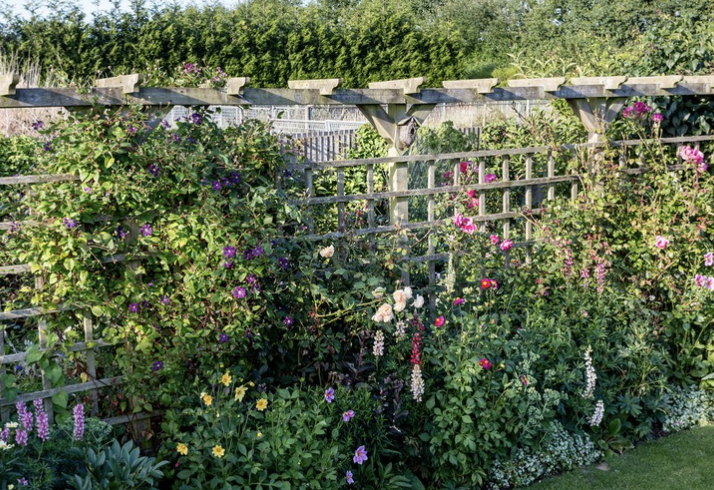
Many apartment balconies face neighbours, roads, or nearby buildings.
A trellis can create a softer alternative to traditional privacy screens.
Natural privacy through climbing plants
As plants grow, they create a living barrier.
This can help reduce:
- direct visibility from neighbours;
- street views;
- harsh sunlight;
- wind exposure.
Popular privacy plants include:
- ivy;
- climbing jasmine;
- honeysuckle;
- climbing roses;
- evergreen vines.
Unlike solid screens, green walls change with the seasons.
Decorative structure without plants
Even without plants, trellises add visual interest.[^4]
Decorative uses include:
- hanging small pots;
- attaching fairy lights;
- displaying outdoor ornaments;
- supporting artificial greenery;
- creating photo backgrounds.
Wooden trellises often create a warm natural style, while metal trellises provide a modern look.[^5]
Creating different balcony themes
A trellis can support many design styles.
Examples:
Natural garden style
- wooden trellis;
- green climbing plants;
- wicker accessories;
- natural colours.
Modern urban style
- black metal trellis;
- minimalist pots;
- geometric plant arrangement.
Romantic floral style
- white trellis;
- climbing roses;
- decorative lighting.
Mediterranean style
- terracotta pots;
- herbs;
- warm colours.
Improving comfort
A planted trellis can also improve balcony comfort by:
- reducing visual exposure;
- softening hard surfaces;
- creating a relaxing atmosphere;
- adding connection with nature.
| Function | Trellis benefit |
|---|---|
| Privacy | Creates natural screening |
| Decoration | Adds height and texture |
| Comfort | Softens urban spaces |
| Gardening | Supports more plants |
| Lifestyle | Creates relaxing outdoor areas |
A balcony trellis is not just a gardening tool—it is a design element that changes how people use outdoor space.
How Do You Keep Balcony Trellises Safe and Long-Lasting?
Balcony environments create unique challenges, including wind exposure, limited fixing options, and weight restrictions.
To keep balcony trellises safe and long-lasting, choose suitable materials, secure the structure properly, avoid excessive plant weight, and regularly maintain the trellis and climbing plants.
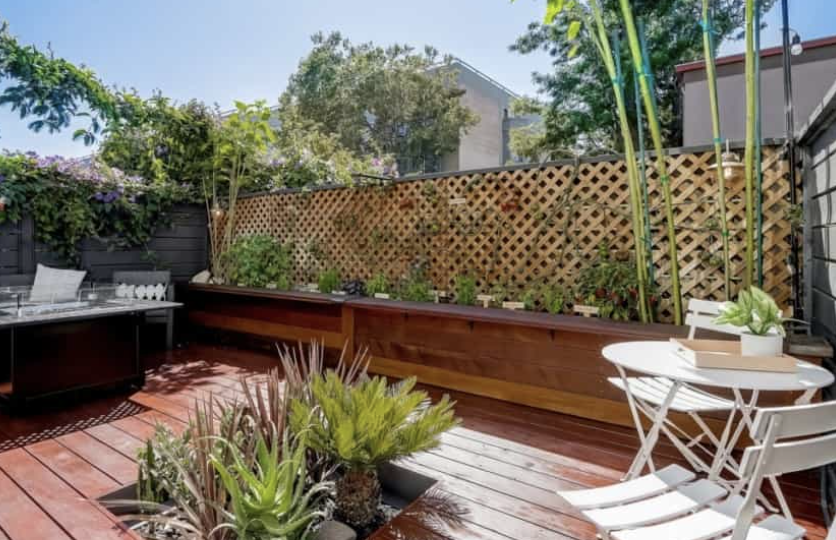
A beautiful balcony garden must also be a safe balcony garden.
Choose lightweight but durable materials
Balcony trellises should balance strength and weight.
Suitable materials include:
- aluminium;
- powder-coated metal;
- treated wood;
- durable plastic;
- composite materials.
Heavy structures may create unnecessary load on balcony areas.
Secure the trellis properly
Wind is one of the biggest risks for balcony installations.
Important considerations include:
- stable fixing points;
- strong brackets;
- secure planter bases;
- anti-tip designs;
- suitable height.
A tall trellis with dense plants can catch strong wind like a sail.
Control plant growth
Plants add beauty but also add weight.
Large climbing plants may create:
- extra pressure on the structure[^6];
- increased wind resistance;
- moisture buildup[^7];
- maintenance challenges.
Regular pruning helps maintain balance.
Choose weather-resistant materials
Balconies are often exposed to:
- rain;
- sunlight;
- temperature changes;
- urban pollution.
Material selection matters.
| Material | Advantage | Maintenance |
|---|---|---|
| Metal | Strong and durable | Check coating |
| Plastic | Lightweight and low maintenance | Clean regularly |
| Wood | Natural appearance | Seal and protect |
| Composite | Stable outdoors | Low maintenance |
Maintain regularly
Simple maintenance extends lifespan:
- check fixing points;
- clean dirt buildup;
- inspect rust or cracks;
- trim plants;
- repair damage early.
A well-maintained trellis can support balcony gardens for many years.
The best balcony trellis is one that combines safe installation, suitable materials, and practical design.
Conclusion
Trellises make balcony gardening easier by adding vertical space, privacy, and decoration. With the right style, material, and maintenance, even a small balcony can become a beautiful green retreat.
[^1]: "The Restorative Value of the Urban Environment – PMC – NIH", https://pmc.ncbi.nlm.nih.gov/articles/PMC6256310/. Research on biophilic design and environmental psychology links the presence of natural elements, including vegetation, with improved perceived quality and restorative value of built environments, which contextualizes why plant-free balcony spaces may feel less complete. Evidence role: general_support; source type: paper. Supports: Small balconies can sometimes feel empty because they lack natural elements.. Scope note: This evidence supports the broader relationship between natural elements and perceived environmental quality, not the specific feeling of emptiness on every small balcony.
[^2]: "Scissors mechanism – Wikipedia", https://en.wikipedia.org/wiki/Scissors_mechanism. Sources describing pantograph or scissor-linkage mechanisms explain that linked parallelogram structures can expand and contract while retaining their basic geometry, which supports the mechanical basis for adjustability in expandable lattice designs. Evidence role: mechanism; source type: encyclopedia. Supports: Expandable trellises are easy to adjust.. Scope note: This supports the adjustability mechanism, not the separate claim that expandable trellises are popular among balcony users.
[^3]: "Grow Your Garden in a Small Space with Containers", https://utianews.tennessee.edu/grow-your-garden-in-a-small-space-with-containers/. University extension guidance on vertical gardening notes that trellises and other vertical supports allow climbing plants to grow upward and can conserve limited horizontal growing space, providing contextual support for their use in compact balcony settings. Evidence role: general_support; source type: education. Supports: Expandable trellises are useful for small balconies.. Scope note: The source may address small gardens or container gardening generally rather than balconies specifically.
[^4]: "19. Landscape Design | NC State Extension Publications", https://content.ces.ncsu.edu/extension-gardener-handbook/19-landscape-design. Landscape design guidance describes structures such as trellises, arbors, and screens as design elements that can add vertical emphasis, enclosure, and focal interest independently of planting. Evidence role: general_support; source type: education. Supports: Trellises can add visual interest even when they are not supporting plants.. Scope note: This supports the design principle contextually rather than proving that every trellis will be visually interesting in every setting.
[^5]: "Handicraft process, aesthetic characteristics, and design …", https://bioresources.cnr.ncsu.edu/resources/handicraft-process-aesthetic-characteristics-and-design-applications-of-molten-metal-inlaid-in-wood-for-home-furnishings/. Design and materials references commonly associate wood with natural warmth and metal with contemporary or industrial visual qualities, supporting the article’s material-style contrast for trellises. Evidence role: general_support; source type: education. Supports: Wooden trellises are often perceived as warmer and more natural, while metal trellises are often associated with a more modern look.. Scope note: The source would support broad material associations, not a universal aesthetic effect for all wooden or metal trellis designs.
[^6]: "(PDF) Vertical Greenery Systems (VGS) for energy saving in buildings", https://www.academia.edu/15330147/Vertical_Greenery_Systems_VGS_for_energy_saving_in_buildings_A_review. Research on green façades and vertical greenery systems notes that climbing vegetation can impose additional dead loads on walls and support systems, which should be considered in structural design and maintenance assessments. Evidence role: mechanism; source type: paper. Supports: Large climbing plants may create extra pressure on the structure.. Scope note: The source would support the general mechanism; the magnitude of load depends on plant species, maturity, water content, and the support structure.
[^7]: "Evaluating Plant Coverage and Thermal Benefits of Green …", https://journals.uvm.edu/jeed/article/id/21/. Building-science and green-wall literature describes how vegetation close to façades can alter drying conditions and retain moisture near exterior surfaces, making moisture management relevant in façade design and maintenance. Evidence role: mechanism; source type: paper. Supports: Large climbing plants may create moisture buildup.. Scope note: This is contextual support rather than proof that all climbing plants cause damaging moisture buildup; outcomes vary with wall material, climate, drainage, and plant density.