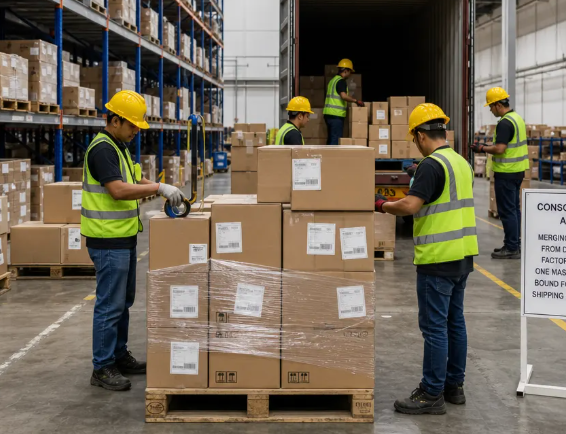
Many importers focus only on factory prices when buying from China, but the final cost of imported products includes much more than the supplier quotation.
Total landed cost includes product price, production expenses, packaging, transportation, customs duties, handling fees, quality control costs, and other expenses required to deliver goods to the final destination.
Understanding and controlling these hidden costs helps importers improve profitability without simply choosing the cheapest supplier.
Understanding the Real Cost Behind China Imports Beyond Factory Prices
The factory price is only one part of the total import cost. Many buyers discover that a low product price does not always create the lowest final cost.
The real cost of China imports includes manufacturing, packaging, freight, customs, inspection, storage, and risk-related expenses that can significantly affect the final landed cost.

When comparing suppliers, many buyers make a common mistake:
They compare only:
Supplier A: USD 5.00/unit
Supplier B: USD 5.50/unit
However, the cheaper supplier may have:
- larger packaging;
- higher defect rates;
- longer lead times;
- higher shipping costs;
- weaker communication;
- more quality problems.
The final cost may actually be higher.
What is included in total landed cost?
A complete landed cost calculation usually includes:
| Cost category | Examples |
|---|---|
| Product cost | Factory price, materials, labour |
| Packaging cost | Cartons, labels, protective materials |
| Quality cost | Inspection, testing, rework |
| Logistics cost | Freight, insurance, local delivery |
| Customs cost | Duties, taxes, clearance fees |
| Risk cost | Delays, defects, returns |
Each part affects the final profitability.
Packaging can influence landed cost
Packaging is often overlooked.
A product with a lower unit price may require:
- larger cartons;
- more protection materials;
- more container space.
- ocean freight cost;
- warehouse space;
- handling expenses.
For example, improving carton design may allow more products to fit into one container2, reducing shipping cost per unit.
Quality problems create hidden costs
Poor quality creates additional expenses:
- replacement shipments;
- customer refunds;
- inspection costs;
- lost sales;
- damaged reputation.
A slightly higher factory price may actually create lower total cost if quality is more stable.
Delivery reliability affects financial performance
Late shipments can create:
- missed promotions;
- empty inventory;
- emergency air freight;
- lost customers.
For seasonal products such as:
- Christmas decorations;
- garden products;
- promotional items;
timing is part of the cost calculation.
The importance of risk management
The cheapest supplier is not always the most economical choice.
A better question is:
“Which supplier gives the lowest total cost after delivery?”
| Supplier factor | Impact on landed cost |
|---|---|
| Product price | Direct cost |
| Quality stability | Reduces hidden losses |
| Packaging efficiency | Controls freight |
| Delivery reliability | Protects sales |
| Communication | Reduces mistakes |
A successful importer focuses on the complete cost from factory to customer.
How to Reduce Manufacturing, Shipping, and Customs Expenses Together
Lowering landed cost requires looking at the entire supply chain instead of reducing only one expense.
Importers can reduce total landed cost by improving product design, optimising packaging, planning shipments efficiently, reducing customs risks, and working closely with suppliers and logistics partners.

Cost reduction works best when different areas are improved together.
Reducing factory price while increasing freight cost does not create real savings.
Improve product design before production
Small design changes can create large cost savings.
Examples:
- reducing unnecessary components;
- simplifying assembly;
- using standard materials;
- improving product structure;
- reducing product volume.
For garden products, examples include:
- foldable trellises;
- flat-packed fencing;
- stackable flower pots;
- nested decorations.
These designs reduce shipping volume.
Optimise packaging
Better packaging can reduce:
- carton volume;
- damage rates 3;
- container space usage.
Useful strategies include:
- testing carton sizes;
- reducing empty space;
- using suitable protection;
- improving stacking methods.
The goal is not the cheapest packaging.
The goal is the lowest total cost 4.
Plan shipping more efficiently
Shipping costs can change significantly depending on planning.
Importers can reduce freight expenses by:
- booking earlier;
- avoiding urgent shipments;
- choosing suitable container sizes;
- combining shipments;
- improving container utilisation.
For example:
A well-planned 40HQ container can often reduce the average freight cost per unit compared with smaller shipments.
Reduce customs-related expenses
Customs problems create unnecessary costs.
Importers should ensure:
- correct HS codes;
- accurate product descriptions;
- complete documents;
- correct declared values;
- required certifications.
Incorrect customs information may lead to:
- delays;
- additional inspection fees;
- storage charges.
Work with experienced logistics partners
A good freight forwarder can help with:
- route selection;
- shipment timing;
- documentation;
- customs coordination;
- cost optimisation.
The cheapest freight quote is not always the best option.
Reliability matters.
| Cost area | Improvement method |
|---|---|
| Manufacturing | Product optimisation |
| Packaging | Volume reduction |
| Shipping | Better planning |
| Customs | Accurate documentation |
| Logistics | Experienced partners |
Reducing landed cost requires optimising the entire supply chain, not only the purchase price.
Smart Supplier Selection and Order Planning Strategies to Lower Costs
Supplier selection has a major influence on long-term import costs.
Smart supplier selection reduces landed cost by choosing factories with stable quality, efficient production, reliable communication, flexible cooperation, and the ability to support long-term improvement.
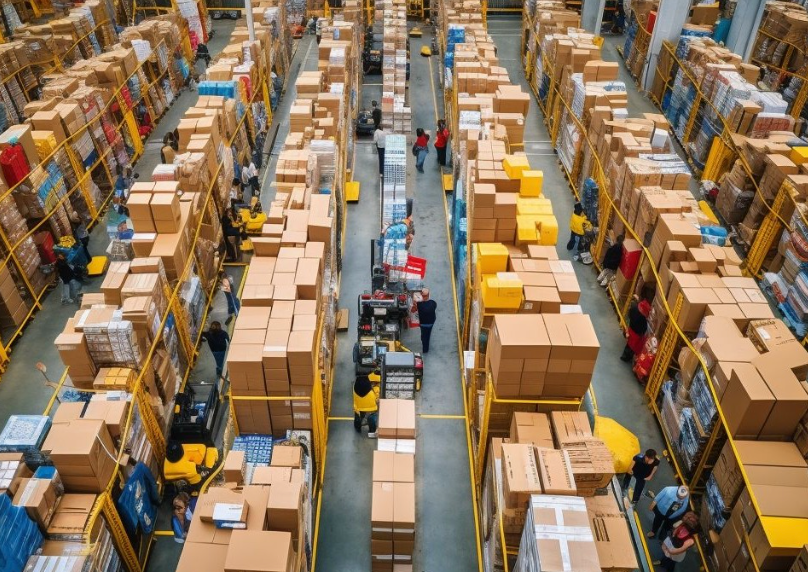
A good supplier does more than offer a low quotation.
The right supplier helps improve:
- product design;
- production efficiency;
- packaging;
- delivery planning;
- quality control.
Choose suppliers based on total value
When evaluating suppliers, consider:
- price;
- quality;
- production capability;
- communication;
- export experience;
- problem-solving ability.
A supplier with slightly higher prices may provide better overall value.
Avoid changing suppliers too frequently
Constantly searching for cheaper factories creates hidden costs.
Changing suppliers may require:
- new samples;
- new approvals;
- new quality checks;
- new communication processes.
Long-term supplier relationships often create better efficiency.
Plan orders strategically
Order planning directly affects cost. 5
Useful strategies include:
- forecasting demand earlier;
- combining products;
- ordering before peak season;
- reducing urgent production requests.
- higher production costs;
- expensive shipping;
- reduced negotiation power.
Use mixed-product sourcing
For buyers importing multiple products, combining orders can improve efficiency.
Examples:
A garden retailer may combine:
- trellises;
- fences;
- bird feeders;
- garden decorations.
This helps:
- reduce communication time;
- improve container utilisation;
- simplify logistics.
Develop suppliers through cooperation
Strong buyers work with suppliers to improve.
Examples:
- redesign packaging;
- reduce material waste;
- improve production methods;
- standardise products.
These improvements reduce costs over time.
Evaluate suppliers regularly
Review:
- delivery performance;
- defect rate;
- cost changes;
- communication quality.
Supplier performance data helps buyers make better decisions.
| Supplier strategy | Cost benefit |
|---|---|
| Long-term cooperation | Better efficiency |
| Early planning | Lower urgent costs |
| Mixed orders | Better logistics |
| Supplier development | Continuous improvement |
| Performance review | Better decisions |
The best supplier relationship helps create long-term cost advantages beyond the first order.
Practical Ways to Improve Import Efficiency Without Sacrificing Quality
Reducing landed cost does not mean choosing lower quality. The best import strategies improve efficiency while maintaining product standards.
Importers can improve efficiency by standardising processes, using quality control systems, improving communication, reducing unnecessary steps, and making better decisions based on reliable data.

Many successful importers focus on process improvement rather than simply cutting prices.
Standardise product requirements
Clear specifications reduce mistakes.
Important documents include:
- product drawings;
- material requirements;
- packaging standards;
- inspection checklists;
- approved samples.
Clear standards help suppliers produce consistently.
Use quality control at the right stages
Quality control does not always require checking everything.
A smart approach includes:
Before production
- sample approval;
- material confirmation.
During production
- progress monitoring;
- problem identification.
Before shipment
- final inspection;
- loading supervision.
This reduces risks without unnecessary costs.
Improve communication efficiency
Poor communication creates hidden costs.7
Avoid problems by:
- using clear product descriptions;
- confirming changes quickly;
- keeping written records;
- using standard order documents.
Better communication reduces delays and misunderstandings.8
Track supplier performance
Keep records of:
- delivery time;
- defect rates;
- inspection results;
- customer feedback.
This helps identify which suppliers create the lowest total cost.
Balance inventory and cash flow
Ordering too much creates:
- storage costs;
- inventory pressure;
- cash flow problems.
Ordering too little creates:
- urgent shipping;
- stock shortages;
- missed sales.
The best inventory strategy balances:
- demand;
- lead time;
- shipping schedule;
- storage capacity.
Focus on continuous improvement
Successful importers regularly improve:
- product design;
- packaging;
- supplier cooperation;
- logistics planning.
Small improvements can create large savings over many shipments.
| Efficiency improvement | Result |
|---|---|
| Clear specifications | Fewer production errors |
| Smart inspection | Lower quality risk |
| Better communication | Fewer delays |
| Supplier evaluation | Better sourcing decisions |
| Inventory planning | Lower operational costs |
The goal is not simply to buy cheaper products. It is to build a more efficient and profitable import system.
Conclusion
Reducing total landed cost requires looking beyond factory prices. By improving supplier selection, packaging, logistics, customs preparation, and quality control, importers can lower costs while maintaining product quality.
-
"Packaging Optimization". Research on logistics packaging and freight efficiency shows that package dimensions, protective materials, and cube utilization can affect transportation, warehousing, and handling costs. ↩
-
"A three-dimensional container loading algorithm for solving …", https://www.sciencedirect.com/science/article/pii/S2192437625000160. Studies of container loading and packaging optimization indicate that carton dimensions and arrangement influence container utilization and the number of units shipped per container; this supports the general logistics principle, though it is not evidence for a particular carton redesign. Evidence role: mechanism; source type: paper. Supports: Improving carton design can increase the number of products fitting into one shipping container and thereby reduce shipping cost per unit.. Scope note: Contextual support; savings depend on container type, palletization rules, product constraints, and loading practices. ↩
-
"CASE STUDIES ON PREDICTING DAMAGE FROM BUCKLING IN …", https://d.lib.msu.edu/etd/52041. Packaging engineering research and logistics guidance describe protective packaging and fit-to-product carton design as factors that can reduce product damage in distribution, although the magnitude of reduction depends on product fragility, handling conditions, and carrier network characteristics. Evidence role: general_support; source type: paper. Supports: Better packaging can reduce damage rates.. Scope note: Provides general support for the relationship between packaging design and damage reduction, not a quantified estimate for this specific operation. ↩
-
"Mastering Packaging in the Supply Chain: Optimize Costs …", https://imba.missouri.edu/packaging-in-supply-chain-1924050847.html. Total-cost approaches in logistics evaluate packaging decisions by considering not only material price but also transport, storage, handling, damage, and other distribution costs; this supports framing packaging optimization around overall cost rather than the cheapest unit package. Evidence role: expert_consensus; source type: education. Supports: The goal of packaging decisions is the lowest total cost, not simply the cheapest packaging.. Scope note: Supports the managerial principle of total-cost tradeoffs, but does not determine the lowest-cost packaging choice for a particular product or supply chain. ↩
-
"Supply Chain Planning: What Is It and How Does It Work?", https://onlineprograms.appstate.edu/blog/supply-chain-planning/. Operations-management literature treats production and inventory planning as a cost-relevant decision area because order timing, lot sizing, and capacity use influence inventory, production, and logistics costs. Evidence role: general_support; source type: education. Supports: Order planning directly affects cost.. Scope note: This supports the general relationship between planning and cost, not the cost impact of any specific order-planning practice in this article. ↩
-
"Getting Online Shoppers to Choose No-Rush Shipping Is Easier Than …", https://walton.uark.edu/initiatives/supply-chain-research/posts/getting-online-shoppers-to-choose-no-rush-shipping-is-easier-than-you-think.php. Supply-chain and operations research describes rush or expedited orders as commonly associated with premium transportation, disrupted production schedules, and weaker purchasing leverage due to shortened lead times. Evidence role: mechanism; source type: paper. Supports: Urgent orders often create higher production costs, expensive shipping, and reduced negotiation power.. Scope note: The source should substantiate the typical mechanisms behind higher costs; it may not prove that every urgent order produces all listed cost effects. ↩
-
"The Importance Of Communication In Construction Projects", https://ptt.edu/the-importance-of-communication-in-construction-projects/. Research on organizational communication and project performance supports that communication failures can create indirect costs through rework, delay, and coordination inefficiencies. Evidence role: general_support; source type: paper. Supports: Poor communication creates hidden costs.. Scope note: This would provide contextual support across organizational settings rather than direct evidence for every commercial transaction. ↩
-
"How does communication affect patient safety? Protocol for a …", https://pmc.ncbi.nlm.nih.gov/articles/PMC11131125/. Studies of supply-chain and project communication indicate that clear, timely information exchange is associated with fewer coordination errors and reduced process delays. Evidence role: general_support; source type: paper. Supports: Better communication reduces delays and misunderstandings.. Scope note: The evidence is likely correlational and context-dependent, so it should be used to support the general relationship rather than prove a universal causal effect. ↩