A small garden can still feel private, calm, and comfortable without building a solid fence around it.
You can create privacy in a small garden without a fence by using plants, trellises, screens, pergolas, planters, garden décor, and smart layout design to block unwanted views while keeping the space open and attractive.
The goal is not to close the garden completely, but to guide sightlines in a softer way.
Why Choose Natural Privacy Solutions Instead of a Fence?
Natural privacy solutions create screening without making a small garden feel boxed in or heavy.
Natural privacy solutions are often better than fences for small gardens because they add greenery, soften hard boundaries, improve atmosphere, support wildlife, and create privacy without reducing the feeling of space.
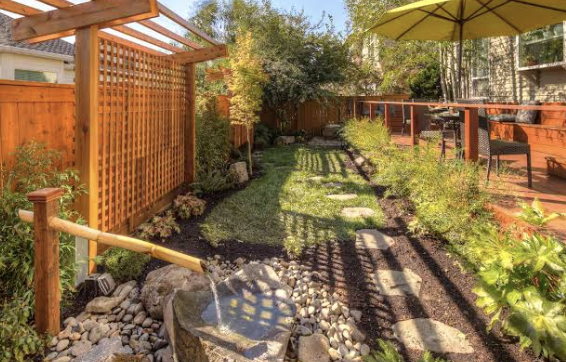
A fence is simple and direct, but it is not always the best answer.
In a small garden, a tall solid fence can make the area feel:
- narrow;
- dark;
- enclosed;
- less natural;
- visually smaller.
Natural privacy solutions work differently. They block views while keeping the garden breathable.
Softer visual effect
Plants and decorative screens create privacy in layers.
Instead of one hard wall, you can use:
- shrubs;
- climbers;
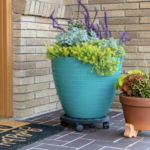
- tall planters;
- trellises;
- outdoor screens;
- hanging plants.
This makes the garden feel more relaxed and natural.
A leafy screen also changes with the seasons, adding movement and character.
Better for small-space design
Small gardens need careful balance.
If every boundary is solid and tall, the space may feel trapped.
Natural privacy elements can be placed only where needed, such as:
- beside a seating area;
- near a patio table;
- around a hot tub;
- along one exposed boundary;
- near a neighbour-facing window.
This keeps the rest of the garden open.
More wildlife-friendly
A planted privacy solution can support:
- birds;
- bees;
- butterflies;
- beneficial insects;
- small garden wildlife.
A plain fence may block views, but a planted screen gives nature something useful.
Easier to adjust over time
Garden needs change.
Maybe the neighbour changes. Maybe a new seating area is added. Maybe the garden layout develops.
Movable planters, freestanding trellises, and climbing plants allow more flexibility than a permanent fence.
| Privacy option | Main benefit | Best use |
|---|---|---|
| Tall plants | Natural screening | Soft boundaries |
| Trellis with climbers | Vertical privacy | Small gardens |
| Planters | Flexible layout | Patios and balconies |
| Decorative screens | Fast privacy | Seating areas |
| Pergola planting | Overhead privacy | Dining spaces |
For a small garden, privacy works best when it is layered, flexible, and visually light.
Which Plants and Trellises Work Best for Small Garden Privacy?
Plants and trellises are one of the most effective combinations for creating privacy in compact outdoor spaces.
The best plants and trellises for small garden privacy are compact climbers, evergreen shrubs, tall ornamental grasses, narrow hedging plants, and vertical trellis systems that screen views without taking up too much ground space.
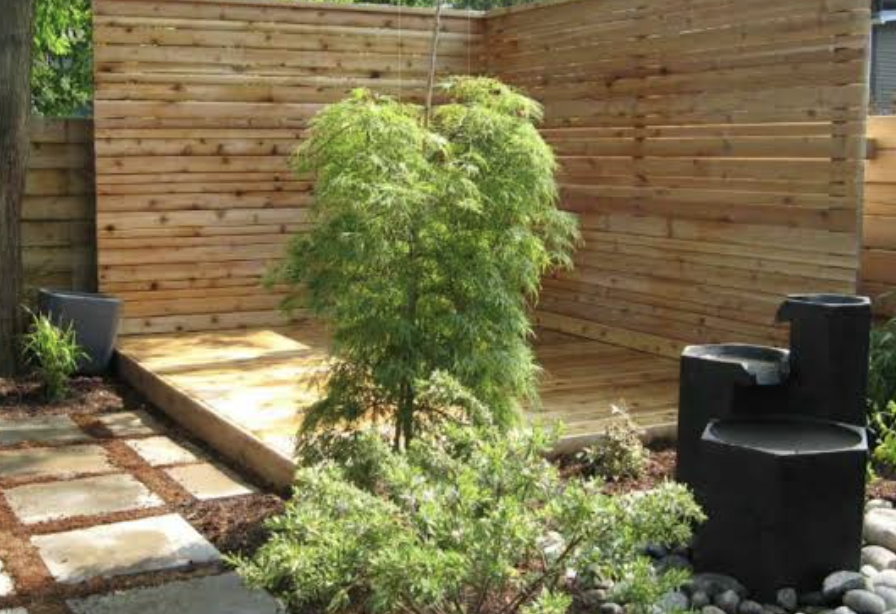
When space is limited, vertical planting is your best friend.
Instead of using wide hedges that take up valuable floor area, trellises allow plants to grow upward.
Climbing plants for privacy
Climbing plants are ideal for covering trellises, arches, and wall panels.
Popular options include:
- clematis;
- jasmine;
- honeysuckle;
- climbing roses;
- ivy;
- passionflower;
- star jasmine;
- wisteria for larger structures.
For year-round privacy, evergreen climbers are useful. For seasonal colour, flowering climbers bring more visual interest.
Trellis panels for vertical screening
A trellis gives plants structure and creates instant height.
Useful trellis styles include:
- wooden lattice panels;
- willow expandable trellises;
- metal garden trellises;
- plastic privacy trellises;
- planter trellis combinations;
- freestanding trellis screens.
In small gardens, narrow and tall trellises are often more useful than wide, bulky screens.
Tall planters with shrubs
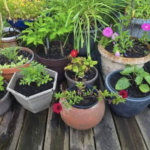
Tall planters can create movable privacy.
They work well for:
- rental gardens;
- patios;
- paved courtyards;
- outdoor dining areas;
- small urban gardens.
Good plant choices include:
- bamboo in containers;
- bay trees;
- olive trees;
- laurel;
- photinia;
- boxwood;
- pittosporum.
Container planting gives flexibility, but it needs regular watering and feeding.
Ornamental grasses
Tall grasses create soft movement and partial privacy.
They are useful when you want screening without making the space feel closed.
Examples include:
- miscanthus;
- pennisetum;
- stipa;
- calamagrostis.
Grasses are especially attractive near seating areas because they move gently in the wind.
| Privacy need | Best plant/trellis choice |
|---|---|
| Year-round screening | Evergreen climbers or shrubs |
| Seasonal flowers | Clematis, roses, jasmine |
| Narrow space | Wall trellis or planter trellis |
| Movable privacy | Tall planters |
| Soft screening | Ornamental grasses |
| Natural style | Willow trellis with climbers |
A trellis with the right plant can turn a small exposed corner into a private garden retreat.
How Can Decorative Garden Features Block Unwanted Views?
Privacy does not always need to come from plants. Decorative garden features can also guide sightlines and create comfortable hidden areas.
Decorative garden features such as screens, pergolas, arches, outdoor mirrors, raised planters, garden ornaments, and furniture placement can block unwanted views while improving the style of a small garden.
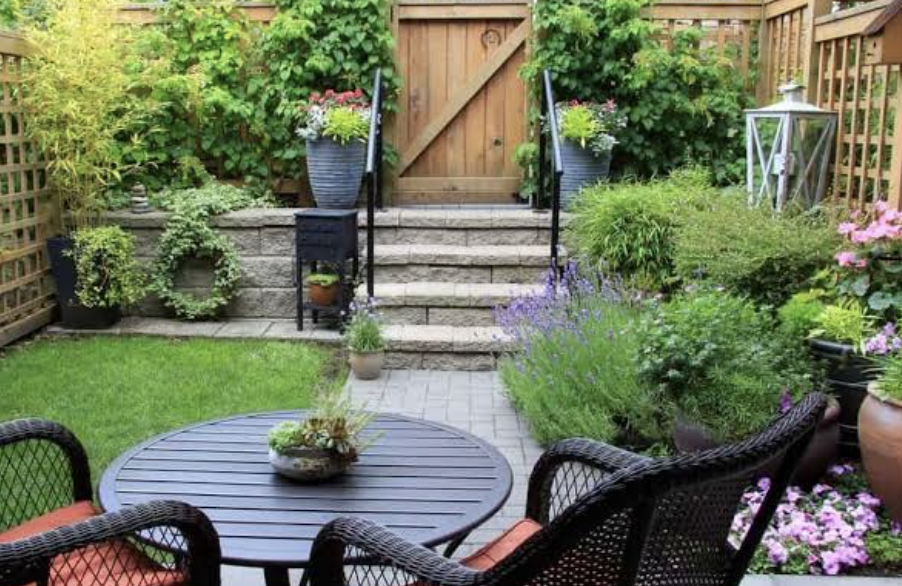
In many small gardens, the problem is not the whole boundary.
Usually, only one or two view lines need to be blocked.
For example:
- a neighbour’s upstairs window;
- a street-facing corner;
- an exposed patio seat;
- a side passage;
- a shared boundary.
Decorative features help solve these problems without building a full fence.
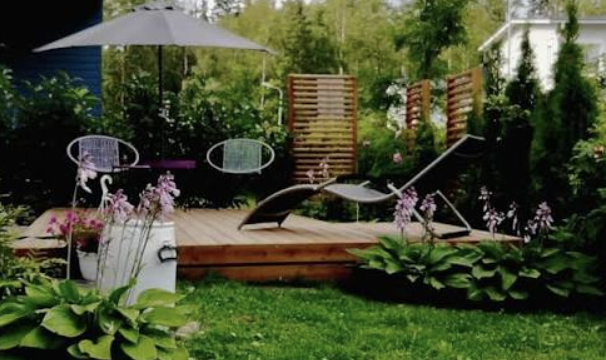
Freestanding screens
Freestanding garden screens are useful because they can be placed exactly where privacy is needed.
They may be made from:
- wood;
- metal;
- willow;
- bamboo;
- composite;
- plastic panels.
They can protect a seating area while keeping the rest of the garden open.
Pergolas and overhead structures
Sometimes privacy issues come from above, not the side.
A pergola can help screen:
- overlooking windows;
- upper-floor views;
- exposed dining areas.
With climbing plants or fabric shade panels, a pergola creates a more intimate outdoor room.
Raised planters
Raised planters create instant height.
They are especially useful along:
- patios;
- terrace edges;
- small courtyards;
- garden seating zones.
A raised planter with shrubs or grasses can provide privacy faster than ground-level planting.
Garden décor as visual distraction
Privacy is not always about fully blocking a view.
Sometimes, drawing the eye toward a beautiful feature is enough.
Useful focal points include:
- outdoor clocks;
- bird baths;
- wall art;
- water features;
- decorative pots;
- garden sculptures;
- planted arches.
A strong focal point can make people notice the garden, not the exposed boundary.
Furniture placement
Where you place furniture matters.
Instead of placing chairs directly in view, angle seating so it faces:
- planting;
- a feature wall;
- a water feature;
- a trellis;
- a garden corner.
This small design change can make the space feel more private immediately.
| Decorative feature | Privacy function | Extra benefit |
|---|---|---|
| Freestanding screen | Blocks side views | Movable |
| Pergola | Screens overhead views | Creates outdoor room |
| Raised planter | Adds height | Supports planting |
| Garden arch | Frames space | Adds structure |
| Water feature | Distracts attention | Improves atmosphere |
| Outdoor décor | Creates focal point | Adds personality |
Good privacy design often depends on blocking the right view, not every view.
What Design Tips Make a Small Garden Feel Both Private and Spacious?
The challenge in a small garden is creating privacy without making the space feel smaller.
To make a small garden feel both private and spacious, use layered planting, vertical structures, light colours, partial screening, diagonal layouts, mirrors, multi-functional planters, and carefully placed focal points.
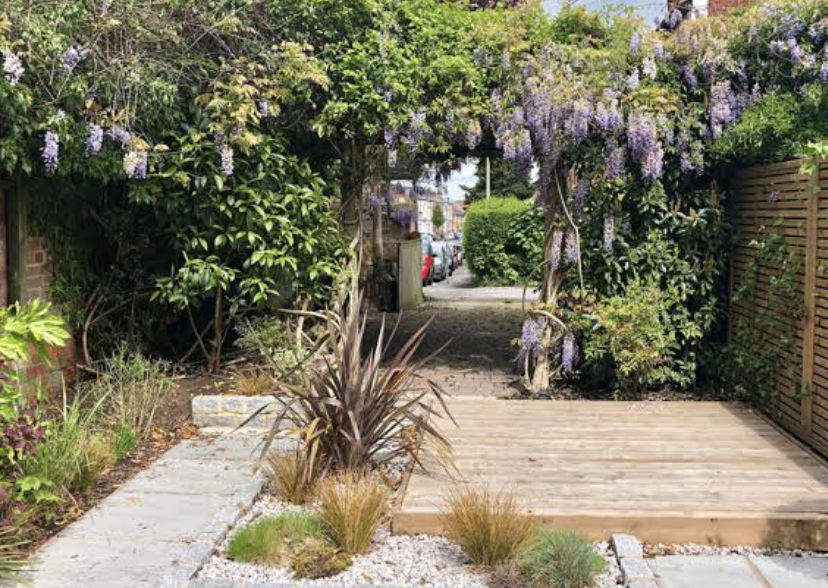
A private garden should not feel like a closed box.
The best small garden designs combine shelter with openness.
Use partial screening
You do not need to block every side completely.
Partial screening can protect key areas while keeping air, light, and visual depth.
For example:
- screen only the seating area;
- use a trellis on one side;
- add tall plants near exposed corners;
- keep some open views toward planting.
This feels more natural than surrounding the whole space with tall barriers.
Build privacy in layers
Layering makes privacy feel softer.
A good privacy layer may include:
- low plants at the front;
- medium shrubs in the middle;
- tall climbers or trellises at the back.
This creates depth and makes the garden look larger.
Use vertical height wisely
Vertical structures are very useful in small spaces.
Consider:
- wall trellises;
- narrow arches;
- hanging planters;
- climbing plants;
- tall pots;
- slim garden screens.
These options add privacy without taking up too much ground space.
Keep materials visually light
Heavy, dark materials can make a small garden feel tighter.
Lighter design choices include:
- open lattice trellises;
- pale timber;
- slim metal frames;
- light-coloured pots;
- natural woven screens.
Open patterns allow light through while still softening views.
Create a focal point
A focal point draws attention inward.
Good focal points include:
- a planted trellis;
- a small water feature;
- a statement planter;
- an outdoor clock;
- a decorative wall panel;
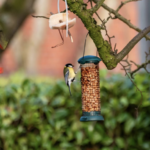
- a bird feeder station.
When the eye has something attractive to rest on, the garden feels more intentional and less exposed.
Avoid overcrowding
Privacy should not create clutter.
Use fewer, stronger elements instead of too many small items.
For example, one well-placed planter trellis may work better than many loose pots.
| Design goal | Best solution |
|---|---|
| More privacy | Layered planting |
| More space | Vertical design |
| More light | Open trellis patterns |
| More comfort | Screen seating zones |
| More style | Strong focal point |
| Less clutter | Multi-functional pieces |
A small garden feels best when privacy is designed as part of the space, not added as an afterthought.
Conclusion
You can create privacy in a small garden without building a fence by using plants, trellises, screens, and smart layout design. The best solution feels natural, flexible, and spacious.