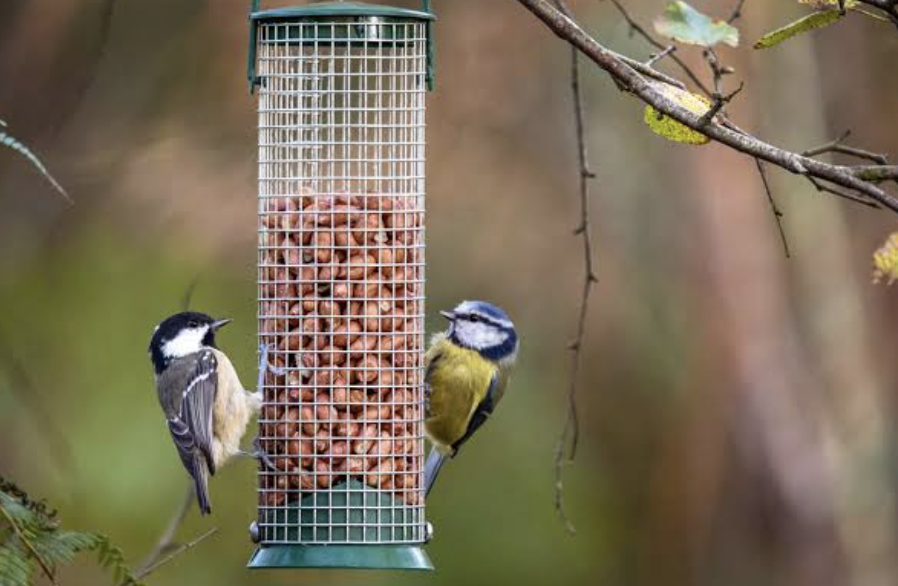
A bird feeder can quickly turn from a wildlife attraction into a health risk if it is not cleaned regularly. Many bird diseases spread through contaminated food, droppings, and moldy seed buildup.
Most bird feeders should be cleaned every 1–2 weeks, and more frequently during warm or wet weather when bacteria and mold grow faster.
Clean feeders are not just better for birds—they also encourage more frequent visits and healthier wildlife in your garden.
Why Regular Bird Feeder Cleaning Is Essential
Bird feeders create shared feeding spaces, which means disease can spread easily if hygiene is ignored.
Regular cleaning is essential because dirty feeders can accumulate bacteria, mold, and parasites that harm birds, reduce feeding activity, and contaminate food supplies.
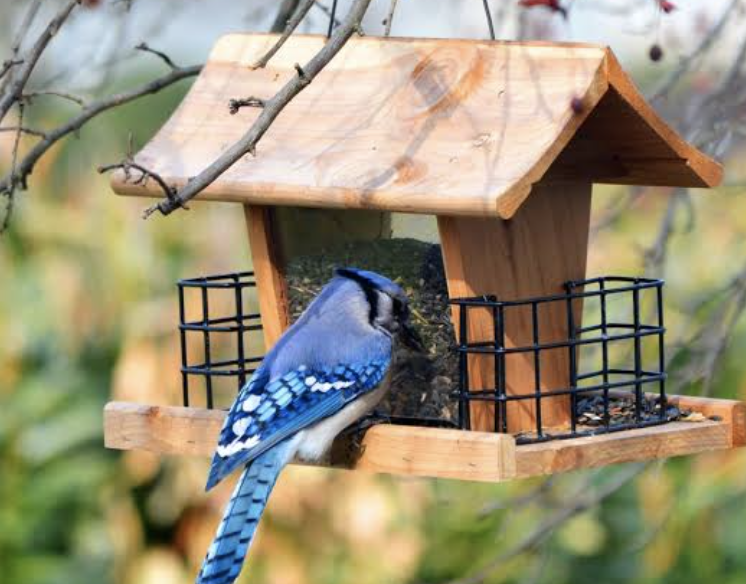
When birds gather at a feeder, they leave behind:
- droppings;
- feathers;
- saliva residue;
- discarded seed shells;
- wet or spoiled food particles.
These materials create ideal conditions for harmful microorganisms.
Disease prevention is the main reason
Common bird diseases associated with dirty feeders include:
- salmonella;[^1]
- trichomoniasis;
- avian pox;
- fungal infections;
- bacterial contamination.
Once disease spreads, it can quickly affect multiple birds visiting the same feeder[^2].
Mold grows faster than most people expect
Moist seeds and warm temperatures create perfect conditions for mold growth.
Moldy food can:
- reduce bird appetite;
- cause respiratory issues;
- contaminate fresh seeds;
- spread quickly between feeding visits.
Even a few days of damp weather can be enough for mold to develop.
Dirty feeders reduce bird activity
Birds are sensitive to food quality and environmental safety.
If a feeder is dirty, birds may:
- stop visiting entirely;
- reduce feeding time;
- switch to safer locations;
- avoid the garden for long periods.
A clean feeder is often the difference between occasional visits and a stable bird population.
| Problem in dirty feeder | Impact on birds | Result in garden |
|---|---|---|
| Bacteria buildup | Disease risk | Fewer birds |
| Mold growth | Poor food quality | Avoidance behavior |
| Old seed residue | Contamination | Reduced feeding |
| Droppings accumulation | Parasite spread | Unsafe environment |
A clean feeder is the foundation of a healthy and active bird-friendly garden.
How Often Should You Clean Different Types of Bird Feeders?
Different feeder types require different cleaning schedules depending on how food is stored, exposed, and consumed.
Most seed feeders should be cleaned every 1–2 weeks, while feeders exposed to rain or soft food types should be cleaned more frequently, sometimes every 2–3 days in warm or humid conditions.
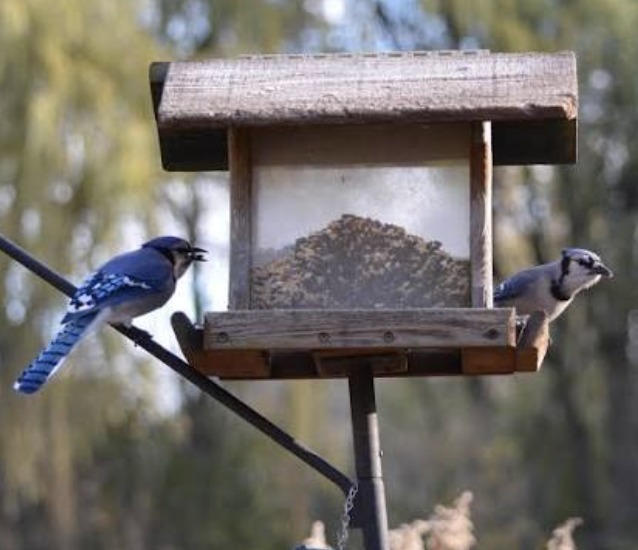
There is no single rule for all feeders.
The best cleaning frequency depends on weather, food type, and feeder design.
Seed feeders
Seed feeders are the most common type in gardens.
Recommended cleaning:
- every 1–2 weeks in normal conditions;
- every 3–5 days in wet or humid weather;
- immediately if seeds become wet or clumped.
Seed feeders often develop moisture buildup, especially under rain exposure.
Suet and fat ball feeders
Suet feeders attract high-energy feeding birds, especially in winter.[^3]
Recommended cleaning:
- every 1–2 weeks;
- more frequently in warm weather (to prevent melting and bacteria growth);
- immediately if fat becomes soft or rancid.
Suet becomes unsafe quickly in high temperatures.[^4]
Platform feeders
Platform feeders expose food directly to the environment.
Recommended cleaning:
- every 2–3 days;
- daily during wet weather or heavy bird activity.
Because food is open, contamination happens faster.
Ground feeders
Ground feeding areas are highly exposed to soil, rain, and droppings.
Recommended cleaning:
- daily or every other day;
- more frequently in crowded feeding areas.
These areas should be treated like natural feeding zones and kept as clean as possible.
Nectar feeders
Sugar-water feeders require strict hygiene.
Recommended cleaning:
- every 2–3 days in warm weather;
- every 3–5 days in cooler weather;
- immediately if liquid becomes cloudy.
Fermentation can occur very quickly in nectar solutions.
| Feeder type | Cleaning frequency | Risk level |
|---|---|---|
| Seed feeder | 1–2 weeks | Medium |
| Suet feeder | 1–2 weeks (more in heat) | High in summer |
| Platform feeder | 2–3 days | High |
| Ground feeder | 1–2 days | Very high |
| Nectar feeder | 2–5 days | Very high |
A good rule is: the more exposed the food, the more often it must be cleaned.
The Best Way to Clean a Bird Feeder Safely
Cleaning a bird feeder is simple, but it must be done correctly to avoid harming birds or leaving behind harmful residues.
The safest method is to empty the feeder completely, wash it with hot water and mild soap, rinse thoroughly, and allow it to dry fully before refilling. Avoid harsh chemicals that may leave toxic residues.
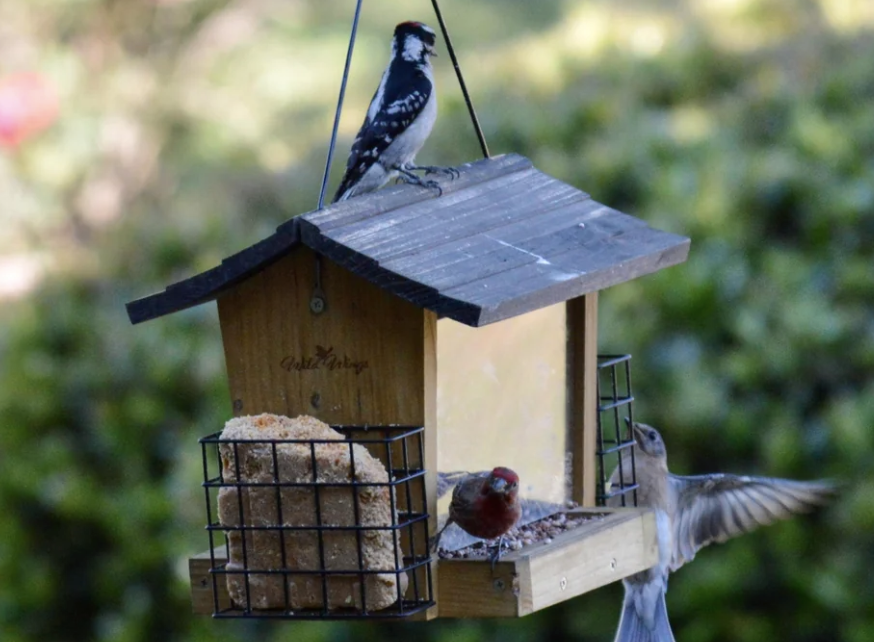
Many people make the mistake of simply topping up old seed instead of fully cleaning the feeder.
This allows contamination to build up over time.
Step 1: Empty the feeder completely
Remove all old food[^5], including:
- leftover seeds;
- wet or clumped material;
- shells and debris;
- old fat or suet residue.
Do not mix fresh seed with old seed.[^6]
Step 2: Disassemble parts if possible
Take the feeder apart so you can reach hidden areas.
This helps remove:
- trapped food particles;
- mold in corners;
- droppings stuck inside;
- moisture in joints.
Step 3: Wash with warm soapy water
Use:
- warm water;
- mild dish soap;
- a soft brush or cloth.
Avoid strong detergents or bleach unless properly diluted and rinsed thoroughly.
Step 4: Rinse thoroughly
Any leftover soap can be harmful to birds.
Rinse multiple times until no smell remains.
Step 5: Dry completely
Drying is essential.
A damp feeder can quickly grow bacteria again.
Best drying methods:
- air drying in sunlight;
- wiping with a clean cloth;
- leaving disassembled parts to dry fully.
Never refill a wet feeder.
Step 6: Optional disinfecting (carefully)
Occasionally, a weak disinfecting solution can be used, but only if:
- it is bird-safe;
- it is fully rinsed;
- it leaves no residue.
Many gardeners prefer hot water alone to avoid chemical risk.
| Cleaning step | Purpose | Key warning |
|---|---|---|
| Emptying | Remove contamination | Do not mix old and new seed |
| Disassembly | Reach hidden dirt | Avoid forcing fragile parts |
| Washing | Remove bacteria | Use mild soap only |
| Rinsing | Remove residues | Ensure no chemical left |
| Drying | Prevent mold regrowth | Never refill wet feeder |
A properly cleaned feeder becomes a safe feeding station again within hours.
Tips for Keeping Bird Feeders Cleaner for Longer
While regular cleaning is necessary, good feeder setup can reduce how quickly dirt builds up.
You can keep bird feeders cleaner for longer by choosing weather-protected designs, using high-quality seed, avoiding overfilling, and placing feeders in locations that reduce rain exposure and ground contamination.
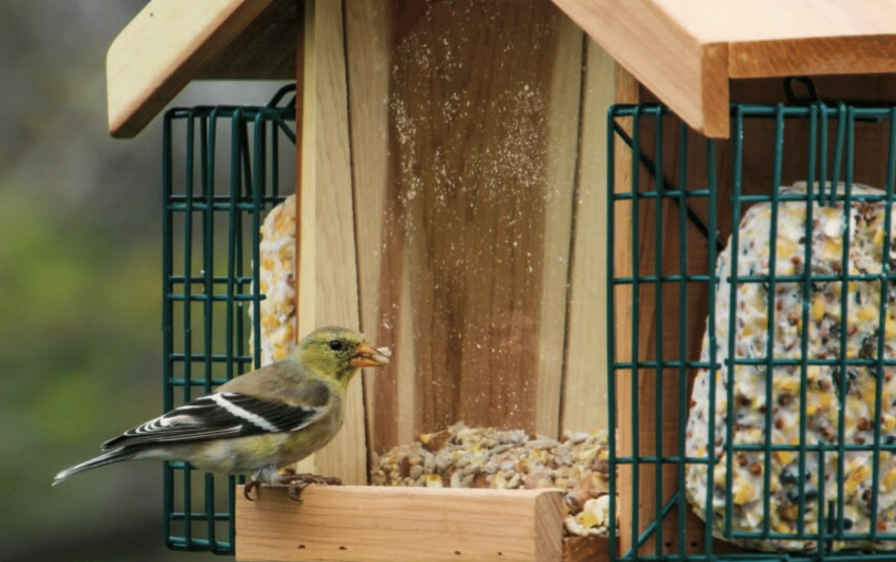
Good maintenance is not only about cleaning—it also depends on prevention.
Choose weather-protected feeder designs
Feeders with protective roofs or covers help reduce:
- rain entering the food area;
- seed soaking;
- direct snow buildup;
- contamination from falling debris.
Even a simple roof can significantly extend cleanliness.
Avoid overfilling feeders
Overfilling can cause:
- seed to stay unused for too long;
- moisture buildup inside;
- faster spoilage;
- wasted food.
It is better to refill small amounts more often than large amounts rarely.
Use high-quality bird seed
Cheap or low-quality seed may contain:
- dust;
- broken shells;
- excess husks;
- moisture-sensitive particles.
Higher-quality seed stays cleaner and lasts longer.
Choose the right location
Placement affects cleanliness more than most people expect.
Avoid placing feeders:
- directly under trees that drop debris;
- in very wet or exposed rain areas;
- too close to muddy ground;
- near compost or waste areas.
A slightly sheltered but open location works best.
Reduce ground contamination
Seed falling to the ground can attract:
- rodents;
- pigeons;
- mold growth.
Using seed catch trays or placing feeders over clean ground helps reduce contamination.
| Prevention tip | Benefit | Cleaning impact |
|---|---|---|
| Roofed feeder design | Less rain exposure | Slower dirt buildup |
| Smaller refills | Fresher food | Less waste |
| Quality seed | Less debris | Cleaner feeder |
| Proper placement | Less contamination | Reduced cleaning frequency |
| Catch trays | Controlled waste | Cleaner ground area |
A well-designed setup helps your bird feeder function as a low-maintenance wildlife support system.
Conclusion
Cleaning bird feeders regularly is essential for bird health and garden biodiversity. With the right schedule, safe cleaning methods, and smart placement, you can create a feeding environment that stays clean, safe, and attractive for birds year-round.
[^1]: "Pathology Case of the Month – Red Crossbills and American … – USGS", https://www.usgs.gov/news/pathology-case-month-red-crossbills-and-american-goldfinches. Wild-bird health guidance identifies salmonellosis as a disease associated with bird feeders and notes that transmission can occur where birds congregate around contaminated food or surfaces. Evidence role: general_support; source type: government. Supports: Salmonella is a common bird disease associated with dirty feeders.. Scope note: This supports the feeder-related risk for salmonellosis generally, rather than proving that any specific feeder is contaminated.
[^2]: "I have a bird feeder (or birdbath) in my yard. Am I putting myself and …", https://www.usgs.gov/faqs/i-have-a-bird-feeder-or-birdbath-my-yard-am-i-putting-myself-and-healthy-birds-risk-west-nile. Wildlife disease guidance explains that bird feeders can concentrate birds and facilitate disease transmission through shared food, feces, or contaminated surfaces; this provides contextual support for the claim that outbreaks may affect multiple feeder visitors. Evidence role: mechanism; source type: institution. Supports: Once disease spreads, it can quickly affect multiple birds visiting the same feeder.. Scope note: The source would support the transmission mechanism and risk context, but the speed and number of birds affected vary by pathogen, feeder conditions, and local bird density.
[^3]: "Feed winter birds with the right seed, shelter and water", https://extension.oregonstate.edu/news/feed-winter-birds-right-seed-shelter-water. Ornithological and bird-conservation sources describe suet as an energy-dense food commonly used by birds during cold weather, supporting the seasonal rationale for winter suet feeding. Evidence role: general_support; source type: institution. Supports: Suet feeders attract high-energy feeding birds, especially in winter.. Scope note: This supports the general feeding rationale rather than proving that any specific feeder will attract birds in all locations.
[^4]: ""Danger Zone" (40°F – 140°F) – Food Safety and Inspection Service", http://www.fsis.usda.gov/food-safety/safe-food-handling-and-preparation/food-safety-basics/danger-zone-40f-140f. Food-safety and bird-feeding guidance notes that fats can become rancid and that warm conditions can accelerate spoilage or microbial growth, providing contextual support for caution about suet in high temperatures. Evidence role: mechanism; source type: government. Supports: Suet becomes unsafe quickly in high temperatures.. Scope note: Most sources address fat spoilage or feeder hygiene generally; they may not quantify an exact temperature threshold or spoilage time for commercial bird suet.
[^5]: "Salmonella | Cornell Wildlife Health Lab", https://cwhl.vet.cornell.edu/resource/salmonella. Wildlife and bird-conservation guidance commonly advises removing spoiled or accumulated food from feeders because damp or contaminated feed can promote pathogens and reduce feeder hygiene; this supports the sanitation rationale but does not quantify the risk for every feeder type or climate. Evidence role: expert_consensus; source type: institution. Supports: Old food should be removed from a feeder rather than left in place.. Scope note: Contextual support; risk varies by species, feeder design, weather, and cleaning frequency.
[^6]: "How to Clean Your Bird Feeder | All About Birds", https://www.allaboutbirds.org/news/how-to-clean-your-bird-feeder/. Feeder-hygiene guidance recommends discarding old or spoiled seed before refilling, since mixing fresh food with contaminated remnants can undermine cleaning and expose birds to degraded feed; this supports the practice as a sanitation measure rather than proving a specific disease outcome in all cases. Evidence role: mechanism; source type: education. Supports: Fresh seed should not be mixed with old seed in a feeder.. Scope note: The source is expected to support the hygiene mechanism generally, not to demonstrate that every instance of mixing old and new seed causes harm.