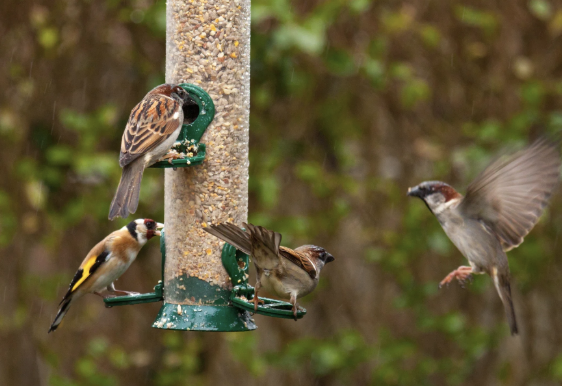
A garden feels more alive when birds are present. Their movement, sound, and behaviour add natural balance that plants alone cannot create.
Bird feeders help create a wildlife-friendly garden by supporting local bird populations, increasing biodiversity, and encouraging a stable ecosystem where birds, insects, and plants interact naturally.
When used correctly, a simple feeder becomes part of a much larger ecological system.
Why Birds Are Essential for a Healthy Garden
Birds are not just visitors in a garden—they are active participants in maintaining its health.
Birds contribute to pest control, seed dispersal, and ecological balance, making them one of the most important natural allies in a healthy garden environment.
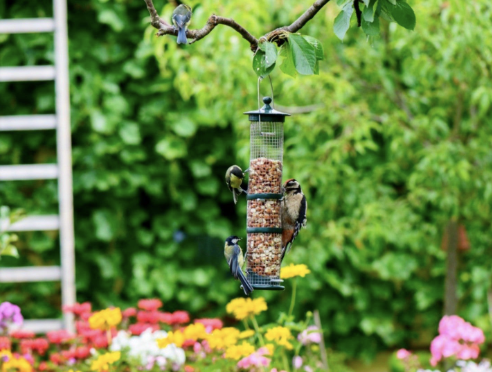
Many gardeners focus only on plants, soil, and watering. However, birds play a quiet but powerful role in supporting garden ecosystems.
Natural pest control
One of the most important roles birds play is controlling insect populations.
Many common garden birds feed on:
- aphids;
- caterpillars;
- beetles;
- flies;
- larvae;
- other small insects.
By reducing pest numbers naturally, birds help protect flowers, vegetables, and shrubs without the need for chemical pesticides.
This creates a healthier and more sustainable growing environment.
Supporting plant growth cycles
Some bird species also help with:
- seed dispersal[^1];
- soil aeration (indirectly through foraging behaviour);
- balancing insect populations that affect plant growth[^2];
- removing damaged or diseased plant material (in some cases).
This natural interaction helps maintain a stable garden ecosystem.
A sign of ecological balance
A garden with regular bird activity usually indicates:
- sufficient natural food sources;
- safe habitat conditions;
- healthy insect populations;
- diverse plant life;
- minimal environmental stress.
Birds are often considered “indicator species,” meaning their presence reflects the overall health of the environment.
| Bird role | Garden benefit | Result |
|---|---|---|
| Insect control | Reduces pests | Healthier plants |
| Seed dispersal | Supports plant spread | Natural regeneration |
| Foraging behaviour | Soil disturbance | Better soil health |
| Ecosystem balance | Population control | Stable garden environment |
A bird-friendly garden is often a more resilient and self-sustaining ecosystem.
Bird Feeders Encourage Greater Biodiversity
Bird feeders do more than attract birds—they influence the entire ecosystem around them.
Bird feeders encourage biodiversity by supporting multiple bird species, increasing food availability, and attracting other wildlife such as beneficial insects and small pollinators to the garden.
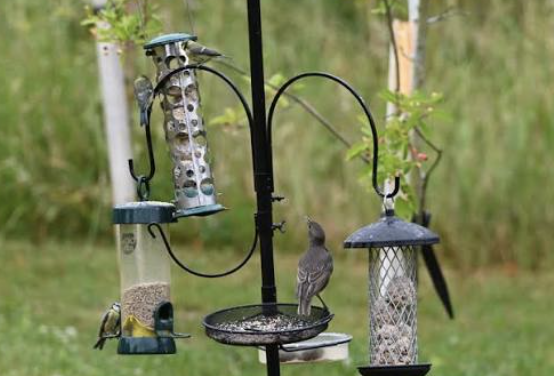
When food is consistently available, more species can coexist in the same space.
This creates a richer and more dynamic garden environment.
Attracting different bird species
Different birds prefer different types of food and feeding styles.
For example:
- seed feeders attract finches and sparrows;
- suet feeders attract woodpeckers and tits;
- ground feeders attract robins and thrushes;
- nectar feeders attract certain small species and insects.
By offering varied food types, a single garden can support multiple bird species at the same time.
Seasonal support for wildlife
Natural food sources change throughout the year.
In winter, insects and berries may become scarce[^3]. Bird feeders help fill this gap by providing consistent nutrition.
This seasonal support helps:
- reduce bird migration stress;
- increase survival rates during cold months[^4];
- maintain stable bird populations in urban areas;
- encourage birds to return regularly.
Indirect impact on insects and pollinators
Bird feeders also affect other wildlife indirectly.
When bird populations increase:
- insect populations are naturally regulated;
- plant health improves;
- flowering cycles become more stable;
- pollinator activity becomes more balanced.
This creates a layered ecosystem where different species support each other.
Reduced dominance of single species
In some gardens, one bird species can dominate food sources.
With well-placed feeders and varied food types, competition can be balanced, allowing:
- more peaceful feeding behaviour;
- less aggression between species;
- better coexistence of small and medium birds;
- more stable population distribution.
| Biodiversity factor | Impact of bird feeders | Garden result |
|---|---|---|
| Food variety | Attracts multiple species | Richer ecosystem |
| Seasonal feeding | Supports winter survival | Stable populations |
| Reduced competition | Balanced feeding zones | Less aggression |
| Habitat expansion | Encourages visits | More wildlife activity |
Over time, feeders help transform a simple garden into a multi-species wildlife environment.
Creating a Safe and Comfortable Habitat for Garden Birds
Birds will only stay in a garden if they feel safe. Food alone is not enough.
A wildlife-friendly garden must provide safety from predators, shelter from weather, and predictable feeding areas where birds can feed and rest without stress.
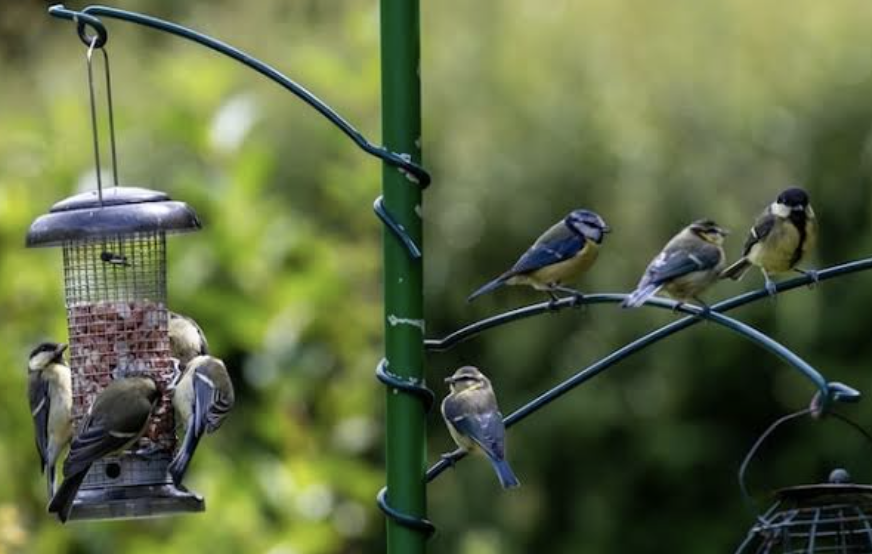
Safety is the foundation of any bird-friendly environment.
If birds feel threatened, they will quickly stop visiting even the best feeder.
Protection from predators
Common garden predators include:
- domestic cats;
- foxes;
- birds of prey;
- snakes (in some regions).
To reduce risk, bird feeders should be placed:
- away from dense ground cover where predators hide;
- at a safe height (usually 1.5–2.5 meters);
- near escape routes such as trees or hedges;
- in open but not exposed spaces.
The goal is to create a “safe awareness zone” where birds can see danger early.
Shelter from weather conditions
Birds also need protection from wind, rain, and temperature extremes.
Good shelter includes:
- hedges;
- small trees;
- shrubs;
- garden structures like pergolas or fences.
Shelter helps birds:
- conserve energy;
- feed comfortably in bad weather;
- reduce heat loss in winter;
- stay cool in summer shade.
Predictable feeding environment
Birds prefer stable environments.[^5]
Frequent changes in feeder location or food type can reduce trust.[^6]
A good setup should:
- keep feeders in consistent positions;
- maintain regular refilling;
- provide reliable food types;
- avoid sudden disturbances.
Clean and safe feeding areas
Hygiene is important for long-term bird health.
Best practices include:
- cleaning feeders regularly;
- removing old or wet food;
- avoiding mold buildup;
- preventing overcrowding;
- keeping water sources fresh.
| Habitat factor | What birds need | What to avoid |
|---|---|---|
| Safety | Escape routes + visibility | Hidden predator zones |
| Shelter | Trees and hedges | Fully exposed spaces |
| Stability | Fixed feeder location | Frequent movement |
| Hygiene | Clean food and water | Moldy or old seeds |
A safe garden encourages birds to treat it as a reliable home environment rather than a temporary stop.
Choosing the Right Bird Feeder for Long-Term Wildlife Support
Not all bird feeders support wildlife in the same way. The design, material, and placement all influence long-term effectiveness.
The best bird feeders for wildlife-friendly gardens are durable, easy to clean, suitable for multiple bird species, and designed to reduce waste while protecting food from weather and pests.
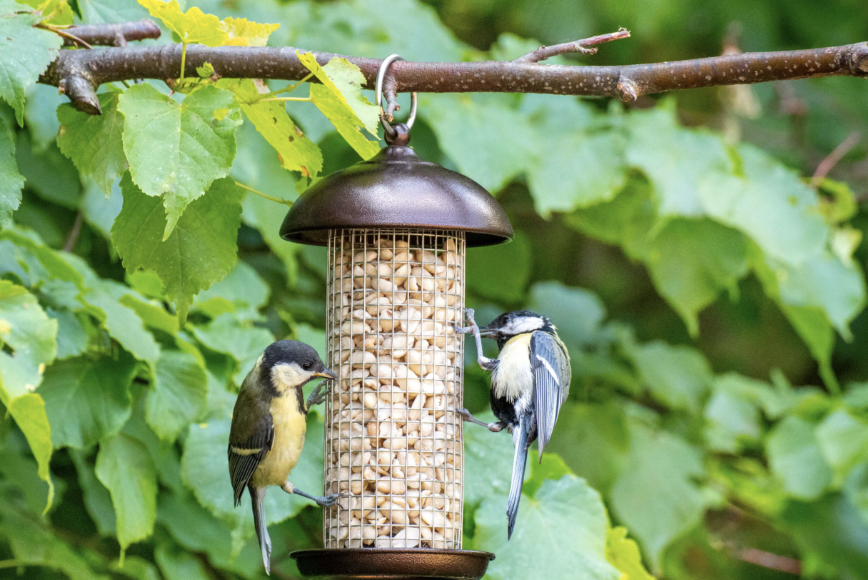
A well-chosen feeder does more than attract birds. It supports their health and encourages long-term visits.
Different feeder types support different species
Choosing the right feeder depends on your garden goals.
Common types include:
- seed feeders (general species like sparrows and finches);
- suet feeders (high-energy food for cold weather);
- platform feeders (multiple species feeding together);
- ground feeders (robins and thrushes);
- nectar feeders (specialised species in some regions).
Using more than one type increases biodiversity.
Material quality affects long-term use
Outdoor feeders must withstand weather conditions.
Common materials include:
- metal (durable and predator-resistant);
- UV-stabilised plastic (lightweight and weather-resistant)[^7];
- wood (natural appearance but needs maintenance);
- mixed materials (balance of strength and design).
Poor-quality plastic can crack or fade, while untreated wood may rot over time[^8].
Easy cleaning is essential
A wildlife-friendly feeder must be easy to maintain.
Good designs allow:
- simple disassembly;
- smooth surfaces without food traps;
- easy rinsing and drying;
- safe removal of old seeds.
Dirty feeders can spread disease between birds, reducing overall garden health.
Weather protection improves reliability
Feeders should reduce exposure to:
- rain (which spoils food);
- wind (which spills seed);
- snow (which blocks access);
- direct sunlight (which dries or overheats food).
Covered designs or sheltered placement improves performance.
Key features for wildlife-friendly feeding
| Feature | Benefit | Wildlife impact |
|---|---|---|
| Multiple feeding ports | More birds can feed | Reduced competition |
| Seed protection roof | Keeps food dry | Healthier nutrition |
| Drainage holes | Prevents water buildup | Reduces mould |
| Metal reinforcement | Stops predator damage | Safer feeding |
| Easy cleaning design | Improves hygiene | Healthier bird population |
The best feeder is one that becomes part of a long-term ecological support system, not just a seasonal decoration.
Conclusion
Bird feeders play a much bigger role than simply attracting wildlife. They help build a balanced ecosystem where birds support plant health, increase biodiversity, and make gardens more alive and resilient.
[^1]: "a mechanistic understanding by simulating avian digestion", https://library.search.tulane.edu/view/action/uresolver.do?operation=resolveService&package_service_id=14341124160006326&institutionId=6326&customerId=6325&VE=true. This source explains that many birds disperse seeds through fruit consumption and movement, supporting the claim that some bird species contribute to seed dispersal in plant communities. Evidence role: mechanism; source type: education. Supports: Some bird species help with seed dispersal.. Scope note: The support is general ecological context and does not show that all garden bird species provide this service equally.
[^2]: "willows, herbivorous insects and insectivorous birds – PubMed", https://pubmed.ncbi.nlm.nih.gov/28308363/. This source documents that insectivorous birds can reduce arthropod abundance and plant damage in terrestrial ecosystems, supporting the claim that birds may influence insect populations relevant to plant growth. Evidence role: general_support; source type: paper. Supports: Some bird species help balance insect populations that affect plant growth.. Scope note: Effects vary by bird species, insect community, season, and habitat, so the source provides contextual support rather than proof for every garden setting.
[^3]: "Winter Bird Feeding: The Basics – Penn State Extension", https://extension.psu.edu/winter-bird-feeding-the-basics/. A university extension or ornithology source on seasonal bird foraging supports that insect activity and many fruit resources decline in winter, creating seasonal variation in natural food availability for wild birds. Evidence role: general_support; source type: education. Supports: In winter, insects and berries may become scarce.. Scope note: This support is contextual because scarcity varies by region, plant community, and winter severity.
[^4]: "Winter feeding of birds increases productivity in the subsequent …", https://pmc.ncbi.nlm.nih.gov/articles/PMC2429937/. Peer-reviewed research on winter supplementary feeding of wild birds can support that feeder access is associated with improved overwinter survival or condition in some species under cold conditions. Evidence role: general_support; source type: paper. Supports: Seasonal bird feeding can increase survival rates during cold months.. Scope note: The evidence is species- and context-dependent; studies do not show that feeders universally increase survival for all birds or locations.
[^5]: "How urban impervious surface shapes bird foraging behavior …", https://pmc.ncbi.nlm.nih.gov/articles/PMC12466499/. Ornithological and behavioral ecology sources describe birds as using learned spatial cues and predictable resource locations when foraging; this supports the general claim that environmental stability can influence bird visitation and feeding behavior. Evidence role: general_support; source type: paper. Supports: Birds prefer stable environments.. Scope note: This support is contextual because preferences vary by species, season, habitat, and individual experience.
[^6]: "Exploring or Avoiding Novel Food Resources? The Novelty Conflict …", https://pmc.ncbi.nlm.nih.gov/articles/PMC3097186/. Research on avian foraging and neophobia shows that birds may hesitate to use unfamiliar food items or altered feeding situations; this supports the claim that frequent changes can reduce feeder use, though it does not directly measure “trust” in backyard feeding contexts. Evidence role: mechanism; source type: paper. Supports: Frequent changes in feeder location or food type can reduce trust.. Scope note: The evidence is likely indirect, since scientific studies usually measure avoidance, latency to feed, or neophobic responses rather than trust as such.
[^7]: "[PDF] Effect of Durability Treatment on Ultraviolet Resistance, Strength …", https://bioresources.cnr.ncsu.edu/BioRes_09/BioRes_09_2_3591_Li_ZSLZW_Effect_Durability_Treat_UV_Resistance_5422.pdf. Materials science references describe UV stabilizers as additives that reduce polymer degradation from ultraviolet exposure, supporting the statement that UV-stabilised plastics are more weather-resistant than unstabilised plastics. Evidence role: mechanism; source type: education. Supports: UV-stabilised plastic is lightweight and weather-resistant for outdoor feeder use.. Scope note: This supports the material property in general; durability still depends on the specific polymer, additive package, thickness, and outdoor exposure conditions.
[^8]: "Wood-water relationships and their role for wood susceptibility to …", https://pmc.ncbi.nlm.nih.gov/articles/PMC8326242/. Wood preservation guidance from forestry and extension sources explains that untreated wood exposed to moisture is susceptible to fungal decay, supporting the claim that untreated wooden outdoor feeders may rot over time. Evidence role: mechanism; source type: government. Supports: Untreated wood used outdoors may rot over time.. Scope note: The rate of decay varies by wood species, climate, moisture exposure, and construction details.