Where you hang a bird feeder matters just as much as the feeder itself. A well-placed feeder attracts more birds, keeps them safe, and makes maintenance easier for you.
The best place to hang a bird feeder is a quiet, semi-sheltered location with good visibility, natural cover nearby, and safe distance from predators and human disturbance.
A thoughtful setup can turn a simple feeder into a reliable feeding station that birds return to every day.
Keep Birds Safe from Predators
Safety is the most important factor when choosing a bird feeder location.
A good bird feeder spot should reduce exposure to cats, foxes, and birds of prey by providing open visibility combined with nearby escape cover such as bushes or trees.
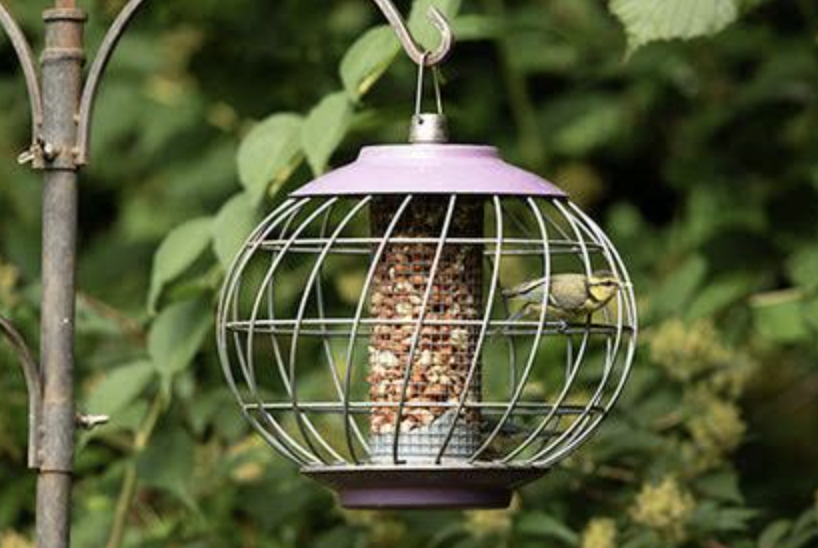
Birds are naturally cautious animals. Even if food is available, they will avoid areas where they feel exposed.
One of the biggest threats in residential gardens is domestic cats. Another is sudden attacks from birds of prey. If a feeder is placed too close to dense hiding spots on the ground, predators may use them for ambush.
At the same time, birds also need quick escape routes. This is why a balance is important.
The ideal safety balance
A safe feeding setup usually follows this rule:
- Not too close to dense shrubs where cats can hide[^1]
- Not too far from trees or bushes where birds can escape
- Elevated and open enough for visibility
A distance of around 2–3 meters from dense ground cover is often ideal[^2], depending on your garden layout.
Avoid high-risk placement mistakes
Common mistakes include:
- Hanging feeders too close to fences where cats climb
- Placing feeders directly above thick bushes (ambush points)
- Installing feeders too low near ground level
- Positioning feeders next to walls that limit escape routes
Birds prefer control of their surroundings. If they feel trapped, they will avoid the feeder entirely.
Height also matters
Most small garden birds feel safe feeding at a height of around 1.5 to 2.5 meters.
This height helps:
- Reduce ground predator access
- Keep food away from children or pets
- Improve bird visibility
However, height alone is not enough without proper surrounding placement.
| Safety factor | Good choice | Risky choice |
|---|---|---|
| Distance from bushes | Moderate open space nearby | Deep dense shrub coverage |
| Height | 1.5–2.5 meters | Ground level |
| Predator access | Limited climbing paths | Near fences or walls |
| Escape routes | Nearby trees or hedges | Open isolated areas |
A safe feeding location is the foundation of a long-term bird-friendly garden.
Choose a Quiet Location with Natural Shelter
Birds are easily disturbed by noise and movement. A feeder placed in a busy or exposed area will attract fewer visitors.
Bird feeders work best in quiet garden areas with natural shelter such as trees, hedges, or shrubs that provide protection from wind, noise, and sudden movement.
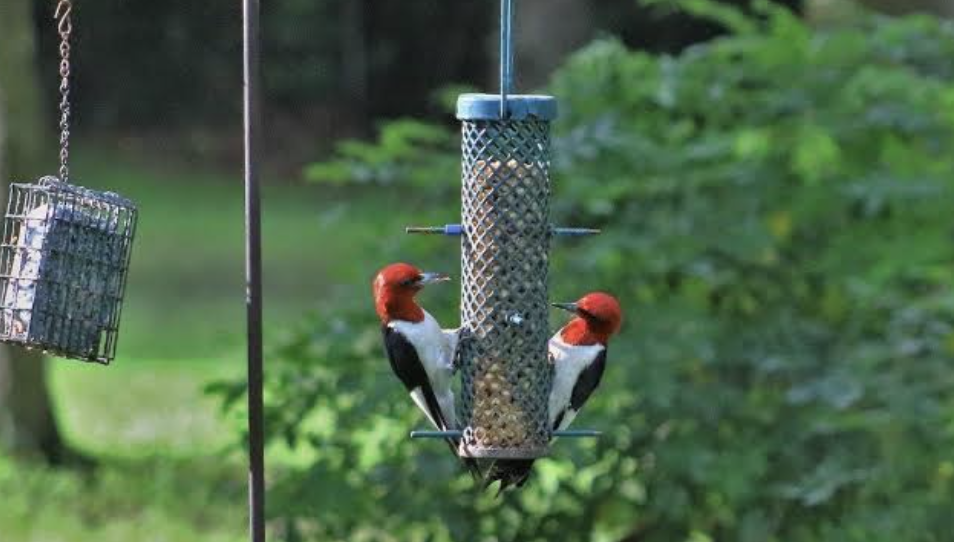
Think like a bird for a moment.
A constant flow of people, pets, or loud activity signals danger. Even if food is available, birds may hesitate to approach.
Best quiet locations in a garden
Ideal feeder locations include:
- Side gardens away from main footpaths
- Areas near hedges or small trees
- Semi-shaded corners with low human traffic
- Spaces protected from strong wind
- Locations not directly facing windows or doors
Natural shelter is especially important during winter, when wind and rain can make feeding uncomfortable.
Why shelter matters
Shelter provides:Shelter provides[^3]:
- Protection from wind while feeding
- Partial cover from predators
- A resting area nearby
- Comfort during bad weather
However, full enclosure is not ideal. Birds still need visibility to detect danger.[^4]
- Protection from wind while feeding
- Partial cover from predators
- A resting area nearby
- Comfort during bad weather
However, full enclosure is not ideal. Birds still need visibility to detect danger.
Avoid overly busy areas
Bird activity will decrease if feeders are placed near:
- Frequent door openings
- Children’s play areas
- Busy patios or BBQ spaces
- Washing lines with constant movement
- High-traffic garden paths
Even if birds visit initially, they may stop returning if they feel disturbed.
Light and visibility balance
A good feeder location is usually:
- Bright enough for birds to see food clearly
- Not fully exposed to direct sun all day
- Not too dark or hidden under dense canopy
| Location type | Bird activity level | Reason |
|---|---|---|
| Quiet hedge area | High | Safe and sheltered |
| Busy patio area | Low | Human disturbance |
| Open lawn center | Medium | Visible but exposed |
| Tree edge zone | High | Shelter + escape routes |
| Deep shaded corner | Low | Low visibility |
A calm environment allows birds to treat your feeder as a safe and predictable food source.
Make Feeding Easy While Keeping Maintenance Simple
A good bird feeder location should not only suit birds—it should also be practical for you.
The best feeder placement allows easy refilling, cleaning, and monitoring while reducing mess, spillage, and food waste on the ground.
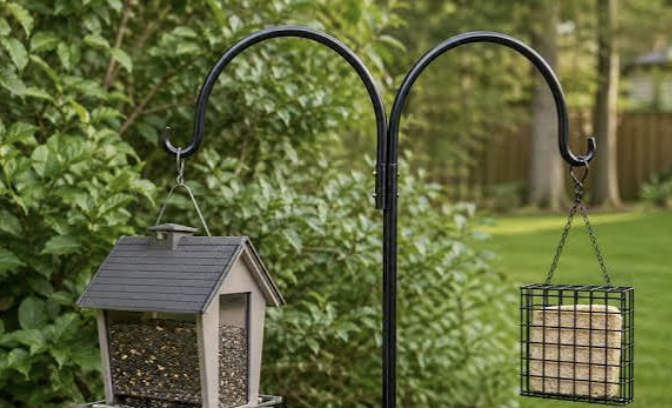
If a feeder is difficult to reach, it often gets neglected. Dirty feeders can spread disease and discourage birds from returning.
Accessibility is key
Choose a location where you can:
- Refill seeds easily without ladders
- Clean the feeder regularly
- Check for damage or mold
- Adjust positioning if needed
A hook on a strong branch, garden pole, or wall bracket usually works best.
Reduce mess and waste
Seed waste can attract unwanted animals like rats or pigeons.[^5]
To minimize mess:
- Avoid placing feeders directly above patios or tables
- Use catch trays where possible[^6]
- Choose feeders designed to control seed flow
- Keep ground beneath relatively clean
Weather considerations
Maintenance becomes harder in bad weather.
Avoid placing feeders where:
- Rain directly floods the feeder
- Wind swings it excessively
- Snow accumulation blocks access
- Water pools underneath
A slightly sheltered position improves both bird comfort and your maintenance routine.
Refilling frequency matters
If your feeder empties quickly, placing it in a hard-to-reach location will become frustrating.
Ask yourself:
- Can I refill this in under 1–2 minutes?
- Can I reach it in winter conditions?
- Can I clean it weekly without difficulty?
| Practical factor | Good setup | Poor setup |
|---|---|---|
| Access for refilling | Easy reach | Requires ladder |
| Cleaning | Simple removal | Difficult disassembly |
| Weather exposure | Semi-sheltered | Fully exposed storm area |
| Ground mess control | Controlled drop zone | Feeding over patio |
A convenient setup ensures the feeder becomes a daily routine rather than a maintenance problem.
Create a Bird-Friendly Feeding Station
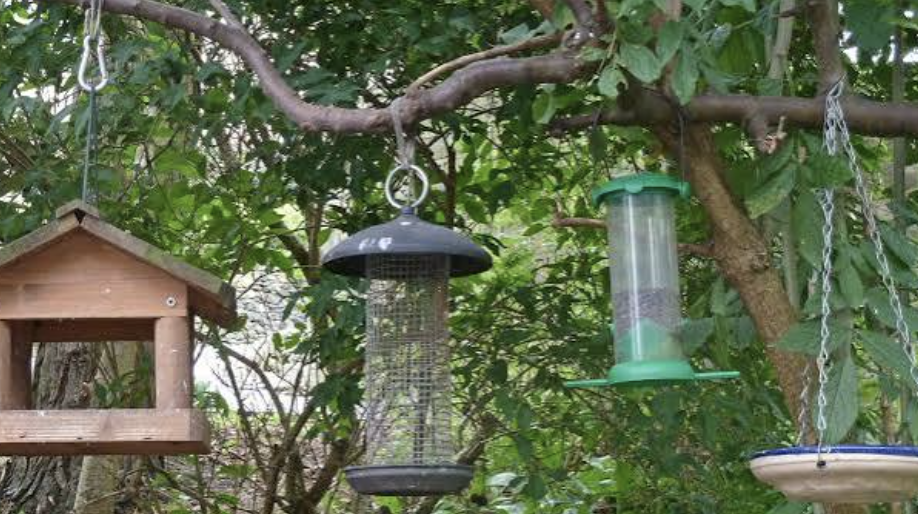
A single feeder is good, but a feeding station is better.
A bird-friendly feeding station combines feeders, water sources, perches, and shelter elements to create a consistent and attractive environment that encourages regular bird visits.
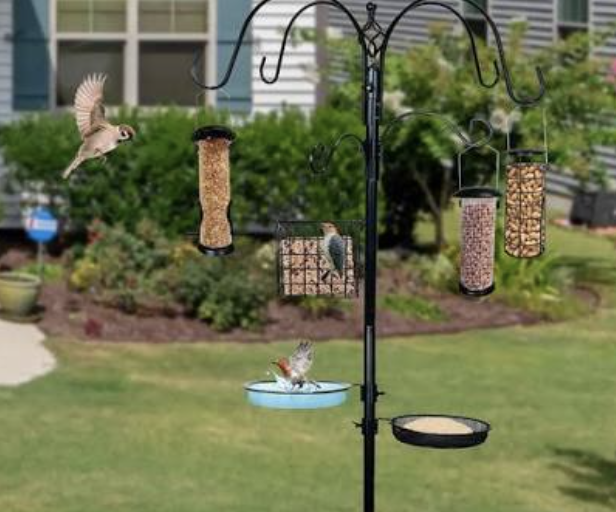
Birds are more likely to return when they find a complete environment, not just food.
Combine food, water, and shelter
An ideal setup may include:
- Seed feeder
- Fat ball or suet feeder
- Ground feeding area (optional)
- Bird bath or water dish
- Nearby shrubs or trees for shelter
Water is just as important as food. In many gardens, water sources attract birds even faster than feeders.
Provide nearby perching areas
Birds often land nearby before approaching a feeder.
Good perching options include:
- Small branches
- Garden poles
- Fence edges (safe distance from predators)
- Nearby trees
This allows birds to observe the area before feeding.
Keep spacing between feeders
If using multiple feeders, avoid overcrowding.
Spacing helps:
- Reduce competition between birds
- Prevent seed mixing
- Allow different species to feed comfortably
A separation of 1–2 meters between feeders is often effective.
Encourage repeat visits
Birds return when they feel safe and rewarded.
To encourage long-term activity:
- Keep feeders consistently filled
- Clean feeders regularly
- Offer variety in seed types
- Maintain stable placement (avoid frequent changes)
| Station element | Purpose | Benefit |
|---|---|---|
| Seed feeder | Main food source | Attracts most species |
| Water source | Drinking and bathing | Increases visits |
| Shelter plants | Protection | Reduces stress |
| Perching points | Observation | Improves safety |
| Clean ground area | Hygiene | Prevents disease |
A well-planned setup turns your garden into a stable bird habitat rather than just a feeding spot.
Conclusion
The best place to hang a bird feeder is a balanced location—safe from predators, sheltered from disturbance, easy to maintain, and connected to a wider bird-friendly environment.
When these elements come together, your garden becomes a place birds trust and return to every day.
[^1]: "[PDF] swanerecocenter.org Bird feeders can be an excellent way to cre", https://extension.usu.edu/swaner/files/Swaner-Bird-Feeding-Best-Practices.pdf. Studies of domestic cat predation and bird-feeder placement indicate that nearby cover can facilitate ambush opportunities for cats, supporting the recommendation to avoid placing feeders immediately adjacent to dense ground vegetation. Evidence role: mechanism; source type: paper. Supports: Bird feeders should not be placed too close to dense shrubs because cats can use such cover to hide and ambush birds.. Scope note: The evidence supports the predator-risk mechanism generally; the safest distance may vary with habitat structure and local cat activity.
[^2]: "Maintaining Your Classroom Feeder – Cornell Lab of Ornithology", https://www.birds.cornell.edu/k12/maintaining-your-classroom-feeder/. Bird-conservation guidance commonly recommends placing feeders a short distance from cover so birds can escape while limiting predator ambush opportunities; this supports the 2–3 meter range as practical guidance rather than a universally proven threshold. Evidence role: expert_consensus; source type: institution. Supports: A distance of around 2–3 meters from dense ground cover is often an appropriate compromise for feeder placement.. Scope note: The cited guidance may offer a recommended range or principle rather than experimentally verifying exactly 2–3 meters for all gardens and bird species.
[^3]: "Climate and Animal Behavior – Zuckerberg Lab", https://zuckerberg.russell.wisc.edu/research/rfid-research/. Ornithological literature describes cover and shelter as habitat features that can reduce exposure to weather and predation risk while birds forage or rest; this supports the general ecological rationale for providing partial shelter near feeding areas. Evidence role: general_support; source type: paper. Supports: Shelter near feeding areas can provide protection from wind, partial predator cover, nearby resting space, and comfort during bad weather.. Scope note: This would support the general principle of shelter use in birds, not necessarily every listed benefit for all bird species or feeder designs.
[^4]: "[PDF] Vigilance and predator detection vary between avian species with …", https://estebanfj.bio.purdue.edu/papers/BE%2020.pdf. Research on avian vigilance and anti-predator behavior shows that birds use visual scanning to detect predators while feeding or resting, supporting the need for visibility around sheltered feeding sites. Evidence role: mechanism; source type: paper. Supports: Birds need visibility around shelter so they can detect danger.. Scope note: Such evidence explains the behavioral mechanism of visual predator detection, but it may not directly test feeder enclosure design.
[^5]: "PESTS & WILDLIFE — Avoid Unwanted Guests at Your Bird Feeders", https://newsroom.unl.edu/announce/stories/63687. Guidance on bird-feeding hygiene from wildlife and public-health oriented institutions notes that spilled seed and accumulated food debris can attract rodents and other non-target animals; this supports the claim as a general risk rather than proving every feeder site will attract rats or pigeons. Evidence role: general_support; source type: institution. Supports: Seed waste can attract unwanted animals like rats or pigeons.. Scope note: Contextual support; attraction depends on local species, feeder design, food type, and site maintenance.
[^6]: "[PDF] The Species Richness of Birds Visiting a Yard Is Influenced by the …", https://scholarworks.uni.edu/cgi/viewcontent.cgi?referer=&httpsredir=1&article=1247&context=jias. Bird-feeding guidance commonly recommends reducing spilled seed and accumulated debris beneath feeders to limit mess and non-target animal attraction; this supports catch trays as a plausible management measure, although evidence may address spill reduction generally rather than testing catch trays specifically. Evidence role: mechanism; source type: education. Supports: Using catch trays can help minimize mess from seed waste around bird feeders.. Scope note: May provide indirect support if the source discusses reducing spillage rather than catch trays as a separately evaluated intervention.