Garden Fence Ideas: 10 Popular Styles for Modern Gardens
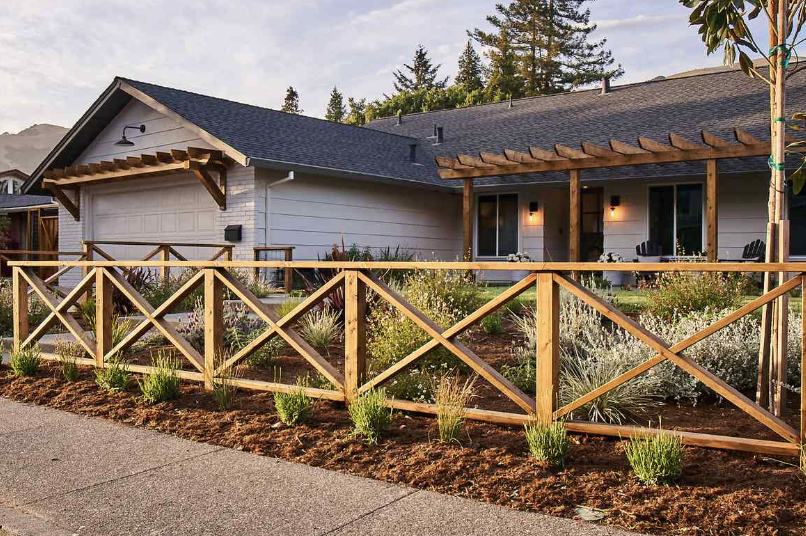
A garden fence is more than a boundary. It shapes privacy, style, safety, and the overall feeling of an outdoor space.
Popular garden fence ideas for modern gardens include privacy panels, horizontal slat fences, willow screens, bamboo fencing, metal panels, composite fencing, trellis-top fences, decorative screens, low edging fences, and mixed-material designs.
The best fence style should match the garden size, climate, budget, and level of privacy needed.
Which Garden Fence Styles Work Best for Privacy?
Privacy is one of the main reasons homeowners choose garden fencing. A good privacy fence blocks unwanted views without making the garden feel too closed.
The best privacy fence styles include solid wooden panels, horizontal slat fences, composite panels, trellis-top fencing, bamboo screens, and decorative privacy panels that create shelter while still looking attractive.
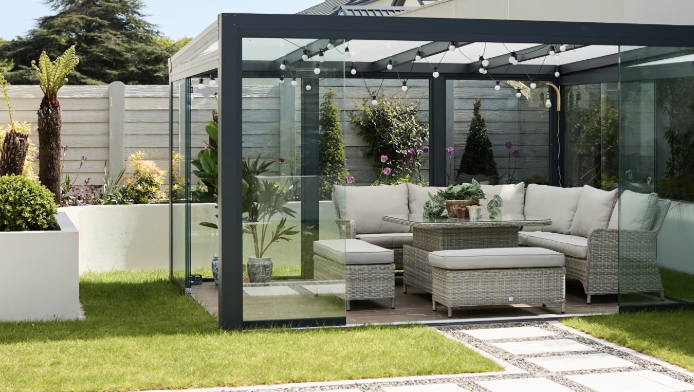
Modern gardens are often used as outdoor living spaces.
People want areas for:
- relaxing;
- dining;
- gardening;
- family time;
- outdoor decoration;
- quiet privacy.
This makes privacy fencing more important than before.
1. Solid wooden privacy panels
Solid wooden fence panels are one of the most traditional privacy choices.
They work well for:
- suburban gardens;
- family homes;
- patios;
- boundary fencing.
Advantages include:
- strong privacy;
- natural appearance;
- easy painting or staining;
- wide market availability.
However, wood needs treatment to resist rain, rot, insects, and UV exposure.
For modern gardens, darker stains or clean vertical boards can make traditional wood feel more contemporary.
2. Horizontal slat fences
Horizontal slat fencing is very popular in modern garden design1.
It creates a clean, architectural look.
Benefits include:
- strong visual lines;
- modern appearance;
- flexible privacy level;
- good airflow if gaps are included2.
The spacing between slats can be adjusted.
Small gaps create partial privacy, while close spacing creates stronger screening.
3. Composite privacy panels
Composite fencing is a good option for customers who want privacy with lower maintenance.
It is often made from wood fibre and plastic materials.
Advantages include:
- resistance to rot;
- stable colour;
- low maintenance;
- modern finish.
Composite panels are usually more expensive than basic wood, but they offer strong long-term value.
4. Trellis-top fence panels
A trellis-top fence combines solid privacy at the bottom with an open decorative section at the top.
This design is useful because it:
- blocks lower-level views;
- allows light and air;
- supports climbing plants;
- softens the fence line.
For small gardens, trellis-top panels can feel less heavy than full-height solid fencing.
5. Decorative privacy screens
Decorative screens can be made from:
- metal;
- composite;
- wood;
- plastic;
- bamboo-style materials.
They are often used near seating areas rather than around the whole garden.
They help block key sightlines while adding design character.
| Privacy fence style | Best use | Main benefit |
|---|---|---|
| Solid wooden panel | Full boundary privacy | Strong screening |
| Horizontal slat fence | Modern gardens | Clean design |
| Composite panel | Low-maintenance privacy | Long lifespan |
| Trellis-top fence | Small gardens | Privacy with light |
| Decorative screen | Patios and seating areas | Targeted privacy |
For modern privacy, the best approach is often blocking the right views without closing the whole garden.
How Can Natural Materials Create a Softer Garden Boundary?
Natural fencing materials create a warmer and more relaxed garden atmosphere than hard, solid barriers.
Natural materials such as willow, bamboo, wood, reed, and brushwood can create softer garden boundaries by adding texture, warmth, and a more organic connection with plants and landscaping.
Not every garden needs a strong solid fence.
Sometimes, the goal is to define space gently.
Natural materials are especially suitable for:
- cottage gardens;
- wildlife-friendly gardens;
- small patios;
- vegetable gardens;
- rustic outdoor spaces;
- eco-style landscaping.
6. Willow fence screens
Willow fencing has a natural, handmade appearance.
It is often used for:
- garden screening;
- raised bed borders;
- decorative boundaries;
- balcony privacy;
- softening existing fences.
Willow works well because it blends naturally with plants.
It does not feel too formal or industrial.
However, willow is a natural material, so it usually has a shorter lifespan than metal or composite fencing3.
It performs best in sheltered areas or as decorative screening4.
7. Bamboo fencing
Bamboo fencing is lightweight, flexible, and visually warm.
It is often supplied in rolls or panels.
Benefits include:
- natural appearance;
- easy installation;
- suitable for covering old fences;
- good for tropical or relaxed garden styles.
Bamboo can also provide useful privacy when used as a screen.
Like willow, bamboo needs protection from long-term moisture and strong weather exposure.
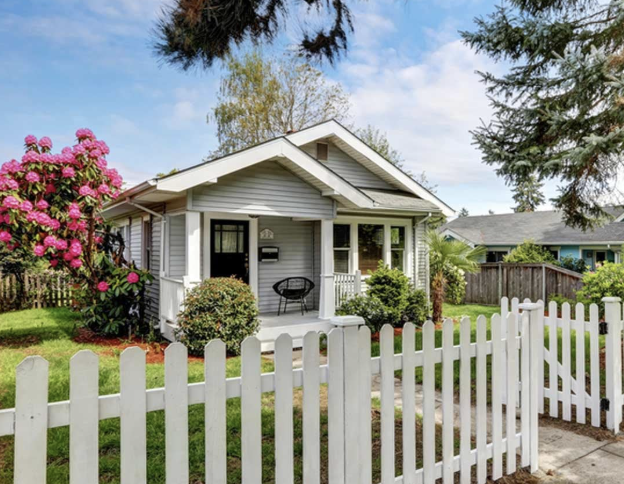
Wooden picket fencing
Picket fencing creates a charming garden boundary without fully closing the space.
It is useful for:
- front gardens;
- flower beds;
- cottage-style gardens;
- pathways;
- decorative borders.
Although it does not provide strong privacy, it helps define areas beautifully.
Reed and brushwood screening
Reed and brushwood screens are popular for quick, natural-looking coverage.
They can be fixed to:
- existing fences;
- balcony railings;
- wire mesh;
- garden frames.
They are useful for budget-friendly privacy and seasonal garden decoration.
Natural materials and wildlife-friendly gardens
Natural fencing can support softer, more wildlife-friendly garden design.
It pairs well with:
- climbing plants;
- bird feeders;
- insect hotels;
- wildflower borders;
- natural edging;
- wooden planters.
| Natural fence material | Best use | Style effect |
|---|---|---|
| Willow | Decorative screening | Rustic and soft |
| Bamboo | Privacy rolls and panels | Warm and relaxed |
| Wood | Classic boundaries | Traditional |
| Reed | Budget screening | Natural texture |
| Brushwood | Quick coverage | Informal and organic |
Natural fencing is ideal when the goal is a boundary that feels like part of the garden, not a wall around it.
Which Modern Fence Designs Combine Style with Practical Functions?
Modern fence designs often combine privacy, durability, decoration, and easy maintenance in one product.
Modern fence designs such as metal panels, composite fencing, mixed-material fences, modular screens, and planter-fence combinations combine style with practical functions such as privacy, weather resistance, plant support, and space division.
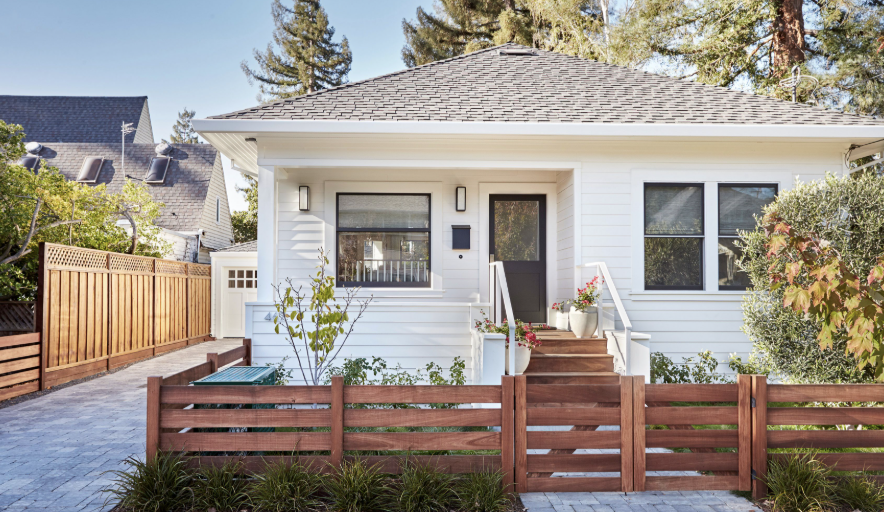
Modern gardens are not only about appearance.
They also need products that solve practical problems.
A fence may need to:
- create privacy;
- support climbing plants;
- divide garden zones;
- resist weather;
- reduce maintenance;
- improve outdoor living comfort.
8. Metal garden fence panels
Metal fence panels are strong, durable5, and suitable for modern garden design.
They may be made from:
- powder-coated steel;
- aluminium;
- wrought iron;
- decorative laser-cut panels.
Metal fencing works well for:
- contemporary gardens;
- front gardens;
- security boundaries;
- decorative screens;
- premium landscaping.
Powder coating or galvanisation is important to prevent rust.6
9. Composite fence panels
Composite fencing is popular because it offers a clean appearance with lower maintenance than wood.
It often suits:
- modern patios;
- urban gardens;
- rental properties;
- premium outdoor living spaces.
Common colours include:
- grey;
- black;
- brown;
- natural wood tones.
Composite panels can create a neat and consistent garden boundary.
10. Mixed-material fencing
Mixed-material fencing combines two or more materials.
Examples include:
- wood and metal;
- composite and aluminium;
- stone base with wooden panels;
- metal frame with bamboo inserts.
This style creates a more customised look.
It is useful for homeowners who want something different from standard fence panels.
Planter-fence combinations
Planter-fence designs are especially useful for small gardens.
They combine:
- raised planters;
- vertical screens;
- trellis panels;
- privacy structures.
This type of product works well for patios and balconies because it adds greenery and privacy at the same time.
Modular fence screens
Modular panels allow customers to build fencing according to their space.
Benefits include:
- flexible layout;
- easy installation;
- replaceable sections;
- design variety.
They are popular in modern retail because customers can adapt them to different garden sizes.
| Modern fence design | Practical function |
|---|---|
| Metal panel | Durability and security |
| Composite panel | Low maintenance |
| Mixed-material fence | Premium design |
| Planter-fence | Privacy plus planting |
| Modular screen | Flexible installation |
| Trellis fence | Plant support and privacy |
A modern fence should be beautiful, functional, and suitable for real outdoor use.
How Can You Choose the Right Fence for a Modern Garden?
The right garden fence depends on the purpose, space, climate, material preference, maintenance level, and budget.
To choose the right fence for a modern garden, consider privacy needs, garden size, local weather, material durability, installation method, maintenance requirements, and how the fence matches the overall outdoor design.
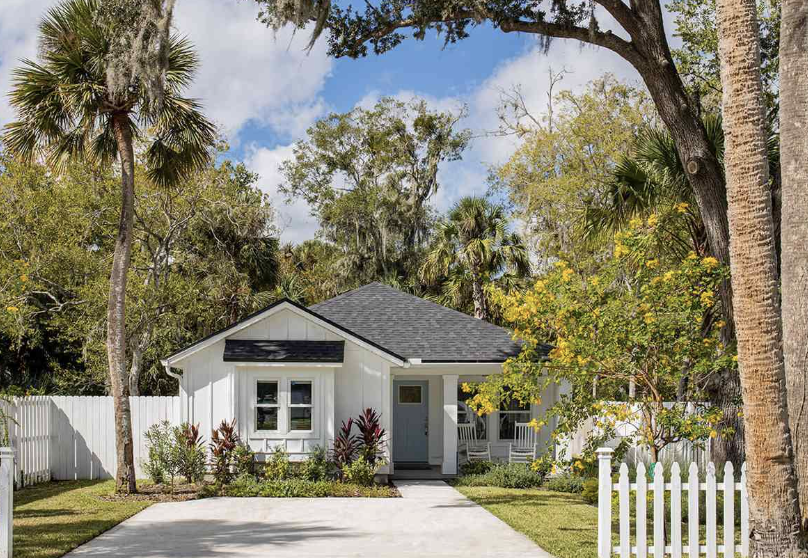
A fence should not be chosen only because it looks good in a catalogue.
It should fit the garden’s real conditions.
Start with the main purpose
Ask what the fence needs to do.
Is it for:
- privacy?
- decoration?
- security?
- plant support?
- wind protection?
- garden zoning?
- covering an old boundary?
Different purposes need different products.
For example:
- privacy needs solid panels or dense screens;
- climbing plants need trellis structures;
- front gardens may need low decorative fencing;
- patios may need stylish screens.
Match the fence to garden size
Small gardens need lighter visual designs.7
Good options include:
- trellis-top panels;
- narrow screens;
- vertical planting fences;
- light-coloured materials;
- open slat designs.
- taller panels;
- solid boundaries;
- mixed-material structures;
- stronger visual elements.
Consider local climate
Weather affects fence lifespan.
In wet climates, look for:
- treated wood;
- powder-coated metal;
- composite panels;
- moisture-resistant materials.
In sunny climates, look for:
- UV-resistant plastics;
- stable coatings;
- fade-resistant finishes.
In windy areas, choose:
- strong posts;
- secure fixings;
- reinforced panels.
Think about maintenance
Different materials require different levels of care.
| Material | Maintenance level |
|---|---|
| Wood | Medium to high |
| Willow | Medium |
| Bamboo | Medium |
| Metal | Low to medium |
| Composite | Low |
| Plastic | Low |
Buyers should choose based on how much maintenance they are willing to accept.
Match fence style with the garden design
A modern garden usually looks best when materials and colours are consistent.
For example:
- black metal suits minimalist gardens;
- natural willow suits rustic gardens;
- grey composite suits urban patios;
- wood suits traditional gardens;
- bamboo suits relaxed outdoor spaces.
For retailers and importers
Retailers should offer a balanced range.
A practical garden fence collection may include:
- one privacy fence range;
- one natural screen range;
- one modern metal or composite range;
- one low decorative edging range;
- one trellis or plant-support range.
This helps cover different customer needs without overcomplicating stock.
| Customer need | Recommended fence style |
|---|---|
| Full privacy | Solid wood or composite panel |
| Natural look | Willow or bamboo screen |
| Modern design | Horizontal slat or metal panel |
| Low maintenance | Composite or plastic |
| Plant support | Trellis-top fence |
| Small garden | Light screen or planter-fence |
Choosing the right fence means matching design, function, and climate together.
Conclusion
Modern garden fences can provide privacy, decoration, plant support, and outdoor comfort. The best style depends on the garden’s purpose, material needs, and local weather conditions.
-
"Home Landscape Design", https://extension.msstate.edu/publications/home-landscape-design. A design history or landscape architecture source can support that horizontal slat fencing is associated with contemporary garden aesthetics and has been widely adopted in modern residential landscape design. Evidence role: general_support; source type: education. Supports: Horizontal slat fencing is very popular in modern garden design.. Scope note: Such sources may document the design trend and visual association rather than quantify popularity with market data. ↩
-
"Airflow and Ventilation | NIST", https://www.nist.gov/el/beed/nist-multizone-modeling/applications/airflow-and-ventilation. Building science or ventilation guidance can support the principle that openings between solid elements allow air movement through a barrier, providing contextual support for airflow through spaced fence slats. Evidence role: mechanism; source type: government. Supports: Horizontal slat fencing can provide good airflow if gaps are included.. Scope note: General ventilation sources explain airflow through openings but may not test horizontal slat fences specifically. ↩
-
"8+ Factors: How Much to Fence a Yard (Cost Guide)", https://bigblue.atlantisuniversity.edu/how-much-is-it-to-fence-a-yard/. Guidance on fence-material durability generally distinguishes untreated or natural wood products from longer-lived metal and composite alternatives, supporting the claim that willow fencing is typically less durable than those materials. Evidence role: general_support; source type: education. Supports: Willow, as a natural plant-based fencing material, usually has a shorter lifespan than metal or composite fencing.. Scope note: The source may discuss wood fencing broadly rather than willow fencing specifically, so the support is contextual unless willow is named directly. ↩
-
"A Guide to Hedgerows: Plantings That Enhance Biodiversity …", https://extension.oregonstate.edu/catalog/em-8721-guide-hedgerows-plantings-enhance-biodiversity-sustainability-functionality. Horticultural or fencing guidance on willow screens commonly treats willow panels or hurdles as lightweight natural screening suited to sheltered garden uses, supporting their use as decorative rather than heavy-duty structural fencing. Evidence role: general_support; source type: institution. Supports: Willow fencing performs best in sheltered areas or as decorative screening.. Scope note: This supports typical use conditions and material suitability, not a quantified performance test for every willow fence product. ↩
-
"metals in building construction 6 10 2014 hdc i", https://www.academia.edu/33601857/METALS_IN_BUILDING_CONSTRUCTION_6_10_2014_HDC_I. A materials engineering source describing steel, aluminium, and wrought iron as structural metals with high strength and service durability would support the characterization of metal fence panels as strong and durable. Evidence role: general_support; source type: education. Supports: Metal fence panels are strong and durable.. Scope note: Support is contextual because durability depends on alloy, coating, installation quality, and local exposure conditions. ↩
-
"Sacrificial Corrosion — Purdue Engineer 1 March 1944", https://historicalnewspapers.lib.purdue.edu/?a=d&d=EGR19440301-01.2.25. A corrosion-protection source explaining that galvanizing protects steel through a zinc barrier and sacrificial action, and that powder coatings form protective surface films, would support the statement that these treatments reduce rust risk. Evidence role: mechanism; source type: research. Supports: Powder coating or galvanisation is important to prevent rust on metal fencing.. Scope note: The evidence supports corrosion prevention mechanisms generally; actual rust resistance varies with coating thickness, preparation, damage, and environmental exposure. ↩
-
"19. Landscape Design | NC State Extension Publications", https://content.ces.ncsu.edu/extension-gardener-handbook/19-landscape-design. Landscape design guidance from university extension sources describes how visual weight, openness, colour, and enclosure influence perceived space in small gardens, supporting the use of lighter and less visually dominant boundary treatments. Evidence role: expert_consensus; source type: education. Supports: Small gardens need lighter visual designs.. Scope note: This supports the design principle contextually rather than proving that every small garden requires a lighter design. ↩
-
"Homeowner Garden Design Series: Elements and …", https://extension.okstate.edu/fact-sheets/homeowner-garden-design-series-elements-and-principles-of-design. Landscape design literature explains that scale and proportion affect whether large or visually strong landscape elements appear balanced within a site, providing contextual support for the claim that larger gardens can accommodate taller, more solid, or more prominent boundary features. Evidence role: expert_consensus; source type: education. Supports: Large gardens can handle taller panels, solid boundaries, mixed-material structures, and stronger visual elements.. Scope note: The source would support the general principle of scale and proportion, not prescribe the listed fence types for all large gardens. ↩