
Importing from overseas creates many opportunities, but small mistakes during the sourcing process can create unexpected costs, delays, and quality problems.
Common import mistakes include choosing suppliers only by price, skipping quality checks, misunderstanding shipping requirements, preparing incorrect documents, and failing to plan the import process carefully.
Avoiding these mistakes helps buyers save time, reduce risk, and build a more profitable international supply chain.
Mistakes Buyers Make Before Placing an Overseas Order
Many import problems start before production even begins. Poor preparation during the sourcing stage can create problems that become expensive later.
Before placing an overseas order, buyers should avoid mistakes such as choosing suppliers only by price, failing to confirm specifications, skipping supplier verification, and not understanding total import costs.

The purchasing decision affects the entire import process.
A mistake at the beginning may influence:
- product quality;
- production schedule;
- shipping cost;
- customs clearance;
- customer satisfaction.
Mistake 1: Choosing the cheapest supplier without evaluation
Price is important, but it should not be the only factor.
A very low quotation may indicate:
- lower material quality;
- weaker production control;
- limited export experience;
- poor communication;
- hidden additional costs.
A supplier with a slightly higher price may provide better overall value.
Buyers should evaluate:
- factory capability;
- product experience;
- previous export history;
- quality management;
- communication speed.
Mistake 2: Not confirming product specifications clearly
Many problems happen because buyers and suppliers understand products differently.
Important details should be confirmed before ordering:
- dimensions;
- materials;
- colours;
- functions;
- packaging;
- labels;
- tolerances.
For example, a product photo may look acceptable, but small differences in:
- size;
- thickness;
- material;
- finish;
can create customer complaints.
Mistake 3: Ignoring the total landed cost
Some buyers only compare factory prices.
However, the real cost includes1:
- product price;
- packaging;
- inspection;
- shipping;
- customs duties;
- taxes;
- storage;
- possible defects.
A cheaper supplier may actually create a higher final cost.2
Mistake 4: Not checking supplier reliability
Before ordering, buyers should review:
- factory background;
- production capacity;
- product samples;
- customer references;
- communication quality.
A reliable supplier reduces many future problems.
Mistake 5: Ordering without a clear timeline
Import orders require planning.
Buyers should confirm:
- production time;
- inspection date;
- shipping schedule;
- expected arrival date.
This is especially important for seasonal products.
Examples:
- Christmas decorations;
- garden products;
- promotional items.
| Mistake | Possible consequence |
|---|---|
| Choosing only by price | Quality problems |
| Unclear specifications | Incorrect products |
| Ignoring landed cost | Lower profit |
| No supplier verification | Higher risk |
| Poor timeline planning | Delivery delays |
Good preparation before ordering helps buyers avoid expensive mistakes before production starts.
Production and Quality Control Mistakes That Create Expensive Problems
Once production begins, quality control becomes one of the most important parts of international sourcing.
Production and quality control mistakes such as skipping inspections, changing specifications during manufacturing, and failing to monitor supplier performance can create expensive problems after shipment.

Many importers discover quality problems only after goods arrive.
At that point, solutions become much more expensive.
Mistake 6: Skipping product samples
Samples provide an important reference before mass production.
Without approved samples, buyers may receive products with differences in:
- appearance;
- materials;
- structure;
- packaging;
- performance.
Before production, buyers should confirm:
- final sample;
- product specifications;
- packaging design;
- acceptable quality standards.
Mistake 7: Not performing quality inspection
Some buyers trust suppliers completely and skip inspection.
This creates risks such as:
- defective products;
- incorrect quantities;
- damaged packaging;
- missing accessories.
Quality checks can include:
- during-production inspection;
- pre-shipment inspection;
- loading supervision.
Mistake 8: Changing requirements after production starts
Late changes can create:
- production delays;
- additional costs;
- quality confusion.
Examples:
- changing colours;
- changing materials;
- changing packaging;
- adding new requirements.
Clear confirmation before production reduces these risks.
Mistake 9: Ignoring packaging quality
Packaging affects both transportation and customer experience.3
- damaged products;
- higher return rates;
- customs concerns;
- warehouse problems.
Buyers should check:
- carton strength;
- product protection;
- labels;
- shipping marks.
Mistake 10: Failing to track supplier performance
A single successful order does not always mean a supplier is reliable.
Buyers should track:
- defect rates;
- delivery performance;
- communication;
- problem-solving ability.
This helps identify strong long-term partners.
| Quality control step | Purpose |
|---|---|
| Sample approval | Confirm expectations |
| Production monitoring | Detect problems early |
| Inspection | Verify final quality |
| Packaging check | Reduce transport damage |
| Supplier evaluation | Improve future orders |
Strong quality control helps buyers prevent small production issues from becoming expensive problems.
Shipping and Customs Mistakes That Increase Landed Costs
Even when products are manufactured correctly, shipping and customs mistakes can create additional expenses.
Shipping and customs mistakes such as incorrect documents, poor freight planning, wrong HS codes, and insufficient preparation can increase landed costs and delay product delivery.
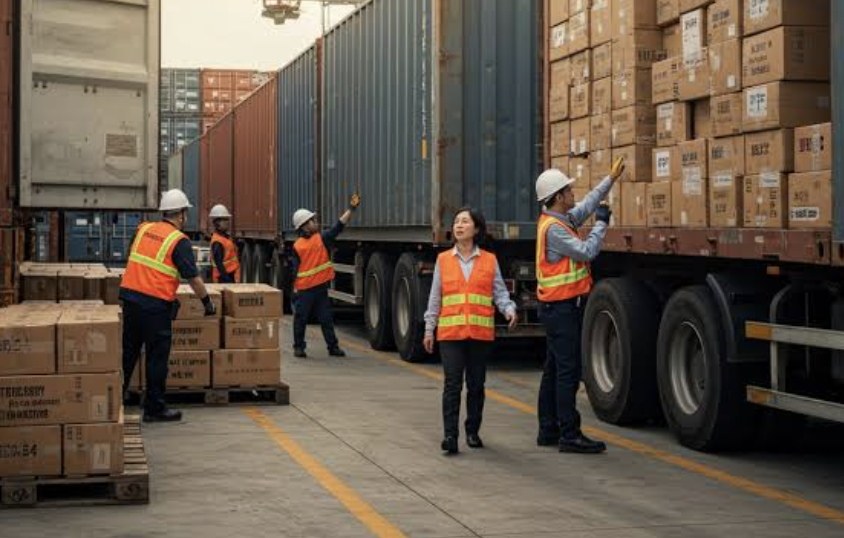
International logistics involves many steps:
Factory → Warehouse → Port → Vessel → Customs → Final Delivery
Problems at any stage can affect the final cost.
Mistake 11: Choosing shipping only by the lowest price
The cheapest freight option may not always be the best.
Buyers should consider:
- transit time;
- reliability;
- route stability;
- destination service;
- communication.
A cheaper shipment that arrives late may cost more through lost sales.
Mistake 12: Incorrect customs documents
Common documentation problems include:
- incorrect invoice information;
- wrong product descriptions;
- inconsistent quantities;
- missing certificates.
These issues may cause:
- customs delays5;
- additional inspections6;
- extra clearance fees.
Mistake 13: Using incorrect HS codes
HS codes affect:
- duty rates;
- customs classification;
- import requirements.
Incorrect classification can create:
- duty adjustments;
- shipment delays;
- compliance issues.
Buyers should confirm HS codes before shipment.
Mistake 14: Poor container planning
Inefficient loading increases cost.
Problems include:
- wasted container space;
- oversized packaging;
- poor stacking;
- incorrect loading sequence.
Better planning can reduce freight cost per unit.
Mistake 15: Ignoring seasonal shipping conditions
Many products have seasonal demand.
Examples:
- Christmas products;
- gardening items;
- outdoor decorations.
Late ordering may create:
- higher freight rates;
- limited shipping space;
- missed selling periods.
| Shipping mistake | Possible result |
|---|---|
| Wrong documents | Customs delay |
| Incorrect HS code | Duty problems |
| Poor loading plan | Higher freight cost |
| Late booking | Limited space |
| Weak logistics planning | Delivery problems |
Better shipping preparation helps buyers control costs beyond the factory price.
How Better Import Planning Prevents Delays and Unexpected Expenses
Successful importers do not simply react to problems. They create systems that prevent problems before they happen.
Better import planning reduces delays and unexpected expenses by improving supplier communication, preparing documents early, monitoring production, controlling quality, and planning logistics in advance.

A strong import process should start before the purchase order is placed.
Create a complete import checklist
A checklist helps buyers manage every stage.
Important items include:
Before ordering:
- supplier verification;
- product confirmation;
- cost calculation.
During production:
- progress updates;
- quality checks;
- packaging approval.
Before shipment:
- inspection;
- documents;
- loading confirmation.
Build stronger supplier communication
Good communication reduces mistakes.
Useful practices:
- confirm important details in writing;
- keep updated product files;
- discuss problems early;
- schedule regular updates.
Use risk-based quality control
Not every shipment needs the same inspection level.
A smart strategy:
New supplier
- detailed inspection.
Trusted supplier
- simplified inspection.
High-value products
- additional quality checks.
This controls cost while protecting quality.
Plan inventory earlier
Good inventory planning helps avoid:7
- emergency shipping;
- stock shortages;
- expensive urgent production.
- sales forecast;
- production time;
- shipping duration;
- seasonal demand.
Review every shipment
After each order, evaluate:
- what worked well;
- what caused delays;
- what costs increased;
- what should improve.
Continuous improvement creates better import performance.
| Planning method | Benefit |
|---|---|
| Supplier evaluation | Lower sourcing risk |
| Early ordering | Avoid urgent costs |
| Quality planning | Reduce defects |
| Document preparation | Faster clearance |
| Shipment review | Improve future orders |
Better planning helps importers build a more efficient and profitable supply chain.
Conclusion
Import mistakes can cost buyers time, money, and business opportunities. By planning carefully, selecting reliable suppliers, controlling quality, and managing logistics properly, importers can create smoother and more profitable international trade operations.
-
"(PDF) Total Cost of Ownership in the Services Sector: A Case Study", https://www.academia.edu/17484730/Total_Cost_of_Ownership_in_the_Services_Sector_A_Case_Study. Total landed cost and total cost of ownership frameworks commonly include not only purchase price but also logistics, duties, taxes, inventory/storage, quality, and related transaction costs when evaluating sourcing decisions. Evidence role: definition; source type: institution. Supports: The real cost of buying from a supplier includes more than the factory price, such as packaging, inspection, shipping, customs duties, taxes, storage, and defects.. Scope note: The source will support the cost-accounting framework generally; it may not list every cost category in the article verbatim. ↩
-
"Purchasing Checklist Instructions | Loyola University Chicago", https://www.luc.edu/purchasing/resources/purchasingchecklistinstructions/. Procurement research on total cost of ownership indicates that supplier selection based only on unit price can be misleading because logistics, quality failures, inventory, and transaction costs may offset a lower purchase price. Evidence role: expert_consensus; source type: paper. Supports: A supplier with a lower factory price can result in a higher final cost once indirect and risk-related costs are considered.. Scope note: The evidence would support the general procurement principle rather than prove that any specific cheaper supplier will have a higher final cost. ↩
-
"[PDF] Evaluation of the functions of packaging and their relations to …", https://scholarworks.umt.edu/cgi/viewcontent.cgi?article=3278&context=etd. Packaging research and logistics literature describes packaging as serving both physical distribution functions, such as protection during handling and transport, and marketing/user-experience functions that influence consumer perception and use. Evidence role: general_support; source type: paper. Supports: Packaging affects both transportation and customer experience.. Scope note: This supports the broad relationship between packaging, logistics, and customer experience; it does not quantify the effect for any specific product category or shipment route. ↩
-
"Canada – Labeling/Marking Requirements", https://www.trade.gov/country-commercial-guides/canada-labelingmarking-requirements. International shipping and logistics guidance identifies inadequate packaging as a cause of product damage during handling and transport, and notes that packaging and labeling errors can create customs or warehouse-processing problems. Evidence role: mechanism; source type: institution. Supports: Poor packaging can cause damaged products, higher return rates, customs concerns, and warehouse problems.. Scope note: A general logistics or customs source can support the causal mechanisms, but may not directly establish higher return rates without separate retail-return data. ↩
-
"I ordered goods from abroad, but the seller said they are being held …", https://www.help.cbp.gov/s/article/Article-1171. Customs authorities and trade facilitation guidance identify incomplete or inaccurate shipment documentation as a common reason consignments may be held while information is verified or corrected. Evidence role: general_support; source type: government. Supports: Documentation problems such as incorrect invoice information, wrong product descriptions, inconsistent quantities, or missing certificates may cause customs delays.. Scope note: The source would support the general relationship between documentation errors and delays, not the frequency or duration of delays for a specific country or shipment type. ↩
-
"I ordered goods from abroad, but the seller said they are being held …", https://www.help.cbp.gov/s/article/Article-1171. Customs risk-management materials explain that discrepancies in declarations, invoices, product descriptions, or supporting certificates can trigger further verification or examination of goods. Evidence role: mechanism; source type: institution. Supports: Documentation problems may cause additional customs inspections.. Scope note: The source would explain why documentation discrepancies can lead to inspections, but may not prove that every listed documentation problem automatically results in inspection. ↩
-
"The Importance of Inventory Management for Supply Chain …", https://haslam.utk.edu/gsci/news/inventory-management-in-supply-chain/. Inventory management literature links planning of order quantities and replenishment timing to reduced stockouts and lower reliance on costly expedited replenishment; this supports the claim at a general operational level rather than proving the magnitude of savings for any specific buyer. Evidence role: general_support; source type: paper. Supports: Good inventory planning helps avoid emergency shipping, stock shortages, and expensive urgent production.. Scope note: Contextual support; effects depend on demand variability, supplier reliability, and the firm’s service-level targets. ↩
-
"[PDF] Stochastic demand forecast and inventory management of a …", https://repository.lsu.edu/cgi/viewcontent.cgi?article=3715&context=gradschool_dissertations. Standard inventory-control guidance identifies demand forecasts, replenishment or production lead time, transport time, and seasonality as inputs for purchasing and reorder decisions; this supports the listed considerations as accepted planning factors, not as a complete purchasing model. Evidence role: expert_consensus; source type: education. Supports: Buyers should consider sales forecast, production time, shipping duration, and seasonal demand when planning inventory.. Scope note: The source may describe general inventory-control principles and may not address every industry or product category. ↩