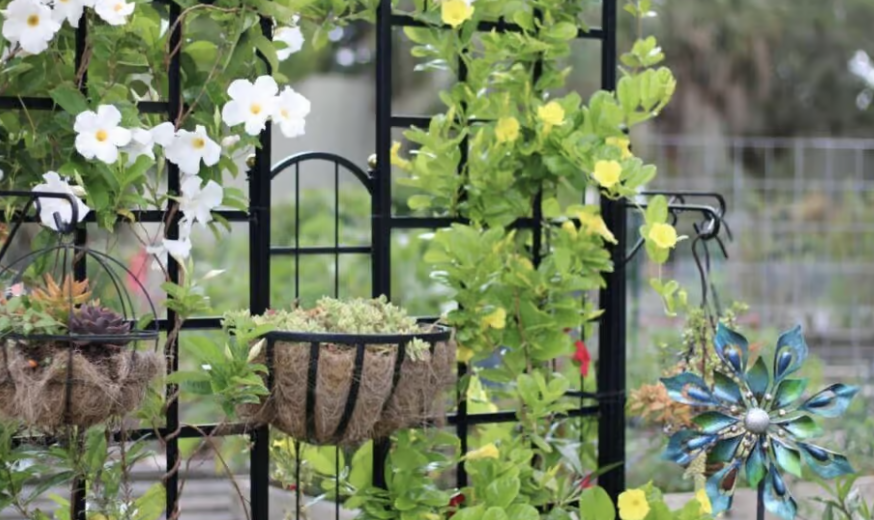
I’ve seen trellises look perfect on day one… then slowly fade, warp, or rust until they become “garden regrets.” So durability is not a small detail—it’s the whole point.
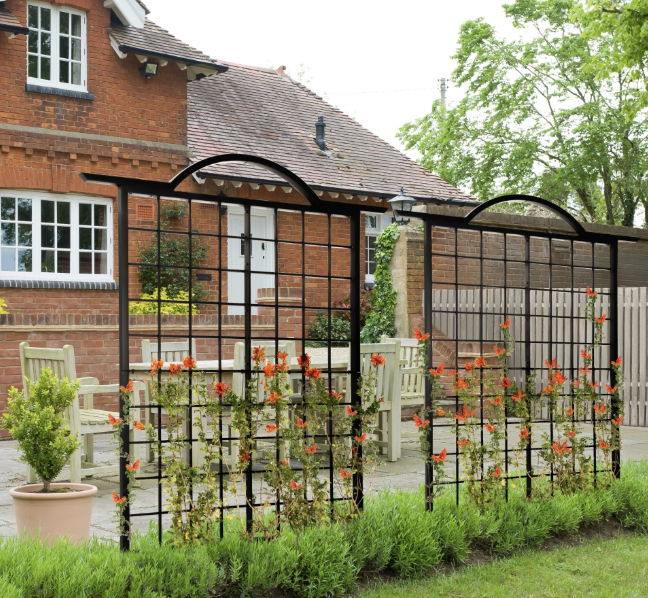
The most durable trellis material for most gardens is powder-coated metal. It holds shape, handles weather better than wood or willow, and can last many seasons when coating quality is strong.
Now let’s compare materials like real gardeners and real buyers.
Comparing Common Garden Trellis Materials
Different trellis materials fail in different ways—rust, rot, cracking, fading, or warping. So “durable” depends on climate and maintenance.
Common trellis materials include powder-coated metal, treated wood, natural willow/bamboo, plastic, and composite/WPC. Metal usually wins for long service life, while natural materials win for charm but need more replacement and care.
When people ask me “what’s the most durable,” I ask back:
- Is the trellis in full sun all day?
- Is it in a wet corner?
- Is it near the coast (salt air)?
- Will you maintain it, or forget it?
Because the same trellis can last 1 year in one garden and 5 years in another.
Quick material overview (what usually happens outdoors)
| Material | What it looks like | Typical durability risk |
|---|---|---|
| powder-coated metal | modern, clean | coating scratches → rust spots |
| treated wood | warm, classic | moisture → warping/mold |
| natural willow/bamboo | rustic, soft | softening/weakening in wet weather |
| plastic | low maintenance | UV fading/brittleness if weak |
| composite/WPC | stable and tidy | heavier, quality varies |
This is why I say: durability is not only material—it’s also finish and environment.
Why Metal Trellises Offer the Longest Service Life
Metal trellis wins because it stays straight, handles weather swings, and doesn’t rot—if the coating is done properly.
Metal trellises offer the longest service life because they resist warping and rot, keep structural strength, and survive sun and rain better. Powder-coated metal is usually the best balance of durability, price, and appearance for long-term outdoor use.
Let me explain it in simple terms.
A trellis has one job: stand there and support growth.
Metal is good at standing there.
1) Metal stays stable in weather changes
Wood expands and shrinks.[^1]
Willow softens.
Plastic can warp in heat.[^2]
Metal tends to keep its shape, which matters when:
- vines get heavy
- wind pushes the structure
- you want the trellis to look neat all season
2) Powder coating is the “secret armor”
Bare metal is not the point.
The finish is the protection.
A good powder-coated trellis can resist:
- rain
- humidity
- sun exposure
- daily wear
But if coating is weak, scratches become rust points.
So the real durability tip is:
choose metal trellis with strong coating and good packaging protection.
3) Metal handles climbing plants better long-term
If you grow:
- roses
- clematis
- jasmine
- grapes
…plants can pull and twist a trellis over time.
Metal holds the load better than softer materials.
4) What to check for a durable metal trellis
- thicker tube/wire structure (feels solid)
- smooth weld points (no weak joints)
- consistent coating (no thin spots)
- rust-resistant hardware (screws, hooks)
- packaging that prevents scratches during shipping
Metal durability table
| What to check | Why it matters |
|---|---|
| coating quality | prevents rust |
| joint strength | prevents wobble |
| thickness | supports heavier vines |
| hardware quality | stops early corrosion |
| packaging | avoids scratches that become rust |
If you want a simple buyer line, it’s metal trellis = long-term peace.
Natural Materials: Beauty vs. Durability
Natural trellises are beautiful because they look alive—but nature also means variability and faster aging outdoors.
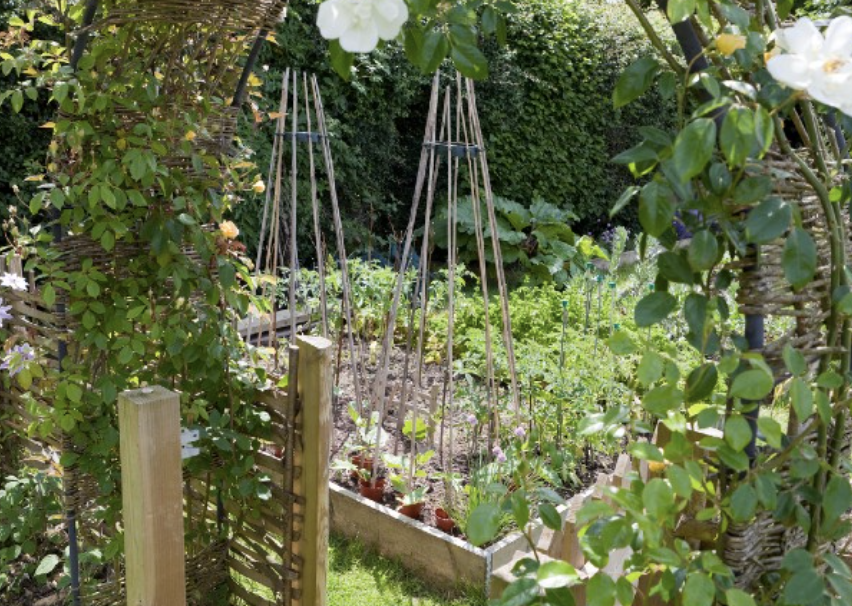
Natural materials like willow, bamboo, and untreated wood look warm and traditional, but they usually have shorter life outdoors. Moisture can soften or rot them, and sun can dry and crack them. They’re best for style-focused gardens or short-to-mid-term use.
I love natural trellis in the right setting.
But I never sell it as “longest lasting.”
1) Willow trellis: charming, but not forever
Willow looks amazing in cottage gardens.
But in wet climates, willow can:
- soften
- loosen at tie points
- weaken over time
It’s more of a “beautiful seasonal structure” than a long-life framework.
2) Bamboo: light, natural, but depends on quality
Bamboo can be strong, but outdoors it can:
- crack if too dry[^3]
- mold if constantly wet[^4]
- split near fasteners
It works best when used in:
- sheltered areas
- lighter climbing plants
- decorative screening
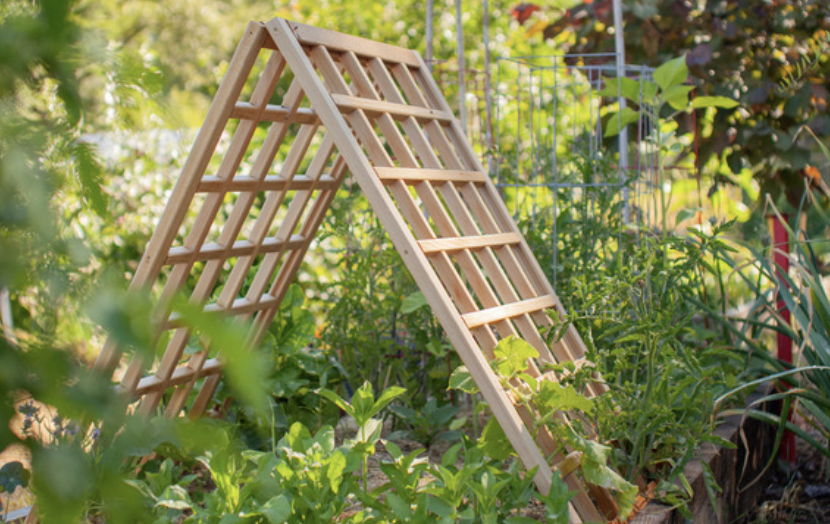
3) Wood trellis: strongest natural option (when treated well)
Wood can last longer than willow if:
- treated properly
- sealed edges
- good moisture control
- stable frame design
But wood still needs maintenance. A “zero-maintenance” wood trellis is a fantasy.
Natural vs durability table
| Natural material | Best for | Main durability challenge |
|---|---|---|
| willow | rustic style gardens | softening in wet weather |
| bamboo | light décor screens | cracking or mold |
| wood (treated) | classic trellis frames | warping and maintenance |
If you want nature look + longer life, treated wood is often the best natural option—but it still won’t beat a well-coated metal trellis.
Choosing the Right Trellis Material for Your Garden
The best trellis material depends on your climate, your garden style, and your tolerance for maintenance.
Choose powder-coated metal for maximum durability and low maintenance. Choose treated wood for warm style with moderate durability. Choose willow/bamboo for traditional charm and seasonal décor. Choose UV-stable plastic/composite if you want consistent low-maintenance performance in wet climates—just confirm UV quality.
Here’s the simplest decision path I use.
1) If you want the longest life with the least effort
Choose:
- powder-coated metal
Best for:
- heavy climbers[^5]
- modern gardens
- windy areas
- people who don’t want maintenance[^6]
2) If you want warm style and accept some maintenance
Choose:
- treated wood
Best for:
- classic gardens
- cottage style
- medium climbing plants
3) If you want rustic beauty and don’t mind replacing sooner
Choose:
- willow or bamboo
Best for:
- decorative corners
- seasonal garden makeovers
- lighter climbing plants
4) If you want low maintenance and consistent look
Choose:
- UV-stable plastic or composite/WPC[^7]
Best for:
- wet climates
- balcony gardens[^8]
- tidy modern layouts
Material selection table (fast)
| Your priority | Best material choice |
|---|---|
| longest durability | powder-coated metal |
| classic warm look | treated wood |
| rustic charm | willow/bamboo |
| low maintenance consistency | UV-stable plastic/composite |
If you want the safest “durability-first” recommendation for most homes, I’ll stick with powder-coated metal—because it stays straight, stays strong, and doesn’t ask for much.
If you want, I can also help you write a simple product comparison card using metal vs wood vs willow so customers choose faster.
Conclusion
For most gardens, powder-coated metal is the most durable trellis material—choose natural materials for charm, not for maximum lifespan.
[^1]: "Drying and control of moisture content and dimensional changes", https://research.fs.usda.gov/treesearch/7143. The USDA Forest Products Laboratory explains that wood changes dimension as its moisture content changes, providing technical support for the statement that wood expands and shrinks. Evidence role: mechanism; source type: government. Supports: Wood expands and shrinks in response to moisture changes.. Scope note: The amount of movement varies by wood species, grain direction, and moisture conditions.
[^2]: "Polymer Advanced Manufacturing and Rheology | NIST", https://www.nist.gov/programs-projects/polymer-advanced-manufacturing-and-rheology. Polymer materials literature describes how plastics can soften or deform when temperatures approach their heat-deflection or glass-transition ranges, supporting the general claim that plastic can warp under heat exposure. Evidence role: mechanism; source type: education. Supports: Plastic can warp or deform when exposed to sufficient heat.. Scope note: This is contextual support because heat resistance differs widely by plastic type, formulation, thickness, and load.
[^3]: "Progress in the study of dry shrinkage deformation and drying stress …", https://bioresources.cnr.ncsu.edu/resources/progress-in-the-study-of-dry-shrinkage-deformation-and-drying-stress-of-raw-bamboo/. Research on bamboo as a hygroscopic lignocellulosic material documents moisture-related dimensional changes and drying defects, including cracking or splitting as moisture content falls; this supports the general risk described for outdoor bamboo exposed to dry conditions. Evidence role: mechanism; source type: paper. Supports: Outdoor bamboo can crack if it becomes too dry.. Scope note: The evidence is general to bamboo material behavior and drying processes, not necessarily to every garden-use product or local climate.
[^4]: "Influence of solvent treatment on mould resistance of bamboo", https://bioresources.cnr.ncsu.edu/resources/influence-of-solvent-treatment-on-mould-resistance-of-bamboo/. Studies and technical resources on bamboo durability note that untreated bamboo is susceptible to fungal attack under persistently moist conditions, which provides contextual support for the claim that constant wetness can lead to mold or related biological deterioration. Evidence role: mechanism; source type: paper. Supports: Outdoor bamboo can develop mold or fungal deterioration when kept constantly wet.. Scope note: Sources may discuss fungal decay or biological deterioration more broadly rather than household-visible mold specifically.
[^5]: "Trellises and cages to support garden vegetables | UMN Extension", https://extension.umn.edu/planting-and-growing-guides/trellises-and-cages. Botanical and horticultural guidance on climbing plants notes that vigorous or heavy climbers require strong, durable support structures; this supports the suitability of metal supports for load-bearing garden use, though it does not evaluate this specific product or coating. Evidence role: general_support; source type: education. Supports: Powder-coated metal is a good choice for supporting heavy climbers.. Scope note: Contextual support only; source should address structural support requirements for climbing plants rather than directly compare all trellis materials.
[^6]: "Powder Coating – IDEALS – University of Illinois", https://www.ideals.illinois.edu/items/2186. Materials and coatings references describe powder coating as a durable protective finish that improves corrosion resistance and reduces the need for frequent repainting compared with uncoated metal; this supports the low-maintenance characterization, although maintenance needs still depend on exposure, substrate, and coating quality. Evidence role: mechanism; source type: institution. Supports: Powder-coated metal is suitable for people who want a low-maintenance garden material.. Scope note: Does not prove the item is maintenance-free; it only supports the mechanism by which powder coating can reduce upkeep.
[^7]: "Effect of durability treatment on moisture sorption properties of wood …", https://bioresources.cnr.ncsu.edu/resources/effect-of-durability-treatment-on-moisture-sorption-properties-of-wood-plastic-composites/. Materials research on wood–plastic composites describes moisture absorption and dimensional stability as central durability issues and reports that polymer-containing composites generally absorb less water than untreated wood, supporting their contextual suitability in wet outdoor settings. Evidence role: mechanism; source type: paper. Supports: Composite/WPC planters are a strong material choice for wet climates.. Scope note: This supports moisture-related durability in general; it does not prove that every commercial WPC product is optimal for all wet climates.
[^8]: "Container Gardens – CSU Extension – Colorado State University", https://extension.colostate.edu/resource/container-gardens/. University extension guidance on container gardening notes that container material affects weight, durability, drainage, and placement, providing contextual support for choosing lightweight, weather-resistant materials for balcony garden containers. Evidence role: general_support; source type: education. Supports: UV-stable plastic or composite/WPC are suitable choices for balcony gardens.. Scope note: The source would support the relevant container-selection criteria for balconies rather than directly ranking UV-stable plastic or WPC as the single best option.