I’ve been talking with importers a lot in 2026, and the message is clear: the winners aren’t chasing every new item. They’re building ranges that feel easy, durable, and lifestyle-ready.
In 2026, importers should watch four big garden trends: practical sustainability (longer-life products + less packaging), outdoor living upgrades (lighting, décor, cozy zones), smart/low-maintenance solutions (multi-function, space-saving, time-saving), and flexible sourcing models that reduce inventory risk.
Let’s break it down trend by trend, in a way you can actually use.
Why Sustainable Garden Products Continue to Dominate Global Markets
Sustainability is no longer a “nice message.” It’s now tied to cost, regulation pressure, and consumer trust—especially in Europe.
Sustainable garden products dominate because buyers want less waste and longer product life. The best-selling sustainability story in 2026 is durability: UV resistance that prevents fading, rust-resistant coatings that extend life, and packaging that uses less plastic and is easier to recycle.
Here’s what I see: consumers love “eco,” but they hate fragile.
So the sustainability products that actually win are the ones that feel practical:
- “lasts longer outdoors”
- “doesn’t fade after one summer”
- “less replacement, less waste”
- “recyclable packaging”
1) Durability is the new sustainability
The greenest product is often the one you don’t replace every year.[^1]
Importers are asking suppliers more often about:
- UV resistance (plastic/resin)
- coating quality (metal)
- wood treatment and moisture control (wood)
- hardware rust resistance
This is not marketing. It’s reducing returns[^2].
2) Packaging is becoming part of the sustainability expectation
Retailers increasingly prefer:
- less plastic tray use
- simpler paper inserts
- recyclable cartons
- compact packaging to reduce shipping footprint
And honestly, compact packaging also improves landed cost. That’s why this trend keeps growing.
3) Natural-look materials are still strong (with a condition)
Products like willow, wood, and bamboo sell well because they look sustainable.
But they must be treated properly. Otherwise, mold and cracking create complaints.
4) What importers should watch for in supplier claims
I always suggest avoiding vague “eco” slogans.
Better is proof-based language:
- “UV-resistant material to reduce fading”
- “rust-resistant coating for longer outdoor life”
- “recyclable carton packaging”
- “reduced plastic packing”
Sustainability trend table
| Sustainable angle | What’s driving it | What importers should control |
|---|---|---|
| longer product life | less waste + fewer returns | UV/coating/treatment |
| recyclable packaging | retail and policy pressure | carton structure + materials |
| reduced plastic | consumer trust | packaging redesign |
| natural-look décor | lifestyle trend | outdoor durability |
If you want a clean way to position it, I like buy once, use longer.
How Outdoor Living Trends Are Changing Garden Product Demand
Gardens are being treated like extra rooms, so demand is shifting from “gardening tools only” to “outdoor lifestyle sets.”
Outdoor living trends are changing demand toward products that create comfort and atmosphere: lighting, décor focal points, privacy screens, and coordinated collections. Customers want gardens that feel cozy at night and intentional in design.
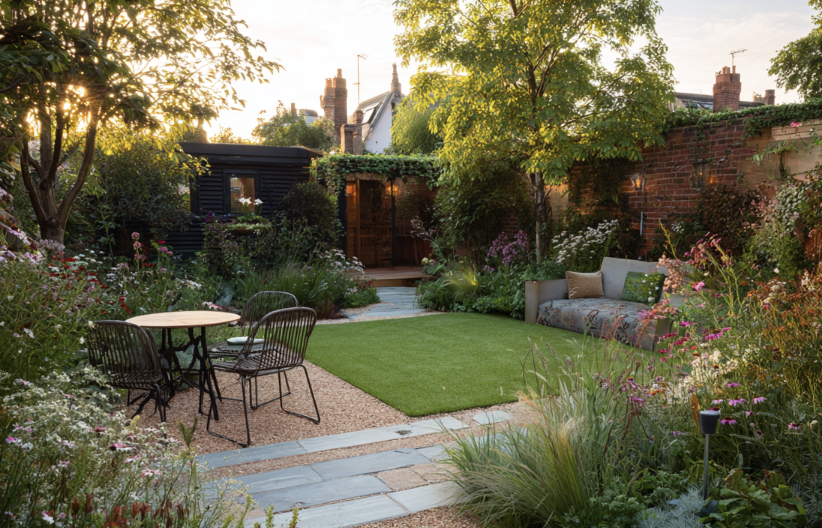
This is one of the biggest changes I see in 2026.
People aren’t only planting. They’re designing:
- patio corners
- balcony lounges
- outdoor dining zones
That creates demand for products that make spaces feel finished.
1) Lighting becomes a core category
Warm outdoor lighting is not optional anymore. It’s a lifestyle product[^3]:
- string lights
- solar pathway lights
- lanterns
- trellis lighting integration
Lighting makes a garden usable after sunset[^4]. That’s a strong selling reason.
2) Privacy and zoning products are rising
More small outdoor spaces means more “soft privacy” demand:
- trellis screens
- fence toppers
- decorative panels
- plant supports that double as screens
These products sell because they solve a real pain point: “I feel exposed.”
3) Decorative but functional items sell best
Items that look nice and feel useful win:
- bird feeders (lifestyle + nature)
- outdoor clocks (focal point + function)
- planters (design + planting)
“Useful décor” sells better than random ornaments.
Outdoor living demand table
| Lifestyle need | Products that are growing | Why it sells |
|---|---|---|
| night-time comfort | lighting | creates mood |
| small-space privacy | screens/trellis panels | soft boundary |
| designed look | coordinated décor sets | intentional style |
| nature experience | bird feeders/baths | calming “living garden” |
If you’re building an importer assortment, I suggest offering a complete patio story instead of isolated items.
Why Smart and Low-Maintenance Gardening Products Are Growing Fast
Busy people still want nice gardens, but they want low effort. That’s why smart and low-maintenance products are growing so quickly.
Smart and low-maintenance garden products are growing because they save time, reduce physical strain, and suit small homes. Multi-function designs, easy installation, compact storage, and controlled watering solutions are leading the trend.

“Smart” doesn’t always mean electronics. In garden products, smart often means:
- easier to use
- easier to maintain
- fewer steps
- fewer tools needed
1) Multi-function design is a big driver
Examples that are growing[^5]:
- trellis panels that act as privacy screens
- planter + trellis combos
- outdoor clocks with thermometer display
- tool sets that nest or fold
People love “one product, two jobs.”[^6]
2) Low-maintenance materials are winning
Buyers are moving toward:
- powder-coated metal (modern and durable)
- UV-stable plastics
- composites where they make sense
The goal is fewer returns and less customer regret.
3) Watering efficiency is becoming a “smart” selling point
In many markets, water waste is a concern.
So products like:
- adjustable nozzles
- drip/soaker concepts
- simple watering control tools
…are becoming more important.
4) Space-saving is part of “smart”
Balcony gardening is still growing, so compact products matter:
- foldable tools
- compact storage
- modular panels
Smart/low-maintenance table
| Smart trend | What it includes | Why it grows |
|---|---|---|
| multi-function | support + privacy | saves space and money |
| durable materials | UV/rust control | fewer complaints |
| watering control | efficient watering | practical value |
| compact designs | foldable/modular | fits small homes |
If you want a simple label for this trend, I like easy garden, less work.
How Importers Can Stay Competitive in the 2026 Garden Products Market
Competition is tougher, so importers need faster testing, stronger differentiation, and better supplier systems—not just lower prices.
Importers stay competitive by building tiered assortments (good-better-best), using flexible MOQ to test SKUs, improving packaging and durability to reduce returns, and developing OEM collections that look consistent across categories. Strong supplier partnerships and repeat-order stability are key.
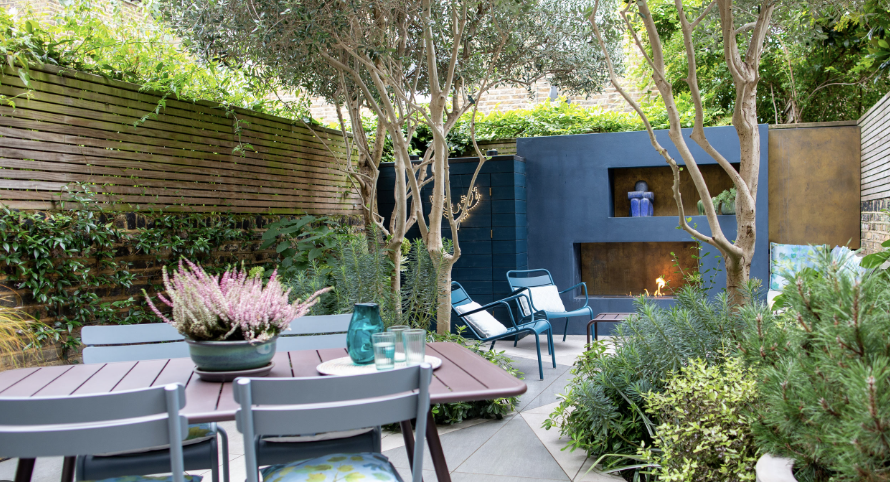
Here are the moves I see strong importers making right now.
1) Build a tiered assortment (not one price band)
A “good-better-best” ladder helps you:
- capture budget buyers
- offer upgrades
- protect margin
It also makes your range look professional.
2) Test small, reorder fast
Instead of betting big on one trend:
- test lower MOQ
- track sell-through quickly
- reorder winners
- drop losers without pain
This reduces dead stock and keeps the range fresh.
3) Differentiate with OEM collections
OEM matters more in 2026 because:
- retailers want unique products[^7]
- price wars are exhausting
- coordinated collections look premium[^8]
A coordinated collection could be:
- trellis + fence + planter + bird feeder in one finish family
- matching packaging style and branding
- consistent color tone and texture
That’s how you build identity.
4) Invest in durability and packaging (quiet profit protection)
Most import problems come from:
- fading
- rust
- wobble
- shipping damage
So importers who lock specs, QC, and packaging standards reduce returns and keep customers.
5) Choose suppliers for repeatability, not just the first quote
My favorite serious question remains:
“What changes on the second order?”
Suppliers who can answer clearly are the suppliers who support long-term growth.
Competitive strategy table
| Strategy | Why it matters in 2026 |
|---|---|
| tiered range | captures more customers |
| low MOQ testing | reduces inventory risk |
| OEM collections | avoids price wars |
| packaging + durability | lowers returns |
| repeatable suppliers | makes reorders easy |
If you want, I can provide a ready-to-send 2026 importer RFQ checklist that covers materials, packaging, QC, and repeat-order stability.
Conclusion
In 2026, importers win with practical sustainability, outdoor living products, smart low-maintenance designs, and flexible sourcing systems that keep inventory risk low and reorders fast.
[^1]: "Product lifetime approaches in life cycle assessments of circular …", https://ui.adsabs.harvard.edu/abs/2025IJLCA..30.3175J/abstract. Life-cycle assessment literature and waste-prevention guidance generally find that extending product lifetimes can reduce material throughput and disposal impacts by avoiding replacement production, although the net benefit depends on the product category, use-phase impacts, and repair or maintenance requirements. Evidence role: general_support; source type: paper. Supports: Longer-lasting products can be environmentally preferable to products that are replaced frequently.. Scope note: Contextual support only; the exact environmental benefit depends on the specific product and its life-cycle profile.
[^2]: "Impact of warranty and green level of the product with nonlinear …", https://pmc.ncbi.nlm.nih.gov/articles/PMC11088665/. Research on consumer product returns and warranty claims identifies product quality, defects, and failure after use as recurring drivers of returns, supporting the link between durability controls and lower return risk; this evidence is general and does not isolate outdoor furniture imports specifically. Evidence role: general_support; source type: paper. Supports: Improving material and hardware durability can help reduce returns caused by product defects or early failure.. Scope note: The support is indirect because it addresses product returns and defects broadly rather than the specific supplier checks listed in the article.
[^3]: "Survey Reveals Top Ten Design Trends for Residential Landscape …", https://www.asla.org/news-insights/press-releases/survey-reveals-top-ten-design-trends-for-residential-landscape-architecture. A residential landscape-design trends source, such as an ASLA survey, can contextualize outdoor lighting as a commonly requested feature in outdoor living spaces rather than a purely decorative add-on. Evidence role: general_support; source type: institution. Supports: Warm outdoor lighting is increasingly treated as part of outdoor lifestyle design.. Scope note: This would support the broader market/design context, not prove that outdoor lighting is literally “not optional” for every garden.
[^4]: "[PDF] Does Night Lighting Harm Trees? – Purdue Extension", https://www.extension.purdue.edu/extmedia/fnr/fnr-faq-17.pdf. University extension or landscape-lighting guidance can support that outdoor lighting improves nighttime visibility, wayfinding, and safety, thereby extending the practical use of outdoor spaces after dark. Evidence role: mechanism; source type: education. Supports: Lighting makes a garden usable after sunset.. Scope note: This supports the functional mechanism of nighttime usability; it does not measure the specific increase in garden-use time for this article’s setting.
[^5]: "Projecting Growth in the Multifunction Garden Tool Market – LinkedIn", https://www.linkedin.com/pulse/projecting-growth-multifunction-garden-tool-market-insights-fywoe. Retail and consumer-products research on multifunctional home and garden goods can support the characterization of these item types as part of a broader growth trend, though it may not verify growth for each listed product category individually. Evidence role: general_support; source type: research. Supports: Trellis privacy screens, planter-trellis combinations, outdoor clocks with thermometer displays, and nesting or folding tool sets are growing product examples.. Scope note: Contextual support only; broad market reports may not provide item-level growth data for every example in the list.
[^6]: "[PDF] Testing a theory of strategic multi-product choice – SMU", https://www.smu.edu/-/media/site/cox/faculty/research/foxedward/testing-a-theory-of-strategic-multi-product-choice.pdf. Consumer-behavior research on multifunctional products can support the general claim that buyers often value products combining multiple functions, although preference varies by category, price, usability, and perceived trade-offs. Evidence role: expert_consensus; source type: paper. Supports: Consumers like products that perform two functions in one item.. Scope note: Supports the general consumer preference for multifunctionality, not necessarily every outdoor or garden product mentioned.
[^7]: "Dan Ariely | Press – MIT", https://web.mit.edu/ariely/www/MIT/Press/msi1.shtml. Retail differentiation research describes exclusive or differentiated merchandise as a way for retailers to reduce direct comparison and strengthen store positioning; this supports the claim as a general retail strategy rather than as a 2026-specific finding. Evidence role: expert_consensus; source type: paper. Supports: Retailers value unique products because differentiated merchandise can help distinguish them from competitors.. Scope note: The source may support retail differentiation broadly, but may not directly address OEM garden or outdoor-product categories in 2026.
[^8]: "Effects of Design Aesthetics on the Perceived Value of a Product", https://pmc.ncbi.nlm.nih.gov/articles/PMC8359925/. Consumer-design research on visual harmony and product aesthetics indicates that consistent color, form, and style can increase perceived quality and brand coherence; this supports the claim conceptually, though it does not prove that every coordinated OEM collection will be perceived as premium. Evidence role: mechanism; source type: paper. Supports: Coordinated collections with consistent visual elements can create a more premium perception.. Scope note: Support is likely contextual, based on design and consumer-perception studies rather than direct evidence from the specific product examples listed.