A garden trellis looks simple, but weather slowly decides how long it will survive. Rain, sun, frost, and wind all leave marks over time.
Weather affects garden trellis lifespan by weakening materials through moisture, UV exposure, rust, rot, cracking, and freeze-thaw damage. The best trellis material depends on the local climate and how much maintenance the gardener accepts.
Choosing the right trellis is really choosing the right material for the weather.
How Does Constant Rain and Humidity Affect Garden Trellises?
Rain and humidity shorten trellis lifespan by keeping materials damp, encouraging rot, rust, mould, and structural weakening.
Constant rain and humidity damage trellises by increasing moisture absorption, accelerating metal corrosion, softening natural materials, and encouraging mould or fungal growth. In wet climates, coated metal, composite, and treated materials usually perform better than untreated wood or willow.
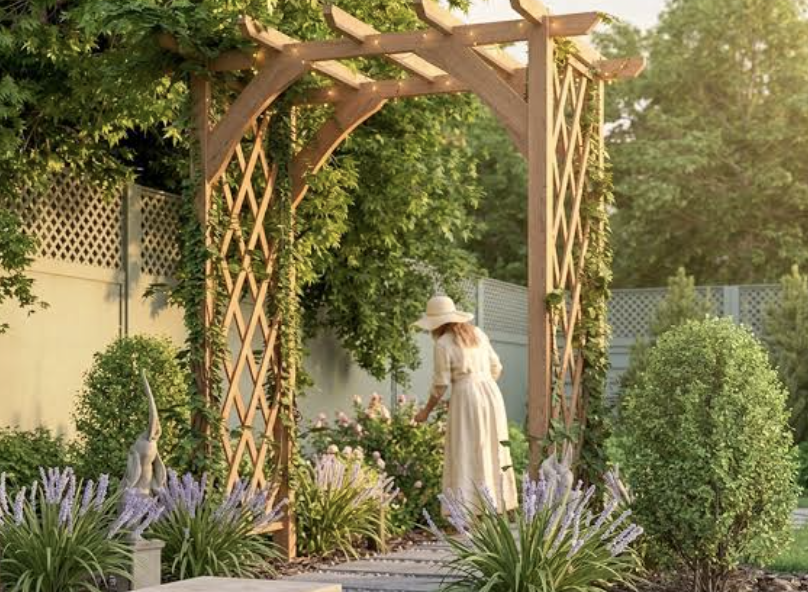
Wet weather is one of the toughest conditions for garden trellises.
A trellis is usually exposed all year. It sits in soil, supports wet climbing plants, and often touches walls, fences, or pots where moisture can collect.
That means rain does not only hit the surface. It also remains in joints, fixing points, and hidden contact areas.
Moisture causes natural materials to soften
Natural materials such as willow, bamboo, and untreated wood absorb water.
Over time, this can lead to:
- softening;
- swelling;
- warping;
- mould growth;
- loose joints;
- gradual fibre breakdown.
Willow trellises are beautiful in cottage gardens, but in wet climates they usually need more frequent replacement.
They are best for decorative or seasonal use rather than long-term structural support in constantly damp gardens.
Wood can last longer, but only with treatment
Wood performs better than willow when it is properly treated, sealed, and maintained.
Good outdoor wooden trellises should have:
- pressure-treated timber;
- sealed ends;
- weather-resistant coating;
- strong joints;
- drainage-friendly design.
The end grain is especially important because it absorbs moisture quickly.[^1]
Metal trellises can rust if coating fails
Metal does not rot, but it can corrode.
In rainy or humid climates, rust often begins at:
- scratches;
- weld points;
- screw holes;
- cut edges;
- joints;
- places where coating is thin.
Powder-coated or galvanised metal usually performs much better than untreated steel.
However, once the protective layer is damaged, rust can spread.
Humidity also affects packaging and storage
For importers and retailers, humidity problems may begin before the product reaches the garden.
Poor storage conditions can cause:
- mould on natural trellises;
- rust spots on metal parts;
- damp cartons;
- deformation of wooden products;
- odour problems.
This is why garden trellises should be packed dry and stored in ventilated areas.
| Wet-climate risk | Affected material | Prevention |
|---|---|---|
| Rot | Wood, willow, bamboo | Treatment and sealing |
| Rust | Metal | Powder coating or galvanising |
| Mould | Natural materials | Dry storage and ventilation |
| Warping | Wood | Stable design and moisture control |
| Joint weakening | All materials | Strong fixing points |
For rainy climates, I prefer weather-resistant coating plus drainage-friendly design rather than relying only on the base material.
What Happens to Trellises Under Strong Sunlight and UV Exposure?
Strong sunlight slowly weakens trellises by fading colours, drying natural fibres, degrading plastics, and heating surface materials.
UV exposure affects trellises by causing plastic brittleness, colour fading, surface cracking, and dryness in natural materials. UV-stabilised plastic, powder-coated metal, and well-treated wood perform better in sunny climates.
Sunlight does not damage a trellis in one day.
It works quietly.
After weeks and months outdoors, UV exposure can change how materials look and perform.
Plastic trellises need UV stabilisation
Plastic trellises are popular because they are lightweight, low-maintenance, and resistant to moisture.
But not all plastic is suitable for strong sunlight.
Low-quality plastic may become:
- faded;
- chalky;
- brittle;
- cracked;
- warped;
- weak at connection points.
UV-stabilised PP, PE, or PVC performs much better outdoors.
For European gardens, Australia, Southern Europe, or sunny US regions, UV resistance should be a key buying point.
Natural materials dry and crack
Willow, bamboo, and wood can lose moisture under strong sun.
This may cause:
- cracking;
- splitting;
- colour fading;
- loose weaving;
- brittle branches.
A willow trellis that performs acceptably in mild shade may age much faster in full sun.
Wood can be protected with outdoor stains, oils, or paint, but maintenance is required.
Metal performs well, but heat and coating matter
Metal trellises generally handle sunlight better than natural materials and low-grade plastics[^3].
However, dark metal can become very hot in direct sun[^4].
This usually does not damage the trellis itself, but it may affect delicate plant stems in very hot conditions.
The main concern is coating quality.
Poor coating may fade, peel, or lose gloss after long UV exposure.
Colour choice affects visible ageing
Some colours show weathering faster than others.
For example:
- black metal may show scratches clearly;
- bright green plastic may fade visibly;
- natural willow may turn grey;
- white plastic may yellow;
- dark brown coatings may lose richness.
Retailers should test colour stability before large orders.
| Sunlight issue | Common result | Best prevention |
|---|---|---|
| UV damage | Plastic brittleness | UV-stabilised material |
| Heat exposure | Warping or surface stress | Heat-resistant plastic |
| Drying | Cracked natural fibres | Treated wood or shaded use |
| Colour fading | Poor appearance | UV-resistant coating |
| Surface ageing | Chalky finish | Better material grade |
For sunny gardens, the safest product message is UV resistance is part of outdoor durability.
How Do Snow, Ice, and Freezing Temperatures Reduce Trellis Lifespan?
Cold climates damage trellises through freeze-thaw cycles, snow load, brittle materials, and moisture expansion inside cracks.
Snow, ice, and freezing temperatures reduce trellis lifespan by adding weight, expanding trapped moisture, cracking weak materials, and stressing joints. Strong metal frames, treated wood, and frost-resistant composite materials usually perform best in cold regions.
Cold weather creates a different kind of damage.
Rain makes materials wet.
Freezing weather turns that moisture into pressure.
When water enters cracks, holes, joints, or natural fibres, it expands as it freezes. Over repeated cycles, small defects become larger.
Freeze-thaw cycles are especially damaging
Freeze-thaw damage happens when:
- water enters the material;
- temperature drops below freezing;
- water expands as ice;
- the material cracks or opens slightly;
- thawing allows more water to enter;
- the cycle repeats.
This affects:
- untreated wood;
- bamboo;
- willow;
- low-quality plastic;
- weak coatings;
- concrete or composite bases.
A trellis may not fail immediately, but its structure gradually weakens.
Snow load can bend weak trellises
Snow may look light, but wet snow can be heavy.
A trellis supporting climbing plants can hold even more snow because branches, leaves, and vines create surfaces where snow collects.
Weak trellises may:
- bend;
- lean;
- break at joints;
- pull away from walls;
- damage plant stems.
This is especially important for tall trellises, arch trellises, and planter-trellis combinations.
Plastic can become brittle in cold weather
Some plastics perform well in moderate climates but become brittle in freezing temperatures.[^5]
Brittle plastic may crack when:
- moved during winter;
- hit by tools;
- loaded with snow;
- bent by wind;
- handled during installation.
Cold-resistant material specifications are important for northern European markets.[^6]
Metal needs good joints and coating
Metal trellises can handle snow and frost well if they are properly coated and structurally strong.
Check:
- weld quality;
- frame thickness;
- rust-resistant coating;
- fixing hardware;
- wall-mount stability;
- ground spike strength.
If rust begins before winter, freezing moisture can worsen the damage.
Wood needs sealing before winter
Wooden trellises can last in cold climates if they are treated properly.
Useful steps include:
- sealing cut ends;
- repairing cracks;
- applying outdoor stain or paint;
- keeping the base away from standing water;
- removing heavy snow buildup.
| Cold-weather problem | Material most affected | Prevention |
|---|---|---|
| Freeze-thaw cracking | Wood, plastic, bamboo | Sealing and frost-resistant materials |
| Snow load bending | Thin frames | Stronger structure |
| Brittle failure | Low-grade plastic | Cold-resistant plastic |
| Rust expansion | Metal | Coating maintenance |
| Joint stress | All trellises | Reinforced connections |
In cold climates, a trellis must be strong enough for winter, not just attractive in spring.
Which Trellis Materials Last Longest Across Different Climate Zones?
No single trellis material is perfect everywhere, but some materials perform better under specific weather conditions.
Powder-coated metal and composite trellises usually offer the best all-round durability. Willow and bamboo provide natural beauty but shorter lifespan. Treated wood is a balanced option when maintained properly, while UV-stabilised plastic works well in low-maintenance gardens.
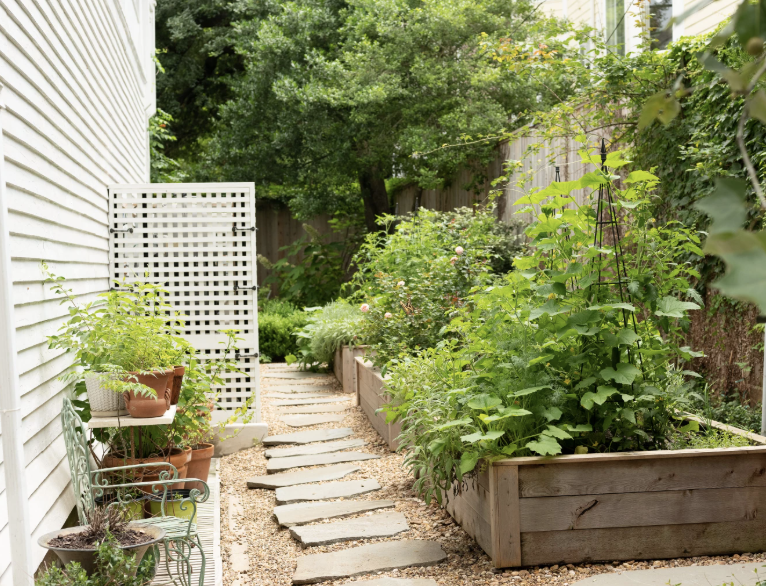
The best trellis material depends on where the product will be used.
A wet UK garden, a sunny Mediterranean balcony, a snowy Nordic backyard, and a humid coastal garden all create different pressure on materials.
Powder-coated metal: best all-round durability
Powder-coated metal is usually one of the strongest choices.
It performs well in:
- windy gardens;
- wet climates;
- cold climates;
- heavy climbing plant applications;
- long-term installations.
Its main weakness is rust if the coating is damaged.
For retail and wholesale buyers, packaging is also important. Scratches during shipping can become rust points later.
Composite trellis: stable and low-maintenance
Composite materials, often made with wood fibre and plastic, can offer strong outdoor performance[^7].
Benefits include:
- resistance to rot;
- lower maintenance than wood[^8];
- stable shape;
- good moisture resistance;
- modern appearance.
Quality varies by supplier, so buyers should check UV stability, wall thickness, and structural strength.
UV-stabilised plastic: practical and economical
Plastic trellises are useful for:
- balcony gardens;
- lightweight climbing plants;
- low-maintenance buyers;
- wet climates;
- budget retail ranges.
The key is material grade.
Cheap plastic may fail quickly outdoors. UV-stabilised, thicker plastic gives better long-term value.
Treated wood: natural look with maintenance
Treated wood offers a warm, traditional style and stronger structure than willow.
It is suitable for:
- cottage gardens;
- classic European landscapes;
- medium-term trellis structures;
- customers who accept maintenance.
It needs regular inspection, sealing, and protection from ground moisture.
Willow and bamboo: beautiful but shorter-lived
Willow and bamboo are best for:
- natural garden styling;
- seasonal displays;
- lighter plants;
- eco-themed retail ranges;
- decorative fencing or edging.
They are not usually the longest-lasting option in wet or harsh climates.
Their value is visual warmth, not maximum lifespan.
Climate material guide
| Climate zone | Best trellis materials | Materials to use carefully |
|---|---|---|
| Rainy and humid | Powder-coated metal, composite, treated wood | Willow, untreated bamboo |
| Hot and sunny | UV-stabilised plastic, coated metal, treated wood | Low-grade plastic |
| Cold and snowy | Strong metal, treated wood, composite | Thin plastic, weak willow |
| Coastal | Aluminium, stainless steel, high-grade coating | Untreated steel |
| Mild and sheltered | Willow, bamboo, wood, plastic, metal | Almost all if maintained |
| Windy areas | Metal, reinforced composite | Lightweight weak frames |
Buyer recommendation by priority
| Buyer priority | Recommended material |
|---|---|
| Longest service life | Powder-coated metal |
| Natural appearance | Treated wood or willow |
| Low maintenance | Composite or plastic |
| Eco-style display | Willow or bamboo |
| Heavy climbing plants | Metal or strong wood |
| Balcony use | Plastic or lightweight metal |
For importers, I suggest building ranges by climate need: wet climate trellis, sunny climate trellis, and natural decorative trellis. This makes buying decisions easier for retailers and end users.
Conclusion
Weather affects trellis lifespan through moisture, UV exposure, freezing, and structural stress. Choose materials based on climate, not appearance alone.
[^1]: "Air- and shed-drying lumber – OSU Extension Service", https://extension.oregonstate.edu/catalog/em-8612-air-shed-drying-lumber. Wood-science sources describe end-grain surfaces as more permeable than longitudinal surfaces because exposed cell cavities can take up liquid water more readily, supporting the need to seal cut ends in exterior woodwork. Evidence role: mechanism; source type: education. Supports: The end grain is especially important because it absorbs moisture quickly.. Scope note: This supports the moisture-absorption mechanism generally for wood, not the performance of any specific trellis product or timber species.
[^2]: "Wood Durability and Protection – Wood Preservation", https://research.fs.usda.gov/fpl/programs/dwp. Wood-durability guidance explains that decay fungi require moisture and can develop where water is trapped in checks, joints, or exposed cuts, which supports the claim that hidden moisture ingress can lead to internal rot before obvious surface failure. Evidence role: mechanism; source type: government. Supports: If water enters through cracks or cut edges, the trellis may rot from inside even when the surface still looks acceptable.. Scope note: The source would support the general decay process in exterior wood; it may not specifically document trellises or the exact visual condition described.
[^3]: "Effects of UV radiation on natural and synthetic materials – PMC", https://pmc.ncbi.nlm.nih.gov/articles/PMC10088630/. Materials-science sources describe ultraviolet exposure as a cause of photodegradation in many polymers and weathering in lignocellulosic materials such as wood, whereas metals are not themselves photodegraded by UV radiation in the same way. Evidence role: general_support; source type: paper. Supports: Metal trellises generally handle sunlight better than natural materials and low-grade plastics.. Scope note: This supports the general material comparison, but actual outdoor durability depends on the specific metal, alloy, plastic formulation, wood treatment, coating, and local exposure conditions.
[^4]: "Heat wave in the garden: How to identify and prevent heat stress in …", https://extension.oregonstate.edu/catalog/em-9556-heat-wave-garden-how-identify-prevent-heat-stress-plants. Research and educational sources on surface energy balance report that dark surfaces absorb more solar radiation and can reach higher surface temperatures; horticultural sources also describe heat injury to plant tissues under high-temperature exposure. Evidence role: mechanism; source type: education. Supports: Dark metal can become very hot in direct sun and may affect delicate plant stems in very hot conditions.. Scope note: The evidence is contextual rather than trellis-specific; it supports the physical and biological mechanisms but does not by itself establish a universal temperature threshold for all metal trellises or plant species.
[^5]: "[PDF] Low Temperature Properties of Polymers", https://www.appstate.edu/~clementsjs/polymerproperties/plastics_low_temp.pdf. Materials-science references describe the ductile-to-brittle behavior of many polymers as temperature decreases, supporting the general claim that plastics suitable in moderate conditions can lose toughness in freezing environments. Evidence role: mechanism; source type: paper. Supports: Some plastics perform well in moderate climates but become brittle in freezing temperatures.. Scope note: The effect varies substantially by polymer type, additives, processing history, and the specific service temperature.
[^6]: "[PDF] WEATHERING OF BUILDING INFRASTRUCTURE AND THE …", https://courses.washington.edu/cee518/Auldetal2007.pdf. European climate and construction references document that northern Europe experiences prolonged freezing conditions, providing contextual support for requiring low-temperature performance specifications in materials used in those markets. Evidence role: general_support; source type: institution. Supports: Cold-resistant material specifications are important for northern European markets.. Scope note: Such sources support the climatic rationale, but they do not by themselves prove market-wide purchasing or regulatory requirements for every plastic product category.
[^7]: "Durability of wood-plastic composites | US Forest Service Research …", https://research.fs.usda.gov/treesearch/25746. A materials-science source on wood–plastic composites supports that combining wood fibres or flour with thermoplastic polymers can produce decking and outdoor products with improved resistance to biological deterioration and moisture compared with untreated wood. Evidence role: general_support; source type: paper. Supports: Composite materials made with wood fibre and plastic can offer strong outdoor performance.. Scope note: The support is contextual because performance depends on formulation, additives, processing, and installation conditions rather than the composite category alone.
[^8]: "Don’t Waste Your Money on Decking (Composite vs Wood) – YouTube", https://www.youtube.com/watch?v=-cdrVNfngo0. A neutral source on composite decking or wood–plastic composites notes that these materials are commonly used as alternatives to timber decking because they generally require less routine maintenance, such as painting, sealing, or staining, than natural wood. Evidence role: general_support; source type: institution. Supports: Composite materials can require lower maintenance than wood.. Scope note: This does not prove that every composite product is lower-maintenance; requirements vary by product quality, surface finish, exposure, and manufacturer instructions.