
For overseas buyers, production visibility is one of the biggest challenges when sourcing from China. Without visiting the factory, buyers still need confidence that orders are moving according to plan.
Tracking production progress remotely allows buyers to monitor manufacturing stages, identify potential delays early, verify supplier performance, and maintain quality control without travelling to the factory.
With the right tools and communication process, remote production management can be highly effective.
Why Overseas Buyers Need Better Visibility During Factory Production
When buyers place orders with Chinese factories, they often face uncertainty between order confirmation and shipment completion.
Overseas buyers need better production visibility because remote monitoring helps control timelines, reduce communication gaps, prevent unexpected delays, and ensure products are manufactured according to agreed requirements.
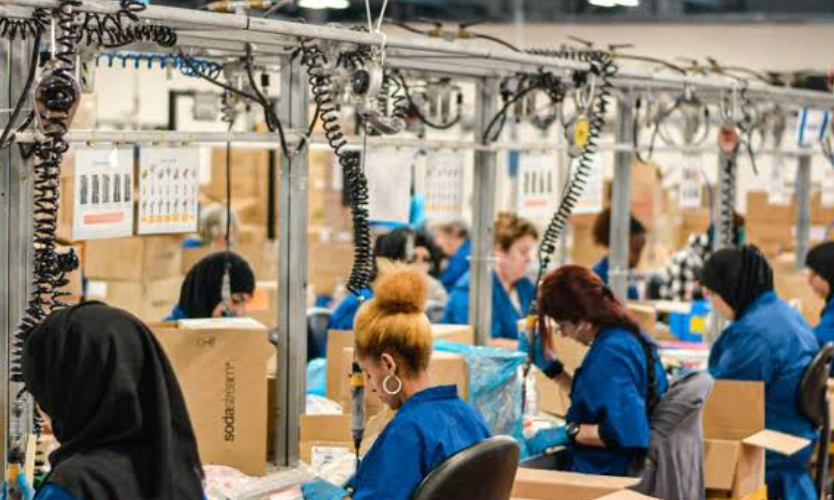
The production stage is often the longest part of the sourcing process.
During this period, many things can change:
- raw materials may arrive late;
- production schedules may shift;
- labour availability may change;
- quality problems may appear;
- suppliers may prioritise other orders.
Without proper visibility, buyers may only discover problems when the shipment is already delayed.
The risks of limited production visibility
When buyers cannot see production progress, they may face:
- missed delivery deadlines;
- incomplete orders;
- incorrect product details;
- rushed final inspections;
- unexpected shipping changes.
This is especially risky for seasonal products.
Examples include:
- Christmas decorations;
- garden products;
- promotional items;
- retail launches.
A delay of only a few weeks can affect an entire sales season.
Better visibility improves decision-making
Production tracking helps buyers answer important questions[^1]:
- Has production started?
- Are materials ready?
- Is the factory following the schedule?
- Are products being assembled correctly?
- When will inspection be possible?
- Is shipment booking still on time?
With clear answers, buyers can make better decisions[^2].
Remote management creates stronger supplier relationships
Regular communication also improves cooperation.
When suppliers know that buyers are actively following production, they are more likely to:
- provide updates;
- report problems earlier;
- follow agreed timelines;
- maintain quality standards.
Useful for all order sizes
Production tracking is not only for large companies.
It is valuable for:
- first-time importers;
- small businesses;
- private label brands;
- repeat buyers;
- companies managing multiple suppliers.
| Visibility problem | Remote tracking solution |
|---|---|
| Unknown production status | Regular progress updates |
| Supplier communication gaps | Scheduled reporting |
| Quality uncertainty | Photos and videos |
| Delivery risk | Timeline monitoring |
| Factory distance | Digital supervision |
Better visibility helps buyers create a more predictable sourcing process from China.
What Tools Can Help Buyers Monitor Production Remotely?
Technology makes it easier for buyers to stay connected with factories without being physically present.
The most useful tools for remote production monitoring include video calls, factory photos and videos, digital project trackers, cloud documents, production reports, and third-party inspection platforms.
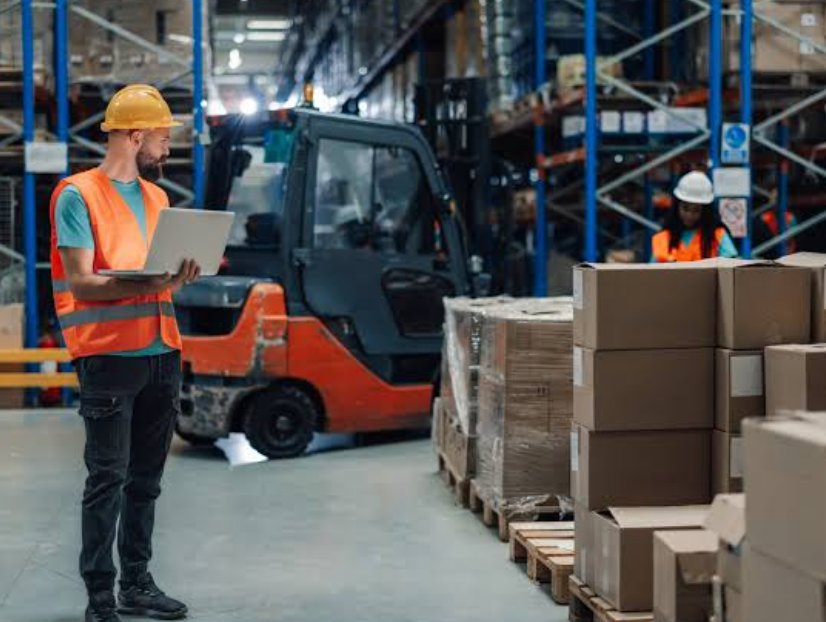
A good remote monitoring system does not require complicated technology.
The key is using the right tools at the right production stages.
Production update photos and videos
Photos and videos are among the simplest monitoring methods.
Factories can provide updates showing:
- raw materials;
- production lines;
- semi-finished products;
- finished products;
- packaging preparation.
Useful photo requirements include:
- date information;
- product labels;
- production quantity;
- clear close-up views.
Regular visual updates help buyers understand real progress.
Video calls with factory teams
Live video communication provides stronger transparency.[^3]
During a video call, buyers can review:[^4]
- production areas;
- machinery;
- product assembly;
- warehouse stock;
- packaging process.
Buyers can also ask questions immediately.
Digital project management tools
For larger projects, digital tracking tools are useful.
They can include:
- production milestones;
- expected completion dates;
- inspection schedules;
- shipment planning;
- responsible persons.
A simple timeline may include:
| Stage | Status |
|---|---|
| Material preparation | Completed |
| Production start | In progress |
| Assembly | Pending |
| Quality inspection | Planned |
| Shipment | Scheduled |
Cloud file sharing
Cloud platforms help organise important information.
Buyers and suppliers can share:
- product specifications;
- approved samples;
- drawings;
- inspection reports;
- packaging requirements.
This reduces confusion caused by multiple versions of documents.
Third-party inspection services
For important orders, buyers may use independent inspection companies.
They can provide:
- factory audits;
- production inspections;
- quality reports;
- shipment checks.
This adds an additional layer of control.
Communication platforms
Many international buyers use:
- email;
- messaging apps;
- video meeting platforms;
- supplier management systems.
The important point is maintaining a consistent communication routine.
| Tool | Main purpose |
|---|---|
| Photos/videos | Visual progress updates |
| Video calls | Real-time factory communication |
| Project trackers | Timeline control |
| Cloud documents | Information management |
| Inspection companies | Independent verification |
The right tools allow buyers to manage factory production from anywhere in the world.
How to Verify Production Status Without Being On-Site?
Remote monitoring works best when buyers verify information instead of simply accepting supplier updates.
Buyers can verify production status remotely by comparing progress against schedules, checking physical evidence, requesting production records, reviewing quality checkpoints, and maintaining regular communication with factory teams.
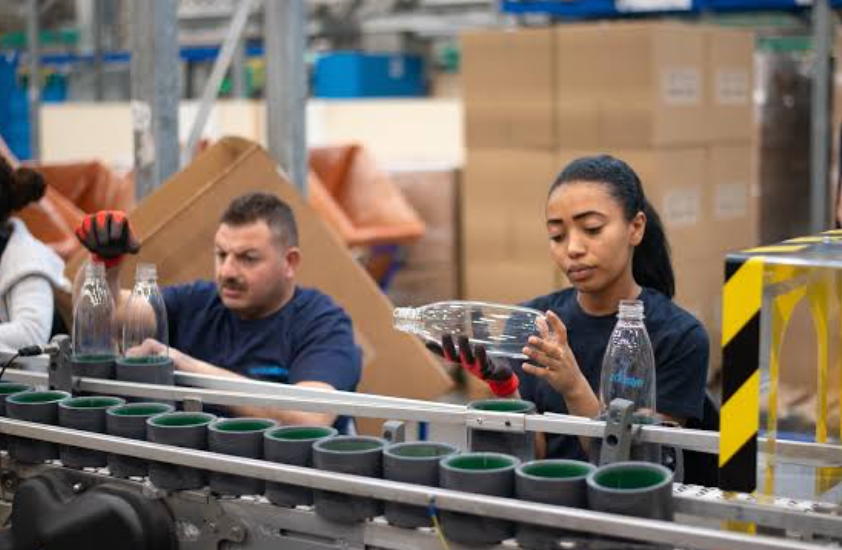
A supplier saying “production is almost finished” does not always provide enough information.
Buyers need evidence.
Compare progress with the agreed timeline
Before production starts, create a clear schedule.
Example:
| Production stage | Expected timing |
|---|---|
| Material preparation | Week 1 |
| Sample approval | Week 2 |
| Mass production | Week 3–5 |
| Inspection | Week 6 |
| Loading | Week 7 |
If progress does not match the plan, buyers can take action earlier.
Request production evidence
Useful evidence includes:
- production line photos;
- finished product samples;
- quantity reports;
- packaging photos;
- warehouse videos.
The information should show real progress, not only selected samples.
Check key production milestones
Instead of checking every day, focus on important points:
Before production
- confirm materials;
- approve samples;
- check specifications.
During production
- confirm progress;
- review quality points;
- check potential problems.
Before shipment
- inspect finished goods;
- confirm packaging;
- verify quantity.
Use random verification
Random checks create stronger confidence.[^5]
Examples:
- request random product photos;
- ask for random carton opening;
- compare products with approved samples;
- verify production quantities.
This reduces the risk of receiving only carefully selected images.[^6]
Keep communication records
Maintain records of:
- production updates;
- approved samples;
- changes;
- inspection results;
- shipment discussions.
These records help avoid misunderstandings.
Work with suppliers who communicate proactively
Reliable suppliers usually:
- provide updates without reminders;
- report problems early;
- suggest solutions;
- share realistic timelines.
| Verification method | What it confirms |
|---|---|
| Timeline comparison | Production progress |
| Photos/videos | Physical evidence |
| Milestone checks | Key stage completion |
| Random checks | Actual condition |
| Records | Communication history |
Remote verification works when buyers create a structured process instead of relying only on promises.
Best Practices to Avoid Delays and Quality Issues Through Remote Follow-Up
Remote production tracking is most effective when buyers create a proactive follow-up system.
The best practices for avoiding production delays and quality problems include setting clear expectations, monitoring milestones, confirming changes quickly, checking quality early, and maintaining regular communication with suppliers.

Many production problems can be prevented before they become serious.
The goal of remote follow-up is not to control every factory action, but to identify risks early.
Set clear production requirements
Before production begins, confirm:
- product specifications;
- materials;
- colours;
- packaging;
- delivery date;
- inspection requirements.
Clear instructions reduce mistakes.
Create a production schedule
A simple production timeline helps both sides understand expectations.[^7]
Include:
- material arrival date;
- production start;
- sample approval;
- completion date;
- inspection date;
- loading date.
This creates accountability.[^8]
Monitor important milestones
Do not wait until the final shipment stage.
Check progress at key points:
- material preparation;
- first production samples;
- mid-production stage;
- finished goods;
- packaging;
- loading.
Early checking provides more time for correction.
Approve changes quickly
Production delays often happen because changes are not confirmed quickly.
Buyers should respond quickly when suppliers ask about:
- design changes;
- material alternatives;
- packaging adjustments;
- delivery issues.
Fast decisions keep production moving.
Combine production tracking with quality control
Production progress and product quality are connected.
A complete system includes:
- supplier communication;
- production monitoring;
- quality checks;
- shipment supervision.
Evaluate suppliers after every order
After shipment, review:
- delivery accuracy;
- communication quality;
- product consistency;
- problem-solving ability.
This helps buyers improve future sourcing decisions.
| Best practice | Benefit |
|---|---|
| Clear requirements | Fewer misunderstandings |
| Production schedule | Better timeline control |
| Milestone tracking | Early problem detection |
| Fast communication | Less delay |
| Quality checkpoints | Better product consistency |
| Supplier evaluation | Long-term improvement |
Effective remote follow-up helps buyers turn overseas production into a controlled and predictable process.
Conclusion
Remote production tracking allows overseas buyers to maintain visibility without visiting factories. With the right tools, clear communication, and regular verification, buyers can reduce delays and improve sourcing confidence.
[^1]: "Supply Chain Visibility and Its Value for Business Growth", https://www.seattleu.edu/business/online/albers/blog/supply-chain-visibility. Supply-chain visibility literature describes tracking and monitoring as a means of obtaining timely status information on production and logistics activities, supporting the claim that production tracking helps buyers answer operational questions. Evidence role: general_support; source type: paper. Supports: Production tracking helps buyers answer important questions about production status, materials, schedule adherence, assembly, inspection timing, and shipment readiness.. Scope note: The evidence is contextual and may address supply-chain visibility broadly rather than buyer-side production tracking in all sourcing arrangements.
[^2]: "A data-sharing approach for greater supply chain visibility", https://www.brookings.edu/articles/a-data-sharing-approach-for-greater-supply-chain-visibility/. Research on supply-chain information sharing and visibility finds that timely, accurate operational information can improve planning and coordination decisions; this supports the statement that clearer production answers can help buyers make better decisions. Evidence role: expert_consensus; source type: paper. Supports: With clear answers from production tracking, buyers can make better decisions.. Scope note: The source would support the decision-making mechanism generally, not prove improved decisions for every buyer or factory relationship.
[^3]: "Building Negotiator Trust Through Social Presence", https://ncmr.lps.library.cmu.edu/article/628/galley/529/download/. Research on video-mediated communication and social presence indicates that real-time visual interaction can increase perceived immediacy and informational richness, supporting the claim that live video may improve transparency in remote exchanges. Evidence role: general_support; source type: paper. Supports: Live video communication provides stronger transparency.. Scope note: This supports the communication mechanism and perceived transparency, but it does not prove that every buyer-supplier video call produces stronger transparency.
[^4]: "MIT9904-14: A Synthetic-Aperture Camera Array", http://www.ai.mit.edu/projects/ntt/documents/proposals99/MIT9904-14/proposal.html. Telepresence and remote-inspection literature describes live video as enabling remote observers to view distant environments and objects in real time, which supports the feasibility of using a video call to inspect production areas, machinery, assembly, stock, and packaging. Evidence role: mechanism; source type: paper. Supports: During a video call, buyers can review production areas, machinery, product assembly, warehouse stock, and packaging process.. Scope note: The source would support the general capability of remote visual inspection, not the accuracy or completeness of any specific supplier’s video walkthrough.
[^5]: "1.2 Random Sampling and Sampling Bias", https://mathbooks.unl.edu/Contemporary/sec-1-2-smp-mthd.html. Random selection is a standard sampling principle used to reduce selection bias and make inspection findings more credible than selectively chosen observations. Evidence role: mechanism; source type: education. Supports: Random checks create stronger confidence.. Scope note: This supports the sampling logic behind random checks generally, not any specific product-inspection workflow.
[^6]: "Selecting a Sampling Design", https://www.epa.gov/quality/selecting-sampling-design. Guidance on inspection and sampling methods notes that independently selected or random samples help limit bias that can arise when inspected items are chosen by an interested party. Evidence role: general_support; source type: institution. Supports: Random requests reduce the risk of receiving only carefully selected images.. Scope note: The source may address sampling or inspection bias broadly rather than the specific practice of requesting factory product photos.
[^7]: "Take control of your projects, and stop being a victim of late …", https://www.pmi.org/learning/library/take-control-projects-late-requirements-7251. Project management guidance commonly treats schedules and milestone dates as tools for coordinating stakeholder expectations and tracking planned work, supporting the use of a production timeline for shared understanding. Evidence role: general_support; source type: institution. Supports: A simple production timeline helps both sides understand expectations.. Scope note: This supports the general project-management principle rather than proving outcomes for every production context.
[^8]: "Scheduling 101 – the Basic of Best Practices", https://www.pmi.org/learning/library/schedule-101-basic-best-practices-6701. Project management standards describe baselines, milestones, and assigned dates as mechanisms for monitoring performance and clarifying responsibility, which contextualizes how a documented timeline can support accountability. Evidence role: mechanism; source type: institution. Supports: A documented production timeline creates accountability.. Scope note: The source would establish the mechanism conceptually; actual accountability depends on enforcement, roles, and communication practices.