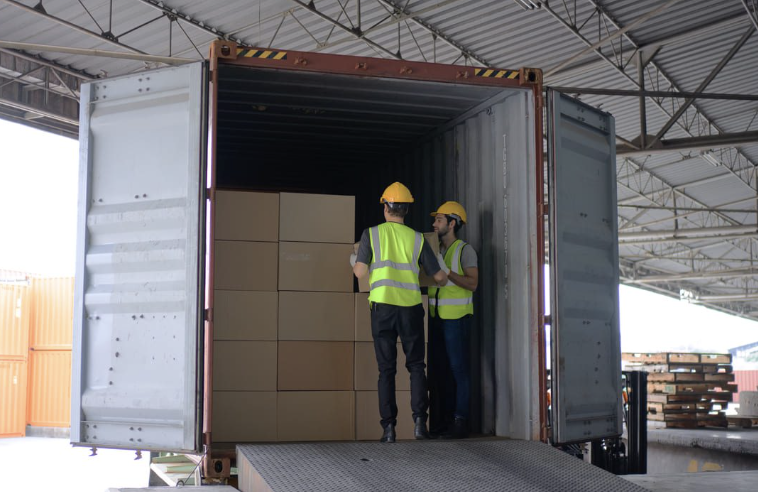
For international buyers, container loading is one of the most important moments before shipment leaves China. However, many importers cannot always travel to factories and supervise loading in person.
Remote container loading supervision allows buyers to control loading quality through photos, videos, digital inspection tools, and clear loading procedures without being physically present at the factory.
With the right process, buyers can reduce loading mistakes, protect product quality, and improve shipping confidence.
Why Remote Container Loading Supervision Matters When Importing from China
Remote supervision has become an important solution for global buyers who need better control over overseas shipments.
Remote container loading supervision matters because it helps importers verify product quantity, loading methods, packaging conditions, and container utilisation while saving travel costs and reducing shipment risks.
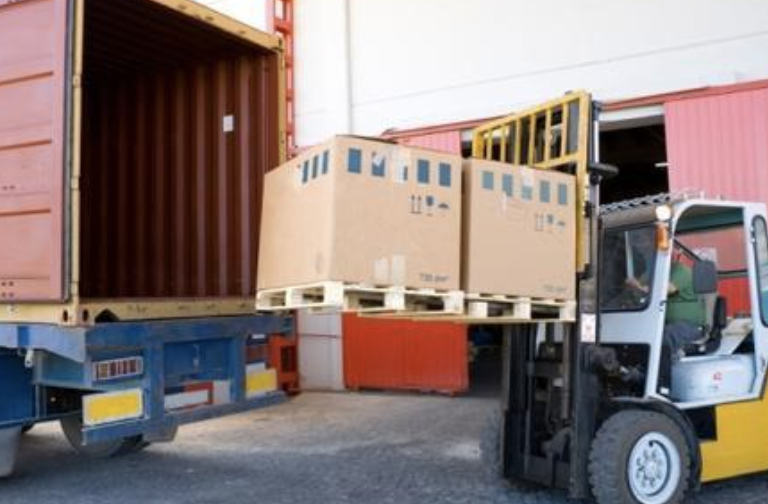
When importing from China, the container loading stage is often the final opportunity to check goods before they leave the factory.
Once the container is sealed and shipped, correcting problems becomes much more difficult and expensive.
The challenges of traditional loading supervision
In the past, buyers often relied on:
- factory promises;
- loading reports after shipment;
- freight forwarder updates;
- random photos.
However, these methods may not provide enough detail.
Common problems include:
- incorrect loading sequence;
- damaged cartons;
- missing products;
- poor space utilisation;
- unstable stacking;
- wrong quantity loaded.
Without direct supervision, these issues may only become visible after the container arrives.
Remote supervision saves time and cost
Travelling to China for every shipment is not practical for many buyers.
Remote supervision helps reduce:[^1]
- flight costs;
- accommodation expenses;
- travel time;
- production disruption.
This is especially useful for:
- small and medium importers;[^2]
- repeat buyers;
- seasonal products;
- multiple suppliers;
- urgent shipments.
Better control for long-distance sourcing
Many European and North American buyers purchase products from China regularly.
A remote loading process creates a repeatable system.
Instead of depending on individual factory workers, buyers can establish clear requirements for every shipment.
This improves consistency across:
- different factories;
- different products;
- different loading dates.
Important for mixed product shipments
Remote loading supervision is especially valuable when containers include multiple SKUs.
For example:
- garden decorations;
- fence panels;
- trellises;
- bird feeders;
- seasonal products.
Mixed containers create more opportunities for mistakes.
A clear loading checklist helps ensure every item is correctly counted and positioned.
| Risk without supervision | Possible result |
|---|---|
| Wrong quantity | Inventory shortage |
| Poor stacking | Product damage |
| Empty space | Higher freight cost |
| Incorrect loading order | Unloading problems |
| Damaged cartons | Customer complaints |
Remote supervision creates better visibility between Chinese factories and overseas buyers.
Key Things Buyers Should Monitor During Container Loading
Container loading is not only about putting cartons inside. The loading process directly affects product safety, unloading efficiency, and final customer satisfaction.
During container loading, buyers should monitor product quantity, carton condition, loading sequence, weight distribution, container condition, and protection methods used inside the container.
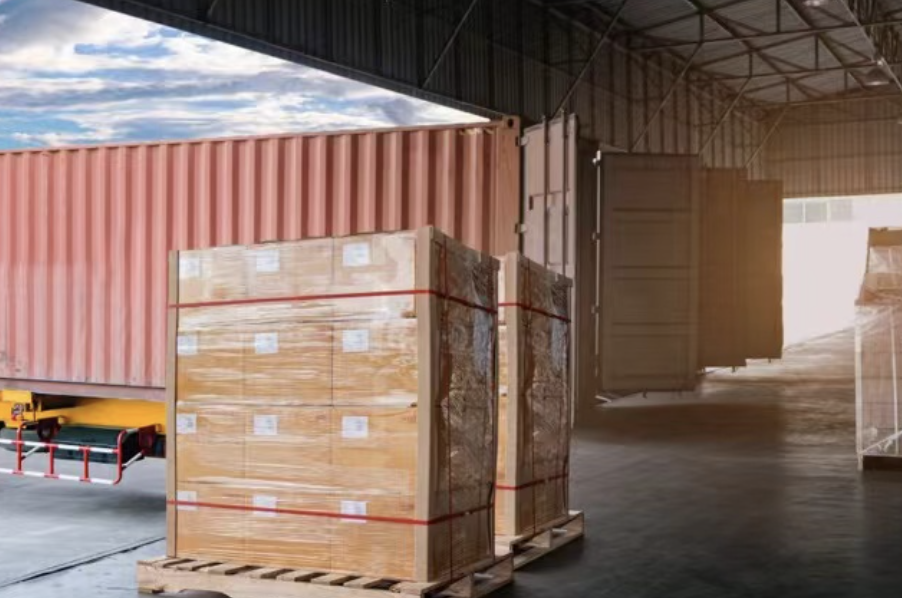
A professional loading check should follow a clear process.
Check container condition before loading
Before cartons enter the container, buyers should confirm:
- container number;
- container size;
- cleanliness;
- dryness;
- damage condition;
- unusual smell;
- holes or leaks.
A damaged or wet container can affect the entire shipment.
For products such as:
- wooden garden products;
- Christmas decorations;
- outdoor textiles;
- paper packaging items;
container condition is especially important.
Verify product quantity
Quantity checking should happen before and during loading.
Monitor:
- carton count;
- pallet count;
- SKU quantity;
- product labels;
- outer carton markings.
A simple loading checklist can prevent expensive shortages.
Example:
| Product | Ordered quantity | Loaded quantity | Checked |
|---|---|---|---|
| Garden trellis | 500 pcs | 500 pcs | ✓ |
| Bird feeder | 800 pcs | 800 pcs | ✓ |
| Fence panel | 300 pcs | 300 pcs | ✓ |
Check carton condition
Cartons should be inspected before loading.[^3]
Look for:
- crushed corners;
- broken cartons;
- water marks[^4];
- incorrect labels;
- weak packaging.
Damaged cartons should not simply be hidden inside the container.
Monitor loading sequence
The loading order affects unloading efficiency.
Important points include:
- heavy cartons at the bottom;
- fragile products protected;
- frequently needed products near the door;
- balanced weight distribution.
Poor loading order can create problems at destination warehouses.
Check container space utilisation
Good loading should maximise container space while protecting products.
Buyers should check:
- unnecessary empty gaps;
- unstable stacking;
- excessive pressure on cartons;
- product movement risks.
For large garden products, such as fence panels and trellises, loading design is especially important.
Take loading evidence
Buyers should request:
- loading photos;
- loading videos;
- container seal photo;
- final container condition photo.
These records are useful for:
- internal approval;
- supplier evaluation;
- insurance claims;
- future improvement.
| Loading check | Why it matters |
|---|---|
| Container condition | Prevents moisture and damage |
| Quantity verification | Avoids shortages |
| Carton inspection | Protects product quality |
| Loading sequence | Improves unloading |
| Space utilisation | Reduces freight waste |
| Photo records | Creates shipment evidence |
A detailed checklist turns remote loading into a controlled quality process instead of a blind shipment.
Using Digital Tools to Control Loading Quality from Anywhere
Technology makes remote container supervision much easier than before.
Digital tools such as live video calls, smartphones, cloud photo sharing, inspection platforms, and digital checklists allow buyers to monitor container loading quality from anywhere in the world.

A buyer does not need to stand beside the container to understand what is happening.
The key is collecting the right information at the right time.
Live video inspection
Live video is one of the simplest remote supervision methods.
Using:
- video calls;
- factory live streaming;
- mobile communication apps;
buyers can directly see:
- container opening;
- carton loading;
- product condition;
- final sealing.
Live communication also allows buyers to ask questions immediately.
Photo and video documentation
Photos remain one of the most practical inspection tools.
Useful photo requirements include:
Before loading:
- product cartons;
- labels;
- container condition.
During loading:
- first layer arrangement;
- stacking process;
- product count;
- protection materials.
After loading:
- full container;
- closed doors;
- seal number.
Digital loading checklist
A digital checklist creates a standard process.[^5]
It can include:
- product information;
- carton quantity;
- loading order;
- inspection points;
- approval status;
- comments.
This reduces communication mistakes between buyers, suppliers, and inspectors.[^6]
Cloud-based sharing
Cloud platforms allow multiple teams to review information.
Useful for:
- purchasing teams;
- quality departments;
- logistics teams;
- company managers.
Everyone can access the same shipment records.
Remote inspection services
Some buyers choose third-party inspection companies to supervise loading.
They can provide:
- professional inspectors;
- loading reports;
- photo evidence;
- compliance checks.
This is useful for:
- first orders;
- high-value shipments;
- new suppliers.
Digital records improve supplier management
Remote loading data can also help evaluate suppliers.
Over time, buyers can compare:
- loading accuracy;
- packaging performance;
- delivery consistency;
- damage rates.
This creates a better supplier selection process.
| Digital tool | Main function |
|---|---|
| Video call | Real-time supervision |
| Photos/videos | Loading evidence |
| Digital checklist | Standard process |
| Cloud storage | Team access |
| Third-party inspection | Professional verification |
| Shipment records | Supplier evaluation |
The goal of technology is simple: make overseas shipments easier to control.
How to Reduce Shipping Risks Before Your Container Leaves China
Remote supervision is most effective when combined with good preparation before loading begins.
Importers can reduce shipping risks by confirming specifications early, inspecting products before loading, preparing detailed loading instructions, choosing reliable suppliers, and creating clear shipment approval procedures.

Many shipping problems are created before the container arrives.
Good preparation prevents most avoidable mistakes.
Confirm all shipment details early
Before loading, confirm:
- SKU list;
- quantities;
- carton sizes;
- container type;
- loading plan;
- shipping schedule;
- required documents.
Last-minute changes often create errors.
Perform pre-shipment inspection
Loading supervision should not replace product inspection.
A complete process includes:
- production quality check;
- quantity confirmation;
- packaging inspection;
- container loading supervision.
This creates stronger protection.
Provide clear loading instructions
Factories should receive clear instructions.[^7]
Examples:
- maximum stacking height;
- fragile product placement;
- carton orientation;
- moisture protection;
- loading sequence;
- photo requirements.
Clear instructions reduce misunderstandings.[^8]
Choose suppliers with good loading experience
Experienced suppliers usually understand:
- export packaging;
- container planning;
- product protection;
- documentation requirements.
They can solve problems before they happen.
Plan container space properly
Poor loading increases risk.
A good loading plan should consider:
- product dimensions;
- carton strength;
- weight balance;
- unloading order;
- protection materials.
For bulky garden products, loading optimisation can significantly affect shipping cost.
Keep shipment records
After every shipment, keep:
- loading photos;
- inspection reports;
- supplier communication;
- container details;
- damage records.
These records help improve future shipments.
| Risk reduction method | Benefit |
|---|---|
| Early confirmation | Prevents mistakes |
| Product inspection | Controls quality |
| Loading instructions | Improves execution |
| Supplier evaluation | Reduces uncertainty |
| Space planning | Protects goods and cost |
| Shipment records | Supports improvement |
A strong remote loading system helps importers control risk before the container starts its journey.
Conclusion
Remote container loading supervision gives importers better control without travelling to China. With clear procedures, digital tools, and supplier cooperation, buyers can reduce shipping risks and protect every shipment.
[^1]: "Costs, Benefits and Effectiveness of Remote Audits for International Food …", https://www.oecd.org/content/dam/oecd/en/publications/reports/2023/06/costs-benefits-and-effectiveness-of-remote-audits-for-international-food-safety_058a7284/fef97106-en.pdf. Research and professional guidance on remote audits and inspections describe remote oversight methods as reducing the need for on-site travel, thereby lowering travel-related costs and time commitments. Evidence role: general_support; source type: paper. Supports: Remote supervision helps reduce flight costs, accommodation expenses, travel time, and production disruption.. Scope note: This would support the cost-and-time rationale in general, but it would not directly quantify savings for China-based shipment supervision unless the source studies that specific context.
[^2]: "SMEs and trade", https://www.oecd.org/en/topics/sub-issues/smes-and-trade.html. International trade research from institutions such as the OECD and WTO identifies small and medium-sized enterprises as facing greater resource and cost constraints in cross-border trade, which contextually supports the claim that travel-avoiding supervision models may be especially useful for them. Evidence role: general_support; source type: institution. Supports: Remote supervision is especially useful for small and medium importers.. Scope note: The evidence would be contextual: it supports SME sensitivity to trade costs and resource constraints, not necessarily the effectiveness of remote supervision for every SME importer.
[^3]: "MSC.1/Circ.1497 16 December 2014 IMO/ILO/UNECE …", https://wwwcdn.imo.org/localresources/en/OurWork/Safety/Documents/1497.pdf. Cargo inspection guidance from international and governmental transport-safety sources supports pre-loading checks of packaging condition to reduce damage, contamination, and handling risks. Evidence role: expert_consensus; source type: institution. Supports: Cartons should be inspected before loading.. Scope note: Such guidance supports inspection as a general logistics practice, but it may not prescribe the exact carton-level checklist used in this article.
[^4]: "E6011 General Fabrication Packaging Export Guide – BU Blogs", https://blogs.bu.edu/kongta/e6011-fabrication-export-packaging-guide/. Cargo and packaging-inspection references commonly treat water staining or moisture marks as evidence of possible exposure to wet conditions, which can indicate compromised packaging or goods condition. Evidence role: mechanism; source type: institution. Supports: Water marks are a condition that should be checked when inspecting cartons before loading.. Scope note: Water marks are an indicator of possible damage rather than direct proof that the contents are defective.
[^5]: "Iso 22716 Checklist", https://sciphilconf.berkeley.edu/sites/mL5GFD/602856/iso_22716__checklist.pdf. Research on checklist use in operational settings indicates that checklists help standardize task execution by making required steps explicit and repeatable. Evidence role: general_support; source type: paper. Supports: A digital checklist creates a standard process.. Scope note: The evidence is likely to support checklist-based standardization broadly, rather than this specific buyer-supplier inspection workflow.
[^6]: "The effectiveness of checklists and error reporting systems in …", https://pmc.ncbi.nlm.nih.gov/articles/PMC11329062/. Studies of structured checklists and standardized documentation show that explicit task records can reduce omissions and miscommunication in coordinated work, although the evidence may be drawn from analogous operational or quality-control contexts rather than this exact trade-inspection scenario. Evidence role: mechanism; source type: paper. Supports: A digital checklist reduces communication mistakes between buyers, suppliers, and inspectors.. Scope note: Contextual support; a source may demonstrate reduced communication errors in comparable workflows, not directly among buyers, suppliers, and inspectors.
[^7]: "Guidance on the requirements for Documented Information …", https://www.iso.org/iso/documented_information.pdf. Quality-management standards such as ISO 9001 treat documented information and controlled production instructions as part of ensuring that operational requirements are defined and consistently followed. Evidence role: expert_consensus; source type: institution. Supports: Factories should receive clear instructions.. Scope note: This provides standards-based contextual support for the practice, rather than direct evidence about every factory-ordering scenario.
[^8]: "Standard operating procedures and teamwork training: study A … – NCBI", https://www.ncbi.nlm.nih.gov/books/NBK401828/. Research on standard operating procedures and written work instructions links explicit procedural guidance with more consistent task performance and fewer execution errors, which supports the claim that clear instructions can reduce misunderstandings. Evidence role: general_support; source type: paper. Supports: Clear instructions reduce misunderstandings.. Scope note: The evidence is likely to address error reduction or task consistency more directly than the specific term “misunderstandings.”