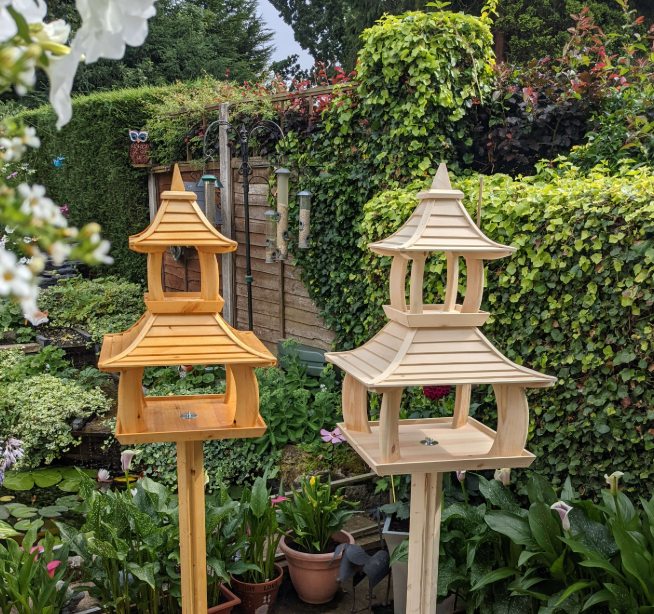
I’ve sold bird feeders and bird tables in bulk for years, and I’ve learned one truth: the “best source” is the one that stays stable after the first order.
To buy bird feeders and bird tables in bulk, start with reliable wholesale channels (manufacturer-direct suppliers, B2B marketplaces, and trade fairs). Then filter suppliers by repeatable quality, export-ready packaging, and clear communication before comparing price.
If you want fewer headaches, build your sourcing plan like a system—not like a gamble.
Best Places to Source Bird Feeders and Bird Tables in Bulk
There are many places to buy in bulk, but each channel has a different “best use,” depending on your product style, MOQ, and timeline.
The best bulk sourcing channels are: manufacturer-direct supply (for long-term programs), B2B platforms (for fast shortlisting), trade shows (for hands-on comparison), and sourcing agents (for complex multi-supplier projects).
Let me explain this the way I would tell a friend over coffee.
If you’re buying bulk, you’re not just buying products.
You’re buying a relationship with the supplier’s factory rhythm.
So where you source from matters.
1) Buy direct from manufacturers (best for repeat orders)
If you already know your target product style and can meet MOQ, this is usually the cleanest route.
[Direct factories][^1] are better for:
- stable long-term SKUs
- OEM branding and packaging
- consistent materials and finishes
- smoother repeat orders next season
This is how most DIY supermarket programs are built.
When customers contact me at HOWDY, they usually don’t want one feeder. They want a range that can be repeated, like:
- hanging feeders
- bird tables
- matching garden décor items
If you want a factory-direct workflow, I suggest building a [bulk RFQ sheet)[^2] and a sample sign-off form from day one.
2) Use B2B marketplaces (best for shortlisting fast)
Platforms are useful because you can compare many suppliers quickly.
Good for:
- building a quick shortlist
- comparing styles and basic MOQs
- checking supplier responsiveness
But I always remind buyers: marketplace listings can be polished.
So after the shortlist, you still need proof:
- factory photos/video
- sample evaluation
- packaging checks
- repeat-order planning
I keep a simple supplier scorecard to avoid “pretty catalog bias.”
3) Visit trade fairs (best for touching the product)
Trade shows are great when you need to feel the product:
- coating thickness
- wood finishing
- stability of bird tables
- packaging quality in hand
Also, face-to-face talk saves a lot of misunderstanding.
If you’re building a serious garden range, fairs can be a shortcut—because you see 20 suppliers in 2 days instead of 2 months of emails.
4) Work with sourcing agents (best for complex projects)
If your program includes multiple materials and many SKUs, a good agent can help.
Agents are useful when:
- you need factory audits
- you are buying from many provinces
- you need QC coordination
- you want to consolidate shipments
The risk is simple: a bad agent can add cost without adding control.
So choose carefully.
Quick channel comparison table
| Channel | Best for | Main risk |
|---|---|---|
| Manufacturer-direct | Repeat orders, OEM, stable SKUs | MOQ and lead time planning |
| B2B marketplaces | Fast shortlisting | Supplier quality varies a lot |
| Trade fairs | Hands-on evaluation | Travel cost and time |
| Sourcing agents | Multi-supplier management | Hidden markups if not transparent |
How to Choose the Right Wholesale Supplier
A bulk order is not about the first shipment. It’s about whether the supplier can repeat the same quality next season.
Choose the right wholesale supplier[^3] by checking durability logic (metal/plastic/wood), packaging protection, QC process[^4], and repeat-order consistency. Price should be compared only after these are clear.
Let me tell you a small “painful lesson” story.
One buyer once told me:
“Lucas, this supplier is cheaper by $0.30 per piece.”
Two months later, they came back and said:
“Half the hooks bent in shipping. Customers returned them. Can you help?”
That $0.30 “savings” disappeared so fast it almost felt like a magic trick.
So here’s how I choose suppliers (and how I suggest buyers choose me).
1) Match supplier type to product type
Bird feeders and bird tables are not one material.
- Metal feeder? Choose suppliers with coating control.
- Plastic feeder? Choose suppliers with stable tooling and UV-resistant plastic.
- Wooden bird table? Choose suppliers with outdoor wood treatment + drainage design.
2) Check communication quality early
This is underrated.
A good supplier replies with:
- clear answers
- simple English
- photos/videos when needed
- firm lead times (not vague promises)
A weak supplier replies like fog.
And fog becomes delay.
3) Ask about repeat orders on day one
I ask this question early:
“What will change on the second order?”
A good supplier will talk about:
- batch color control
- material consistency
- spare parts planning
- peak season lead time
A weak supplier will say: “No problem.”
A simple supplier scoring model
| Score item | Weight | What good looks like |
|---|---|---|
| Product durability | 30% | clear material and finish logic |
| Packaging | 25% | strong inner protection, low damage risk |
| QC process | 20% | inspection steps explained simply |
| Communication | 15% | fast, clear, consistent |
| Commercial terms | 10% | MOQ, lead time, price stability |
If you want, you can build this into a supplier evaluation sheet and reuse it forever.
What to Check Before Placing a Bulk Order
Bulk orders fail for boring reasons—small details that people skip when they feel excited about a good price.
Before placing a bulk order[^5], confirm specs in writing, approve pre-production samples[^6], verify packaging protection, agree on QC checkpoints, and confirm lead time + payment terms. This prevents the most common bulk-order problems.

I like to treat bulk orders like building a small bridge.
If one bolt is missing, the bridge still looks fine… until someone walks on it.
So here’s my “boring but profitable” checklist.
1) Confirm product specs clearly
Don’t rely on screenshots.
Confirm:
- size and weight
- material thickness (metal)
- coating method and color code
- plastic grade and UV additive (if applicable)
- wood type and outdoor treatment
- drainage design for bird tables
- hardware type (hooks, chains, screws)
I like using a one-page spec confirmation form.
2) Confirm packaging like it’s part of the product
For bird feeders, packaging is often where profit dies.
Check:
- hook and chain protection
- scratch protection for coated surfaces
- corner protection for wood
- carton strength (double wall if needed)
- inner separators (if multiple pieces)
A product that arrives damaged is not “cheap.” It’s expensive.
3) Confirm QC and inspection points
At minimum, align on:
- pre-production sample approval
- in-line inspection
- final inspection
- AQL standard (if you use one)
Even if you don’t use complicated terms, you can still define checkpoints.
4) Confirm lead time and season risk
Bird feeders often sell seasonally.
So confirm:
- production lead time
- peak season capacity
- shipping schedule
- spare parts policy for replacements
Quick “before order” checklist table
| Item | What to confirm | Why it matters |
|---|---|---|
| Specs | material, size, finish | prevents “not the same as sample” |
| Packaging | inner protection, carton | prevents damage and returns |
| QC | checkpoints, photos | prevents hidden defects |
| Lead time | realistic schedule | prevents missed season |
| Terms | payment, Incoterms | prevents cost surprises |
Why Buying Direct from Manufacturers Can Be More Cost-Effective
Direct purchasing isn’t only about lower unit price. It’s about fewer middle layers, better control, and stronger repeat-order stability.
Buying direct from manufacturers[^7] can be more cost-effective because it reduces middle costs, improves QC control, supports OEM packaging at source[^8], and lowers long-term costs from returns and inconsistent batches.

Let me put it simply.
When you buy bulk through too many layers, you pay in two ways:
1) money (markups)
2) risk (lost control)
1) Fewer layers usually means cleaner pricing
If you buy from:
Factory → You
you usually avoid multiple markups.
But price is only the beginning.
2) Factory-direct improves product control
When you can talk closer to the factory level, you can control:
- coating thickness
- wood treatment steps
- plastic material selection
- packaging structure
That reduces “small surprises” that become big costs later.
3) OEM branding becomes easier
Many retailers need:
- logo on product
- private label carton
- barcode placement
- instruction sheets
Direct factories can do this more smoothly because the packaging and production happen together.
4) Returns are the hidden cost killer
Here’s the part I always emphasize:
A slightly higher unit price can be cheaper if it reduces:
- breakage
- rust complaints
- fading
- missing parts
- repeat-order inconsistency
So direct purchasing is often about total cost, not unit cost.
A quick cost logic table
| Cost type | Non-direct buying | Factory-direct buying |
|---|---|---|
| Unit price | sometimes higher | often lower or cleaner |
| QC control | weaker | stronger |
| OEM packaging | slower | faster |
| Repeat order stability | uncertain | better |
| Return risk | higher | lower |
If you want a long-term bulk program, factory-direct is usually the calmer path.
And if you want to discuss bird feeders and bird tables as part of a full garden range, you can always start with a simple message using a bulk inquiry template. I’ll keep it clear and efficient—because that’s how wholesale should feel.
Conclusion
Bulk buying works best when you control quality, packaging, and repeat orders—not just the first price.
[^1]: Exploring this resource will provide insights into the advantages of direct factory partnerships, enhancing your manufacturing strategy.
[^2]: This link will guide you in developing a bulk RFQ sheet, crucial for streamlining your procurement process.
[^3]: Understanding how to choose a wholesale supplier can significantly impact your business’s success and product quality.
[^4]: Learning about the QC process helps ensure that products meet quality standards, which is crucial for customer satisfaction.
[^5]: Understanding common bulk order issues can help you avoid costly mistakes and ensure a smooth purchasing process.
[^6]: Exploring the significance of pre-production samples can enhance your product quality and satisfaction before final production.
[^7]: Explore this link to understand how direct purchasing can enhance cost-effectiveness and quality control.
[^8]: Learn about OEM packaging at source to see how it can streamline your supply chain and reduce costs.