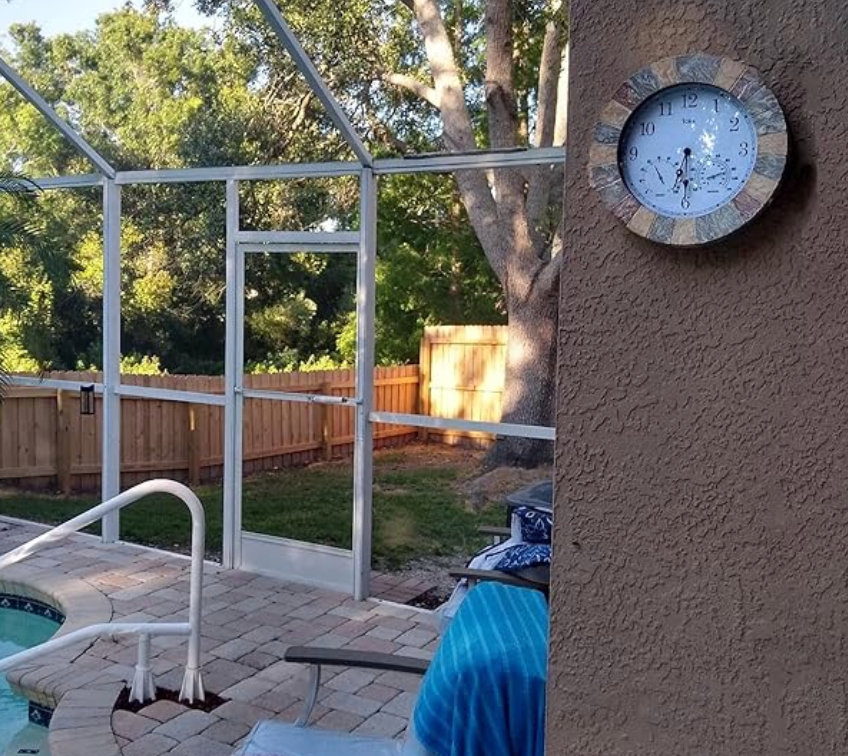
I’ve handled outdoor clock wholesale projects from China for years, and the best imports all have one thing in common: the boring details were handled early.
To import outdoor clocks from China successfully, choose a supplier with stable outdoor-grade materials, confirm a clear specification sheet, approve samples, lock packaging standards, and set QC + delivery checkpoints before you pay the balance.
If you want smooth repeat orders, treat your first order like building a blueprint.
Why More Buyers Source Outdoor Clocks from China
China remains the most practical sourcing base for outdoor clocks because the supply chain is complete, OEM is normal, and factories can scale for wholesale buyers.
More buyers source outdoor clocks[^1] from China because it offers wide design options, competitive wholesale pricing, mature OEM/ODM support[^2], and a connected supply chain for frames, dials, movements, and export packaging.

Let me explain this from the seller’s side.
When a buyer comes to me, they usually want two things that sound simple but are actually hard:
- consistent quality
- consistent delivery
China works well for outdoor clocks because many parts of the chain are already connected:
- clock movements
- metal frames and powder coating
- resin and plastic housings
- dial printing
- lenses and covers
- packaging printing and inserts
That means a buyer can build a full product range without chasing suppliers across different countries.
OEM/ODM is part of daily business
In many places, “custom” feels like a special favor.
In China, it’s often normal workflow:
- logo on dial
- private label carton
- color options
- size variations
- thermometer/hygrometer combinations
But I always say this: custom should be controlled.
Too many changes kill stability.
Stable SKUs win long-term.
China supports both “fast movers” and “premium”
Europe buyers often want:
- resin clocks that sell fast
- metal clocks that feel premium
China’s supply base can support both, which helps retailers build a complete range.
If you want a structured project start, I usually suggest building a simple range plan and a RFQ sheet before contacting suppliers.
What to Check Before Placing a Wholesale Order
A wholesale order fails for small reasons: unclear specs, weak packaging, and no repeat-order rules.
Before placing a wholesale order, confirm the product specification in writing, verify weather resistance (sealing + UV + rust control), approve samples, confirm packaging protection, and agree on QC checkpoints and delivery timeline.
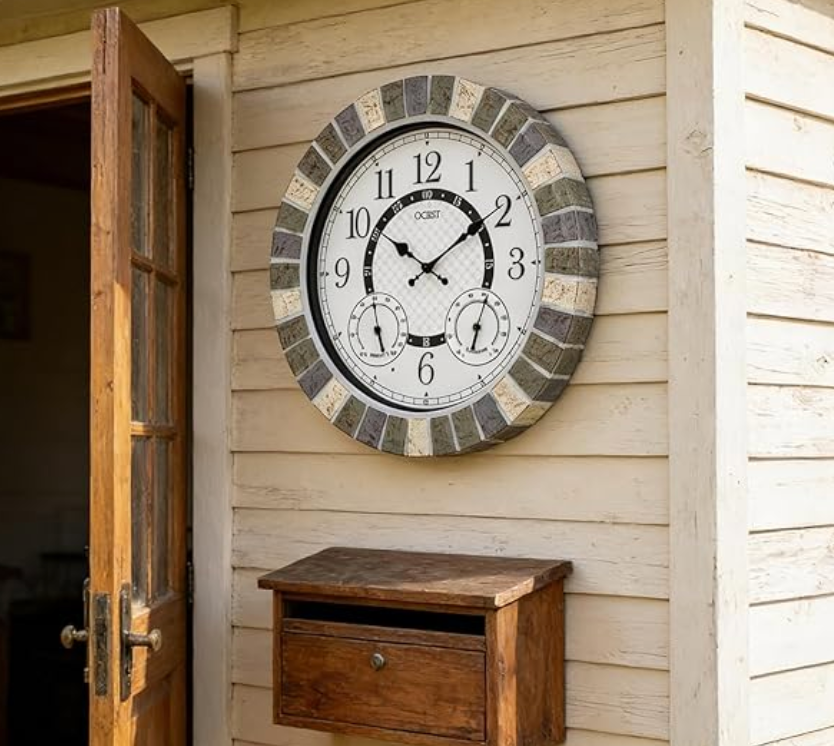
I’ve seen the same mistakes again and again, even with experienced buyers.
They focus on the unit price first.
But price is the last step—not the first.
Here’s what should be checked early.
1) Confirm the “outdoor” logic (not just the label)
An “outdoor clock” should have:
- sealed back cover
- moisture protection around the hand shaft
- weather-resistant materials (UV + rust resistance)
- stable mounting structure
If those are not clear, you will see:
- fogging
- rust
- fading
- broken parts during shipping
2) Confirm materials and finish
Ask for:
- frame material (powder-coated metal / stainless / resin)
- coating method and thickness (if possible)
- UV stability approach for plastic/resin
- lens material (glass or strong clear cover)
I like to keep this in a one-page spec sheet.
3) Confirm readability and dial design
This is often ignored, but it drives returns.
Check:
- number contrast
- hand thickness
- font clarity
- visibility from target distance
A beautiful clock that can’t be read is just decoration—and customers complain.
4) Confirm MOQ, lead time, and repeat order rules
The smartest question you can ask:
“What changes on the second order?”
A serious supplier will explain:
- batch color control[^3]
- consistent materials
- lead time for repeats[^4]
- spare parts policy
A weak supplier will say: “No problem,” and then you discover problems later.
Quick pre-order checklist table
| Item | What to confirm | Why it matters |
|---|---|---|
| Outdoor structure | sealing + shaft protection | prevents fogging and corrosion |
| Materials | UV + rust control | prevents fading and rust |
| Readability | contrast + thick hands | reduces complaints |
| MOQ/lead time | realistic schedule | protects your season |
| Repeat rules | batch consistency | supports long-term business |
If you want, I can share a bulk inquiry template you can copy-paste to suppliers.
How to Control Quality, Packaging, and Delivery
Control comes from clear checkpoints, not hope. The best importers don’t “trust,” they build a simple system.
To control quality, packaging, and delivery, lock specs and samples first, define QC checkpoints[^5] (pre-production, in-line, final), confirm packaging drop-safety[^6], and align shipping terms and timeline before production starts.
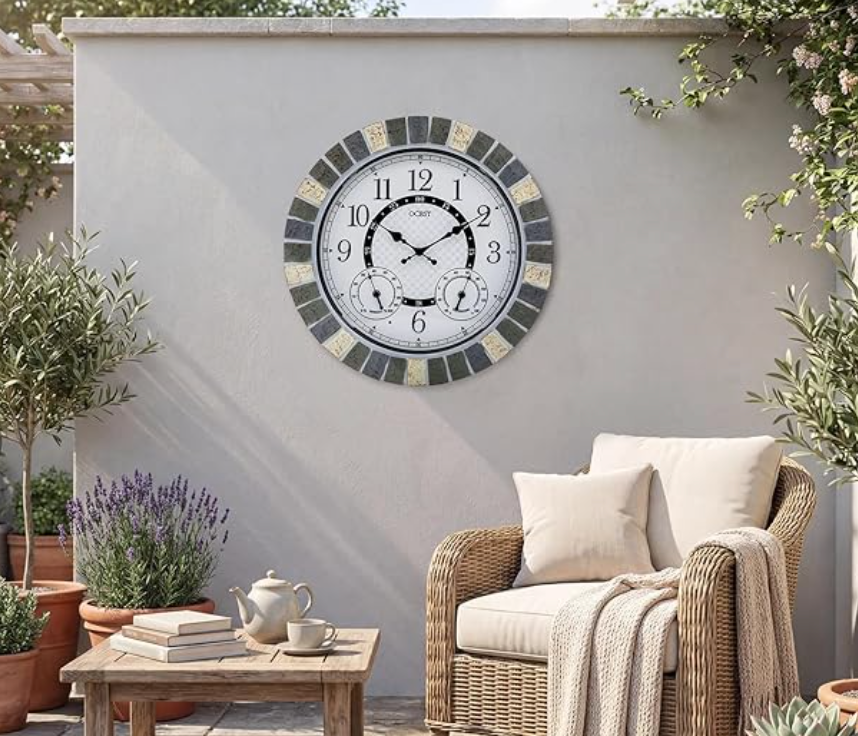
Let me keep this very practical.
If you want predictable results, you need three controls:
1) quality control
2) packaging control
3) schedule control
1) Quality control: make the sample the contract
The sample is not “just a sample.”
It’s the physical version of your contract.
I recommend:
- approving a pre-production sample
- confirming key details with photos
- storing one “golden sample” reference
Key QC points for outdoor clocks:
- dial printing clarity
- hand alignment
- sealing fit
- coating finish (no scratches, no thin spots)
- movement function check
2) Packaging control: protect the weak points
Outdoor clocks often get damaged at:
- hands (bent)
- lens (cracked)
- frame edge (scratched)
- corners (crushed)
So packaging should include:
- hand protection (spacer or inner support)
- lens protection (inner tray or sleeve)
- scratch protection for coated frames
- strong cartons (and corner protection if needed)
A cheap carton makes an expensive return.
I like to confirm packaging with a packing standard sheet.
3) Delivery control: confirm the timeline like a calendar
Many buyers only ask, “What is lead time?”
I prefer a clearer question:
- When does production start?
- When is mid-production check?
- When is final inspection?
- When is the cargo ready date?
This becomes your project timeline.
A simple control plan table
| Stage | What you do | Output |
|---|---|---|
| Before production | lock spec + sample + carton | confirmed order file |
| During production | in-line check | photo report / inspection notes |
| Before shipment | final inspection + packing check | pass/fail and rework list |
| Shipment | booking + documents | on-time departure |
If you’re running multiple SKUs, a simple production tracker keeps everything clean.
How to Choose the Right Chinese Supplier for Your Market
The “right supplier” depends on your channel, price level, and product positioning. DIY retail and garden centers do not need the same clock.
Choose your Chinese supplier[^7] by matching them to your market: DIY channels[^8] need fast movers, stable quality, and strong packaging; premium channels need better finishes and modern design. In all cases, prioritize clear communication and repeat-order consistency.

Here’s how I guide buyers when they ask me this question.
Step 1: Define your channel and price band
- DIY supermarkets → fast movers, stable SKU, easy price points
- Garden centers → premium feel, stronger design story
- E-commerce → packaging safety and shipping-friendly cartons
Once you define this, supplier selection becomes easier.
Step 2: Decide material direction
- Resin clocks → decorative, often faster sell-through
- Metal clocks → premium feel, but coating must be controlled
If your market is coastal or humid, metal coating quality becomes critical.
Step 3: Test supplier communication
This is a big deal in real projects.
A strong supplier:
- answers clearly in simple English
- sends photos quickly
- confirms details in writing
- doesn’t “change small things”
A weak supplier:
- answers vaguely
- avoids details
- promises everything
- causes surprises later
Step 4: Ask for proof of repeat order stability
Ask:
- “How do you control color between batches?”
- “Can you repeat the same dial printing next season?”
- “What is your standard carton protection?”
- “What happens on the second order?”
These questions reveal supplier maturity fast.
Supplier selection table (simple and useful)
| Your market | Supplier strengths to prioritize |
|---|---|
| DIY retail | packaging + fast lead time + stable QC |
| Premium retail | finish quality + design support |
| E-commerce | compact cartons + damage protection |
| Multi-SKU programs | communication + repeat consistency |
If you want a calm start, I can send you a copy-paste supplier screening message you can use to filter suppliers in one day.
Conclusion
A successful import is built on clear specs, strong packaging, and repeatable quality—not just a good first price.
[^1]: Discover why China is the go-to source for outdoor clocks, offering diverse designs and competitive pricing.
[^2]: Learn about OEM/ODM support and how it benefits businesses in sourcing products efficiently.
[^3]: Understanding batch color control is crucial for ensuring product consistency and quality in manufacturing processes.
[^4]: Exploring lead time for repeats helps you grasp the importance of timely deliveries and inventory management.
[^5]: Understanding QC checkpoints is crucial for maintaining quality in production. Explore this link to learn how they can enhance your processes.
[^6]: Discover the significance of packaging drop-safety in ensuring product integrity during shipping. This knowledge can save you from costly damages.
[^7]: Understanding how to select a Chinese supplier can significantly impact your business success and product quality.
[^8]: Exploring the traits of successful DIY channels can help you tailor your strategy for better market penetration.