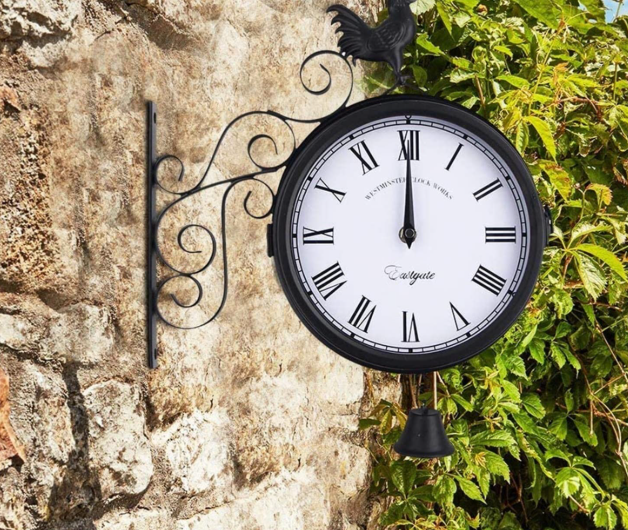
I once bought an outdoor clock that looked “perfect” online… then I hung it up and couldn’t read it from my patio chair.
A good outdoor clock is chosen in this order: size for your viewing distance, weather-safe materials (rust + UV), and a few practical features like a sealed back cover and easy battery access. Style comes last.
If you get these basics right, the clock will feel effortless—just like a garden should.
How to Choose the Right Size for Your Outdoor Space
The best size is the one you can read comfortably from where you actually sit, not where you think you’ll look from.
Choose outdoor clock size by viewing distance: small spaces need a medium clock you can read from 3–5 meters, while larger patios and garden walls usually need a bigger dial for 6–10 meters. Prioritize large numbers and thick hands.
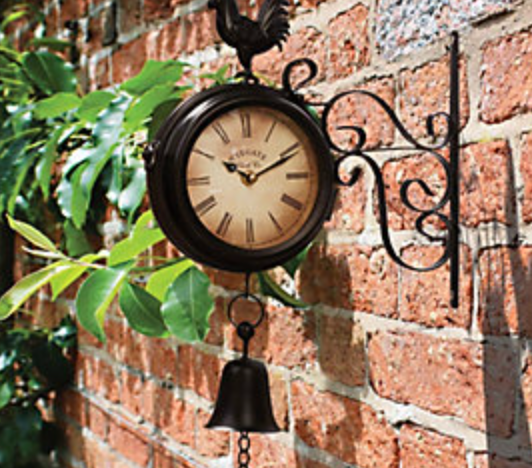
Here’s a simple moment that taught me this lesson.
I hung the clock on a sunny wall. It looked great.
Then I sat down with a coffee… and squinted.
That’s when I realized: size is not decoration. Size is usability.
Step 1: Find your real viewing spot
Before you buy, stand or sit where you will actually check the time:
- patio chair[^1]
- kitchen window
- balcony table
- garden bench
Then ask yourself:
Can I read it without leaning forward?
If the answer is “not really,” go bigger or choose higher contrast[^2].
Step 2: Match size to the wall and the “visual weight”
A clock should feel balanced in your outdoor space.
A big wall with a tiny clock looks lost.
A small fence with a huge clock looks heavy.
I like thinking of it like hanging a picture frame:
- the wall and clock should “fit” each other
Step 3: Don’t underestimate number thickness
Many clocks look large but still read poorly because:
- thin hands
- low contrast
- fancy fonts
For outdoor use, simple wins.
Quick size decision table
| Outdoor space | What usually works | What to avoid |
|---|---|---|
| Balcony / small patio | medium size + high contrast | tiny numbers, thin hands |
| Standard garden wall | larger dial + thick hands | decorative fonts, low contrast |
| Large patio / open yard | big dial + clear markers | “pretty but hard to read” dials |
If you want a clean way to compare, I often use a simple viewing distance checklist so the decision is fast.
Best Materials for Long-Lasting Outdoor Clocks
Outdoor clocks don’t fail because of time—they fail because moisture, sun, and temperature changes slowly attack weak materials.
For long-lasting outdoor clocks, choose powder-coated metal[^3] or stainless steel frames, UV-stable plastic[^4] or resin housings, and a sealed glass or strong clear cover. Avoid untreated steel and low-grade plastics for full outdoor exposure.
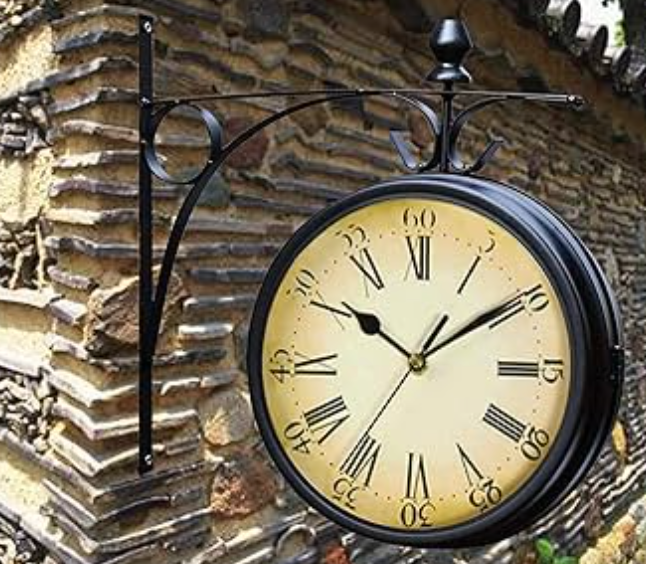
I always tell customers the same thing:
materials decide complaints.
A clock can be beautiful on day one, but outdoors is a long game.
1) Frame materials: where rust begins
Good choices:
- powder-coated metal (when coating is done well)
- stainless steel (strong corrosion resistance)
Risky choices:
- untreated steel
- thin painted metal that chips easily
If the coating chips, rust spreads. It’s like a small crack in a dam.
2) Housing materials: what protects the movement
Common outdoor housings include:
- resin (great for stone-look styles)
- UV-stable plastic (lightweight and practical)
- metal + plastic mixes (balanced feel)
Resin looks premium, but sealing still matters.
Plastic is affordable, but UV stability matters a lot.
3) Cover materials: clarity + protection
Good covers:
- sealed glass cover (stable and clear)
- strong clear cover (impact-resistant)
Weak covers:
- thin covers that warp
- covers that fog easily because sealing is poor
Material comparison table
| Part | Better materials | Why it helps outdoors |
|---|---|---|
| Frame | powder-coated metal, stainless | reduces rust risk |
| Housing | resin, UV-stable plastic | resists weather wear |
| Cover | sealed glass, strong clear cover | prevents fogging + stays readable |
If you’re choosing for a sunny area, start with UV-safe models and then pick your style.
Which Features Add Real Value to an Outdoor Clock
Features only matter when they prevent real-world problems or make daily use easier.
The best value features are a sealed back cover, moisture resistance around the hand shaft, strong mounting hardware, and easy battery access. Optional features like thermometer/hygrometer add appeal when they stay accurate and readable.
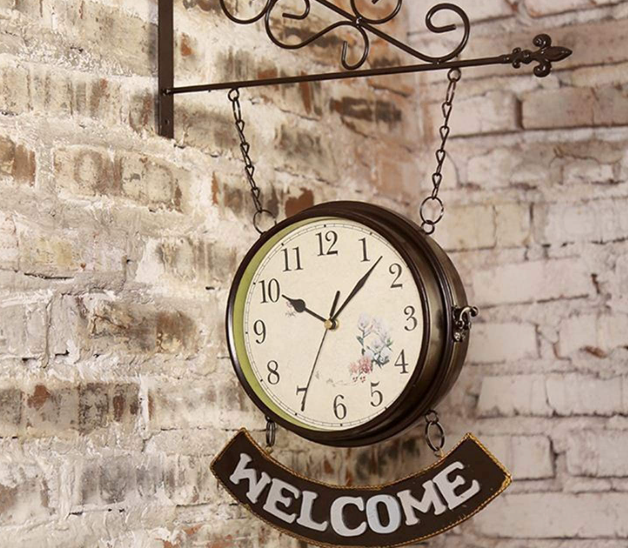
Let’s keep it practical.
Some “features” are just decoration.
Some features protect your money.
1) Sealed back cover (real value)
This is the first thing I look for.
A tight back cover helps prevent:
- fogging under the lens
- corrosion
- random stopping
If the back feels loose, water will find a way in.
2) Protection around the hand shaft (real value)
This is a common weak point.
Even small gaps around the shaft can let moisture in over time.
It doesn’t happen in one day. It happens slowly… then one morning the clock stops.
3) Strong mounting point (real value)
Wind and vibration matter outdoors.
Check for:
- strong hook or hanging plate
- solid back support
- stable screw points
A weak hook bends. A bent hook leads to drops. Drops lead to returns.
4) Easy battery access (real value)
This is a daily-life feature.
If changing batteries is annoying, people stop using the clock.
The best designs let you replace batteries quickly without removing the clock.
5) Thermometer/hygrometer (nice value, when done well)
These features can help sales because they feel useful.
But only if:
- numbers are easy to read
- accuracy is stable
- the dial doesn’t become too busy
Feature value table
| Feature | Adds real value? | Why |
|---|---|---|
| Sealed back cover | ✅ Yes | prevents moisture problems |
| Shaft area protection | ✅ Yes | reduces fogging risk |
| Strong mounting | ✅ Yes | prevents falls and damage |
| Easy battery access | ✅ Yes | makes it usable long-term |
| Thermometer/hygrometer | ✅ Sometimes | adds appeal if readable + accurate |
If you’re comparing models, I recommend using a feature score sheet to keep the choice logical.
How to Balance Style, Visibility, and Durability
The best outdoor clock is not the “prettiest one.” It’s the one you enjoy using every day without worry.
Balance style, visibility, and durability by choosing high-contrast readability[^5] first, weather-safe materials[^6] second, and style details last. A simple dial with thick hands often outperforms complex decorative faces outdoors.
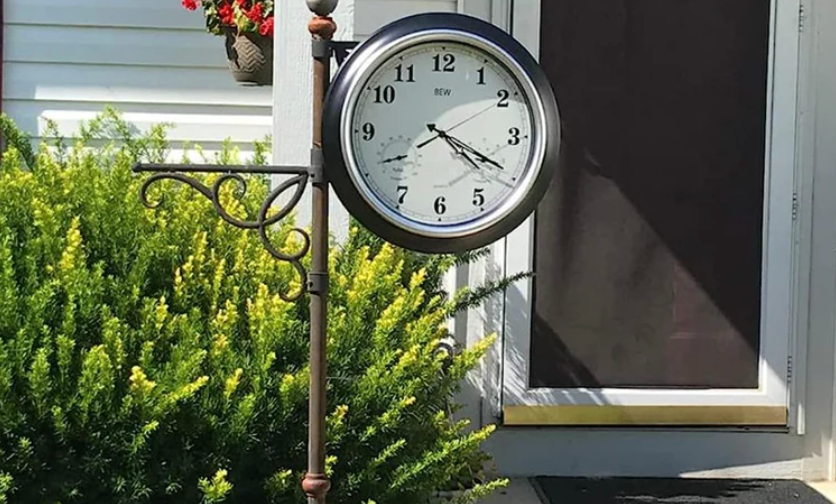
I’ll say it like this:
A clock can be stylish and still fail outdoors if it’s not built right.
And a clock can be durable but useless if you can’t read it.
So I balance it in a simple order.
1) Start with visibility (the “daily joy” factor)
Choose:
- high contrast numbers[^7]
- thick hands
- simple fonts
- clean dial layout[^8]
Avoid:
- low contrast (light grey on white)
- thin hands
- crowded graphics
2) Confirm durability (the “years, not weeks” factor)
Outdoor durability is about:
- rust resistance
- UV resistance
- sealing quality
- stable build
Even a small improvement here saves you replacement cost later.
3) Choose style that fits your garden personality
This is the fun part—but it should be last.
- Rustic garden → classic/vintage look
- Modern patio → simple clean look
- Stone décor → faux-stone resin look
When style matches the garden, the whole space feels more intentional.
Balance table (simple but useful)
| Priority | What to focus on | What “good” looks like |
|---|---|---|
| 1 | Visibility | readable from your seat |
| 2 | Durability | rust + UV + sealing |
| 3 | Style | matches your garden vibe |
If you want a quick decision process, you can build a one-page clock comparison checklist and use it for every model.
Conclusion
Pick size for readability, materials for weather, and features for real daily value—style should follow, not lead.
[^1]: Explore this link to find patio chairs designed for comfort and visibility, ensuring you can read the time effortlessly.
[^2]: Discover how higher contrast can enhance readability, making it easier to check the time without straining your eyes.
[^3]: Discover why powder-coated metal is a top choice for durability and weather resistance in outdoor clocks.
[^4]: Learn about UV-stable plastic’s role in enhancing the longevity of outdoor items, including clocks.
[^5]: Understanding high-contrast readability can help you choose a clock that is easy to read in various lighting conditions.
[^6]: Exploring weather-safe materials will ensure your outdoor clock withstands the elements and lasts longer.
[^7]: Explore how high contrast numbers enhance readability and visual appeal in various designs.
[^8]: Learn effective strategies for creating a clean dial layout that improves user experience and aesthetics.