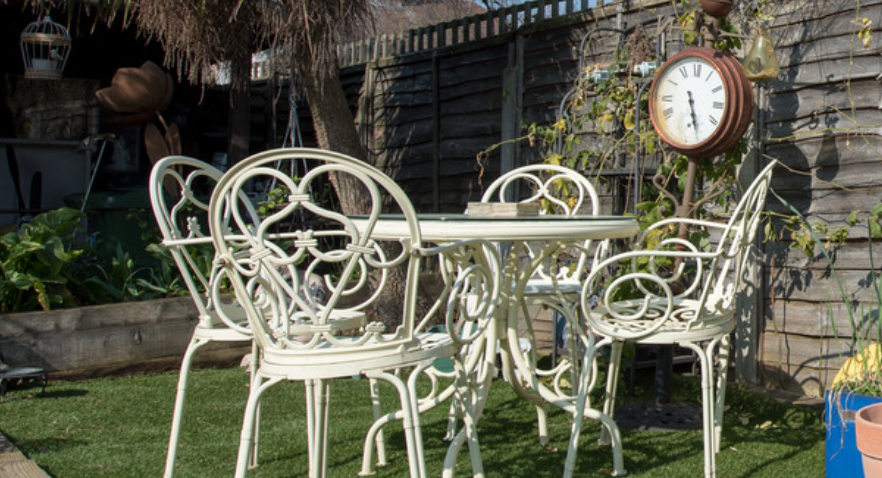
I once hung an “outdoor” clock that looked perfect… then one rainy month later, it fogged up like a bathroom mirror.
To choose a weatherproof outdoor garden clock, focus on three things: a sealed housing, weather-resistant materials (rust-proof frame + UV-stable face), and clear visibility from 3–10 meters. Then check mounting strength and easy battery access.
If you buy smart now, you won’t be replacing it next season.
Why Weather Resistance Matters for Outdoor Garden Clocks
Outdoor clocks don’t fail because time stops—they fail because weather quietly attacks the weak points.
Weather resistance matters because rain and humidity can cause fogging and corrosion, sunlight can fade dials and crack plastics, and temperature changes can loosen seals. A “garden clock” must be built like an outdoor product, not an indoor decoration.
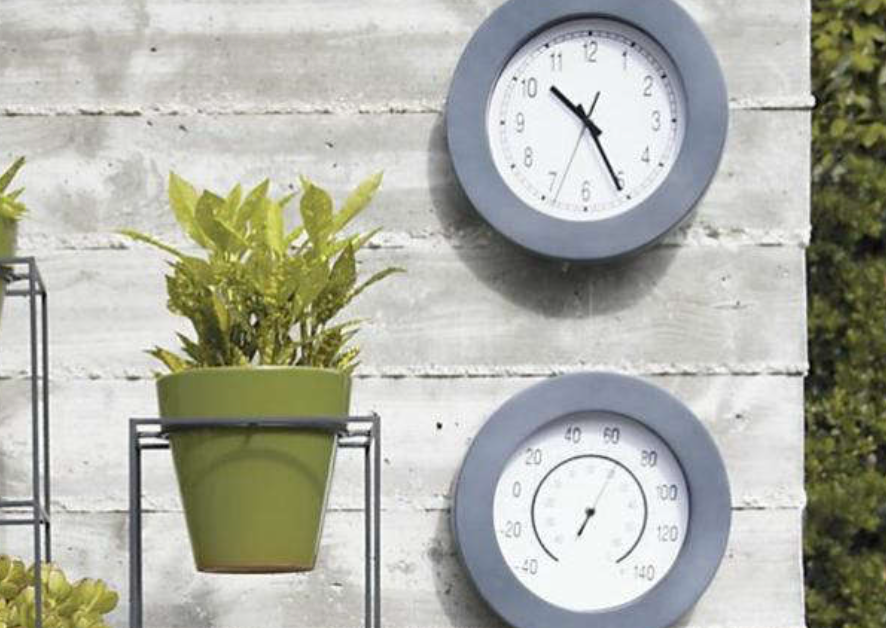
Let me keep this simple and real.
A clock outside faces three daily enemies:
1) water
2) sun
3) temperature swings
And each one breaks clocks in a different way.
Water: the slow leak problem
Water doesn’t need a big hole.
Sometimes it only needs a tiny gap around:
- the back cover
- the battery door
- the hand shaft
- a screw point
Once moisture gets inside, you’ll see:
- fogging under the lens
- rust on the movement area
- stains on the dial
- the clock stopping randomly
This is why a proper seal[^1] matters more than a fancy design.
Sun: the silent fading problem
A clock can still “work” while looking bad.
Sunlight can:
- fade printed numbers
- yellow clear covers
- make cheap plastics brittle
- weaken paint over time
If your garden clock sits on a sunny wall, UV resistance isn’t optional. It’s survival.
Temperature swings: the stress test
Hot days and cool nights make materials expand and shrink.
Over time, this can:
- loosen screws
- weaken seals
- warp plastic parts
- reduce the smooth movement of hands
So when I say “weatherproof,” I’m not talking about one rainy day.
I’m talking about hundreds of days.
A quick “why clocks fail outdoors” table
| Weather factor | Common failure | What to look for |
|---|---|---|
| Rain / humidity | fogging, corrosion | sealed housing, tight back cover |
| Sun (UV) | fading, brittleness | UV-stable dial and cover |
| Temperature swings | loose parts, seal gaps | solid materials, stable build |
If you want to keep it simple, I like using a weatherproof checklist before choosing any outdoor clock.
Best Materials for Long-Lasting Outdoor Use
The best outdoor clock material is the one that survives your local weather—not the one that looks best on day one.
For long-lasting outdoor use, choose powder-coated metal[^2] or stainless steel frames, UV-stable plastic[^3] or resin housings, and sealed glass or high-quality clear covers. Avoid untreated steel and low-grade plastics if the clock will face sun and rain.
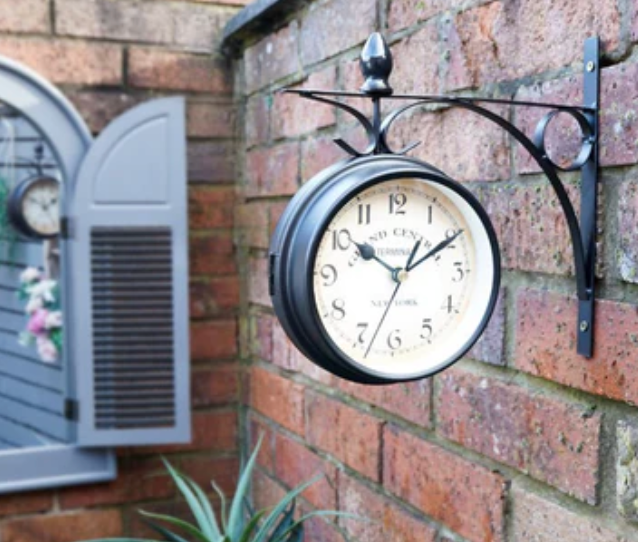
I’ll tell you something I’ve learned from selling garden products:
materials decide complaints.
Not marketing. Not photos. Materials.
1) Frames: what holds the clock together
Powder-coated metal is a strong option when the coating is done well.
It can resist rust, and it feels solid on the wall.
Stainless steel can be even better for corrosion resistance, but it can cost more.
What I try to avoid outdoors:
- untreated steel (rust risk)
- thin painted metal with poor coating (chips and rust spreads)
2) Housing: what protects the movement
Outdoor clocks often use:
- resin[^4] (good for decorative styles)
- UV-stable plastic[^5] (lightweight and affordable)
- metal + plastic mix (balanced approach)
Resin can be great for a “stone look,” but it should still have proper sealing.
For plastic, I always care about UV stability. Cheap plastic can crack and fade fast.
3) Lens / cover: what keeps moisture out and keeps numbers clear
Good options:
- sealed glass cover (clear and stable)
- high-quality clear cover (impact-resistant)
Weak options:
- thin covers that warp
- covers with poor sealing that fog easily
A practical material comparison
| Material area | Best choices | Why it helps |
|---|---|---|
| Frame | powder-coated metal, stainless | rust resistance + strength |
| Housing | resin, UV-stable plastic | weather protection |
| Cover | sealed glass, strong clear cover | prevents fogging + stays readable |
If you’re choosing for a sunny garden, I’d recommend starting with UV-safe options and then selecting the style you like.
How to Balance Visibility, Size, and Style
A garden clock can be weatherproof and still be useless if you can’t read it from the patio.
Balance visibility, size, and style by choosing a clock diameter that matches viewing distance (bigger for farther walls), using high-contrast numbers, and avoiding overly thin hands or decorative fonts that reduce readability.
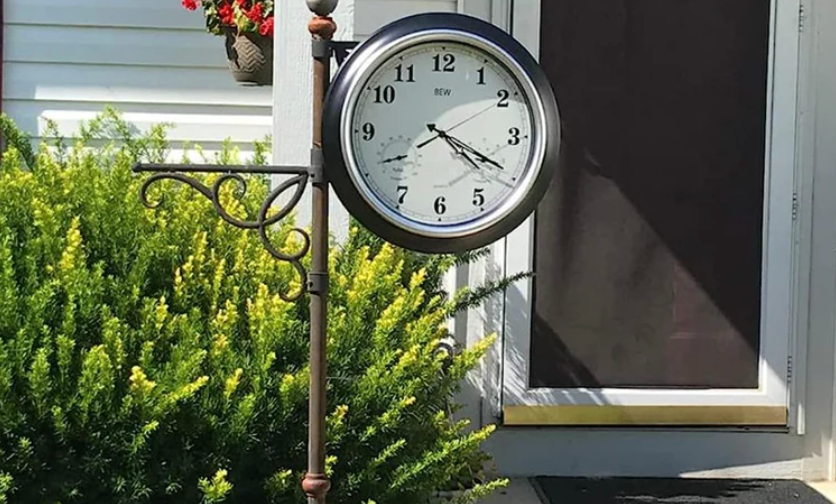
This is where many people choose with their eyes, not their life.
They buy a clock that looks pretty in a photo.
Then they hang it up and realize they have to squint.
So I use one simple rule:
My “3–10 meter” rule
- If you want to read it from 3–5 meters, a medium clock can work.
- If you want to read it from 6–10 meters, go bigger and clearer.
I know that sounds obvious, but it’s the most common regret.
1) High contrast beats fancy design
If you want easy reading:
- dark numbers on a light face
- thick hands
- clear minute marks (optional but helpful)
If you choose:
- thin hands
- low contrast
- decorative fonts
…you might get a beautiful wall decoration that doesn’t function as a clock.
2) Size should match the wall and the garden vibe
A small clock on a big fence looks lost.
A huge clock on a tiny balcony wall looks heavy.
I like thinking of it like a picture frame:
- match the “visual weight” to the space
3) Style should match what you already have
If your garden has:
- rustic wood → classic/vintage clocks fit well
- modern metal → minimalist clocks fit well
- stone/resin décor → faux-stone clocks feel natural
I often suggest building a small “style match” set: clock + fence + trellis + décor, so the garden looks intentional. I keep notes like a garden style board to avoid random mixing.
Simple visibility and style table
| Goal | Best choice | What to avoid |
|---|---|---|
| Easy reading | high contrast + thick hands | thin hands + light-on-light |
| Natural garden look | rustic/vintage face | overly shiny indoor style |
| Modern clean look | simple dial + clear markers | busy dial graphics |
If you want a safe choice, always prioritize readability first. You can still choose style after that.
Key Features to Check Before You Buy
Features are not “extra.” For outdoor clocks, features are the difference between “works for years” and “fails after one season.”
Before you buy, check sealing (back cover and hand shaft), weather-resistant materials[^6], clear dial readability[^7], strong mounting hardware, easy battery access, and stable movement performance. If possible, choose models designed specifically for outdoor use, not indoor clocks labeled as “outdoor.”
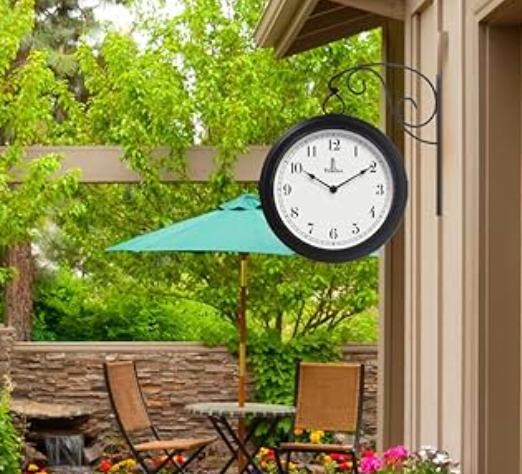
Here’s my simple pre-buy checklist. I use this logic even when I choose products for our own range.
1) Sealed back cover
Look for:
- tight back design
- screw or lock system that feels secure
- no obvious gaps
If the back feels loose, moisture will find its way in.
2) Protection at the hand shaft area
This is a common weak point.
Even a small gap around the shaft can allow moisture in.
So I like designs that feel “finished” and sealed here, not exposed.
3) Strong mounting structure
Outdoor walls and fences face wind.
So check:
- hook strength
- hanging point thickness
- stable back support
A weak hook can bend over time.
4) Easy battery access
This sounds small, but it matters a lot.
If battery access is painful, people stop using the clock.
Look for:
- simple open/close
- clear polarity marks
- easy replacement without removing the clock (when possible)
5) Readability in real life
I always test this:
Stand where you’ll actually sit—patio chair, kitchen window, balcony—and see if you can read it.
If you need to “lean forward,” it’s not the right one.
Quick “buy check” table
| Feature | What to verify | Why it matters |
|---|---|---|
| Sealing | back cover + shaft area | prevents fogging and corrosion |
| Materials | rust/UV resistance | extends outdoor life |
| Readability | contrast + hand thickness | reduces daily frustration |
| Mounting | hook/plate strength | avoids falling and damage |
| Battery access | easy replacement | keeps it usable |
If you’re comparing multiple models, a simple comparison sheet helps you decide fast without emotion.
Conclusion
Choose a sealed, UV-strong, rust-resistant clock with clear readability—your garden will thank you all year.
[^1]: Understanding the significance of a proper seal can help you protect your devices from moisture damage effectively.
[^2]: Discover why powder-coated metal is ideal for outdoor clocks, ensuring durability and resistance to weather elements.
[^3]: Learn how UV-stable plastic protects outdoor clocks from sun damage, extending their lifespan significantly.
[^4]: Discover the versatility of resin in outdoor clock design and how it can achieve a beautiful stone look.
[^5]: Explore this link to understand how UV-stable plastic enhances durability and longevity in outdoor clocks.
[^6]: Understanding weather-resistant materials can help you choose a durable outdoor clock that withstands the elements.
[^7]: Exploring the significance of clear dial readability ensures you select a clock that’s easy to read in various outdoor conditions.